Donkey Orchid
The donkey orchid is a genus of approximately 60 species of terrestrial orchids known as Diuris, belonging to the family Orchidaceae. While one species is…
What is Donkey orchid?
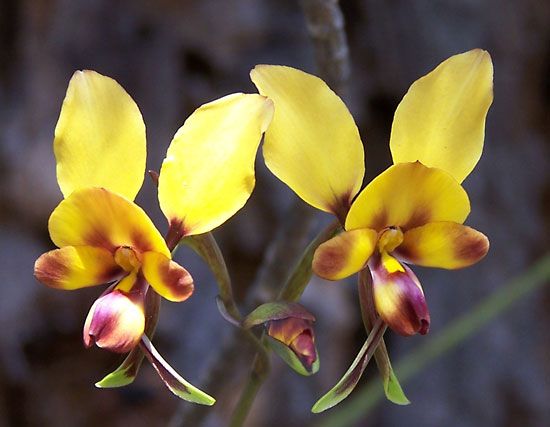
The donkey orchid is a genus of approximately 60 species of terrestrial orchids known as Diuris, belonging to the family Orchidaceae. While one species is native to Java and Timor, the vast majority are found in Australia.1
These plants are deciduous perennials characterized by grasslike leaves. Their common name is derived from the appearance of the two upper petals on each flower, which resemble the ears of a donkey, complemented by long, drooping greenish lateral sepals. The plant produces a dry capsule containing winged seeds. Notable species include the common donkey orchid (Diuris longifolia), the cat’s face (D. filifolia), and the nanny-goat orchid (D. laevis).1
Why are they called donkey orchids?
The donkey orchid (genus Diuris) receives its common name from the distinct appearance of its flowers. Specifically, the two upper petals of each bloom resemble the ears of a donkey, a feature that is further accentuated by the plant’s long, drooping greenish lateral sepals.1
How do orchids reproduce using seeds?
Orchid reproduction begins when a pollinator deposits pollen onto the stigma, leading to the fertilization of ovules within the ovary. This process results in the development of embryos housed within a capsule.4
Unlike most flowering plants, orchid seeds are extremely minute and lack endosperm, the nutrient-rich tissue typically used to nourish a developing seedling. Because they lack these internal food reserves, orchid seeds are highly specialized for wind dispersal, allowing them to travel long distances.54
To successfully germinate and grow in nature, these seeds must establish a symbiotic relationship with a specific mycorrhiza (fungus). The fungus penetrates the seed and supplies the necessary nutrients for the seedling to develop until it can establish its own photosynthetic abilities. While this process is essential in the wild, some orchids can be germinated artificially in laboratory settings that provide the required nutrients directly.546
What makes a plant a perennial?
A perennial is any plant that lives for several years, typically regrowing and reblooming year after year. Unlike annuals, which complete their entire life cycle—including growth, flowering, and death—within a single growing season, perennials persist for an indefinite number of years.789
The category of perennials includes all trees and shrubs, as well as many herbaceous (nonwoody) flowering plants. In temperate climates, herbaceous perennials often survive the winter by having their aboveground portions die back in autumn, while the plant remains alive through specialized underground structures such as:79
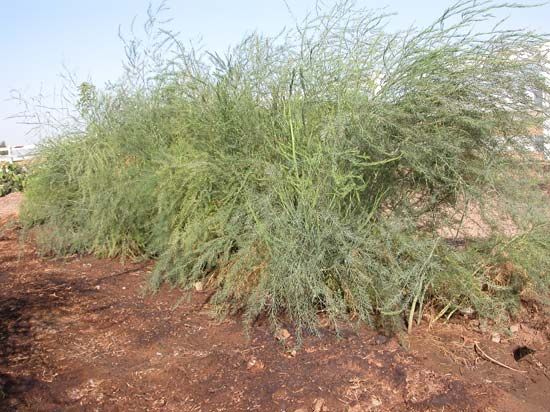
These structures allow the plant to produce new shoots when the next growing season begins. Many economically important crops, such as fruit trees, nuts, asparagus, and mint, are also classified as perennials.79
Sources
- donkey orchid — Encyclopædia Britannica
- sun orchid — Encyclopædia Britannica
- sun orchid — Merriam-Webster
- orchid - Seeds — Encyclopædia Britannica
- orchid - Natural history — Encyclopædia Britannica
- Asparagales - Fruits and seeds — Encyclopædia Britannica
- Perennial — Encyclopædia Britannica
- Angiosperm - General features — Encyclopædia Britannica
- Is That Plant 'Perennial' or 'Annual'? — Merriam-Webster
Published on · 2 min read