Vitaceae
Vitaceae, commonly known as the grape family, is a group of flowering plants within the order Rhamnales. This family consists of 12 genera of woody or…
What is Vitaceae?
Vitaceae, commonly known as the grape family, is a group of flowering plants within the order Rhamnales. This family consists of 12 genera of woody or herbaceous plants, most of which are vines that utilize tendrils for support. These plants typically feature simple, palmate, or pinnate leaves and produce small, greenish, clustered flowers that develop into several-seeded berries.12
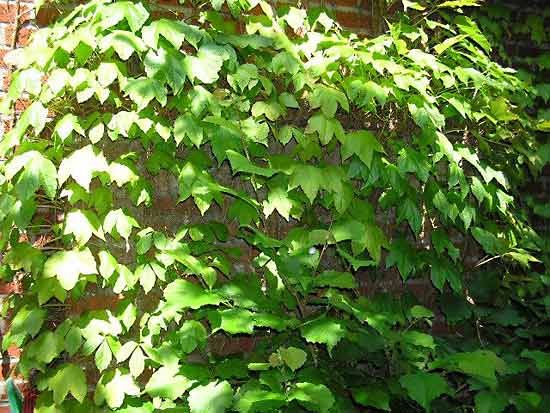
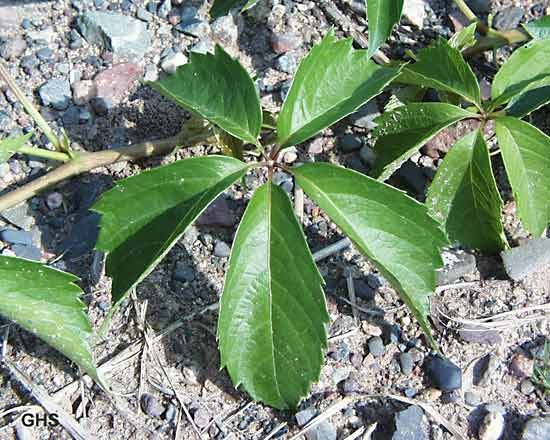
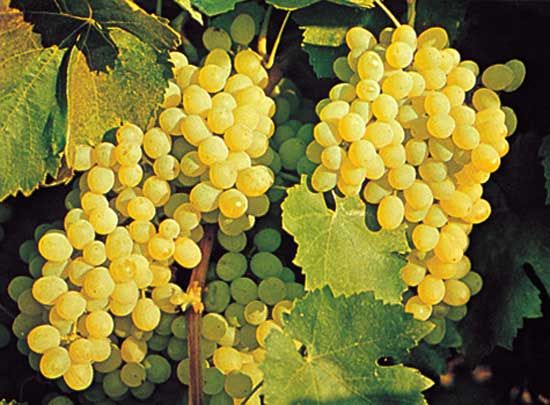
The genus Cissus is the largest in the family, containing approximately 350 species. However, the genus Vitis holds the greatest economic importance, as it includes the European wine grape and the North American fox grape. Other well-known members of the family include ornamental woody vines such as Boston ivy and Virginia creeper.1

How do tendrils help vines climb?
A tendril is a specialized plant organ—often a modified leaf or stem—that enables a vine to climb by anchoring itself to surrounding objects. These structures are highly sensitive to touch, a response known as thigmotropism.34
The process of climbing occurs through several stages:
- Contact and Response: Tendrils are prehensile and constantly “feel” for solid surfaces. When a tendril brushes against an object, it curves toward the point of contact and wraps around it.34
- Attachment: Once the tendril has encircled an object, it clings to it as long as the stimulation persists. Some species also develop terminal enlargements that flatten against a surface and secrete an adhesive to cement the plant to its substrate.3
- Structural Reinforcement: After the initial attachment, the plant develops strong mechanical tissue called sclerenchyma within the tendril. This transformation hardens the structure, providing the necessary strength to support the weight of the growing plant.3
What are the differences between wild and cultivated grapes?
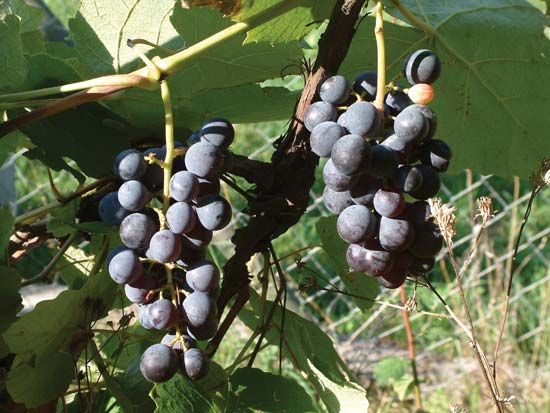
The primary difference between wild and cultivated grapes lies in their development through selective breeding, a process that prioritizes traits economically or aesthetically desirable to humans over those that might benefit the plant in nature.7
Key Distinctions
- Purpose and Selection: Wild grapes are species that grow in nature without human intervention. In contrast, cultivated grapes (or cultivars) have been selected over thousands of years for specific qualities, such as high sugar content for fermentation, flavor profiles, berry size, and disease resistance.8910
- Cultivation and Management: Unlike wild vines, which grow unchecked, cultivated grapes undergo intensive viticulture. This includes propagation via grafts or cuttings, systematic pruning to regulate crop yield, and training the vines to supports to ensure fruit quality.10
- Composition: Domesticated varieties, particularly Vitis vinifera, are prized for their balanced sugar and acid levels, which are optimized for winemaking. Some wild species, such as V. labrusca, may have “foxy” or overly pronounced flavors and often lack sufficient natural sugar for high-alcohol wine production, requiring human intervention to improve their utility.9
Why are Virginia creepers often considered invasive?
The premise that the Virginia creeper (Parthenocissus quinquefolia) is invasive is inaccurate. While it is a vigorous vine native to eastern North America, it is commonly cultivated as an ornamental covering for walls, fences, and trees rather than being classified as an invasive species.11
The plant is often misunderstood due to its rapid growth and its ability to climb using disk-tipped tendrils. Because it can cover large surfaces quickly, some may perceive it as aggressive in a garden setting. Additionally, it is sometimes confused with poison ivy, which may contribute to a negative reputation, though the two are unrelated. While the plant can be susceptible to pests like the Virginia creeper leafhopper, which can cause damage to the foliage, this does not make the vine itself invasive.1112
Sources
- Vitaceae — Encyclopædia Britannica
- Vitaceae — Merriam-Webster
- Tendril — Encyclopædia Britannica
- vine — Encyclopædia Britannica
- Did you know? — Merriam-Webster
- Locomotion - Climbing — Encyclopædia Britannica
- wild grape — Merriam-Webster
- wine - Species and varieties — Encyclopædia Britannica
- Grape — Encyclopædia Britannica
- selective breeding — Encyclopædia Britannica
- Virginia creeper — Encyclopædia Britannica
- Virginia creeper leafhopper — Merriam-Webster
Published on · 3 min read