Vistula River
The Vistula River contributes to Poland’s energy production primarily through the generation of hydroelectricity. While the vast majority of the country's…
How does the Vistula River contribute to Poland’s energy production?
The Vistula River contributes to Poland’s energy production primarily through the generation of hydroelectricity. While the vast majority of the country’s energy is derived from thermal plants fired by coal and lignite, the Vistula—along with the Sudeten region and the Carpathians—serves as a key source for the nation’s hydroelectric output.1
To harness this potential, various storage reservoirs and spillway dams have been constructed along the river and its tributaries. These water-management structures are designed to utilize the river’s hydroelectric capacity while simultaneously aiding in flood control and navigation. The operation of these hydroelectric plants is one of several factors that influence the quality and thermal characteristics of the river’s water.23
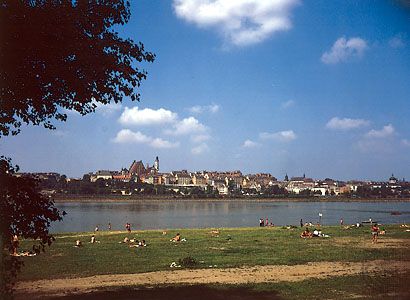
What major cities are located along the Vistula River?
The Vistula River flows through several major cities and industrial centers in Poland. These urban areas have historically developed along its banks due to the river’s role in trade, water supply, and transportation.26
Key cities located along the Vistula include:
- Kraków: Situated on the upper Vistula, this historic city served as Poland’s capital from the 11th century until the late 16th century.24
- Warsaw: Poland’s capital city is divided into right- and left-bank portions by the river.27
- Płock: A significant industrial center located along the river’s course.2
- Toruń: Another major city positioned on the banks of the Vistula.2
- Gdańsk: Located at the river’s delta estuary, this port city serves as the Vistula’s gateway to the Baltic Sea.2
- Nowa Huta: An industrial center that is now part of the Kraków urban area.24
- Sandomierz: A city situated along the river’s path in southern Poland.2
- Malbork: A town located along the banks of the Vistula.2
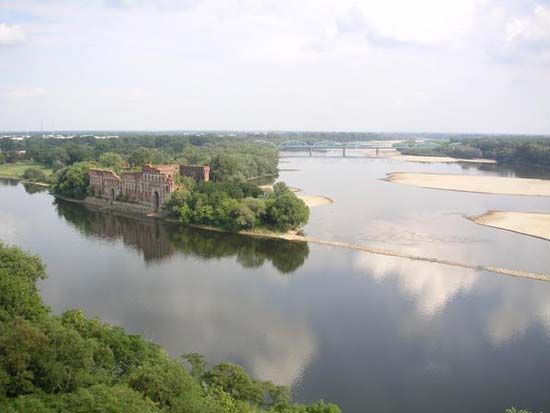
How has the Vistula River influenced Poland’s economy and trade over the centuries?
The Vistula River has served as a vital artery for Poland’s economy and trade for centuries, evolving from an ancient transit route to a modern industrial corridor.
Historical Trade Significance
Since the Stone Age, the Vistula functioned as a primary trade route connecting the Baltic region with central Europe. Early trade involved the movement of raw materials and flint northward, while amber was transported south. During the height of the Polish state between the 15th and 18th centuries, the river became the nation’s most intensive trade route, facilitating the transport of salt, timber, grain, and building stone. The economic importance of the river was so significant that numerous granaries and storehouses were constructed along its banks as early as the 14th century.4
Industrial and Modern Economic Role
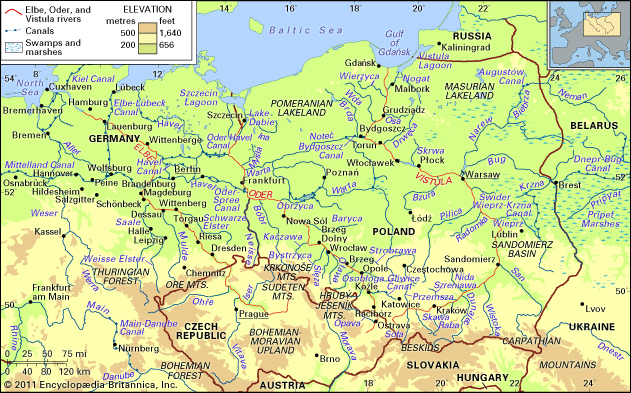
In the modern era, the Vistula has attracted large-scale industrial projects, drawn by the availability of water and the potential for cost-effective bulk transport. It is linked to broader European waterway systems, including the Oder River via the Bydgoszcz Canal, and connects to eastern inland networks through the Narew and Bug rivers.110
Despite its potential, navigational hazards—such as sandbanks and ice dams—have historically restricted its use for freight. Consequently, inland river navigation currently accounts for less than 1 percent of Polish freight. Post-World War II efforts focused on constructing reservoirs and dams to improve navigability and harness the river’s hydroelectric potential. Today, the river remains a critical component of Poland’s infrastructure, supporting industrial centers and serving as a gateway to the Baltic Sea through the port of Gdańsk4.182410
How long is the Vistula River, and what are its major tributaries?
The Vistula River has a total length of 651 miles (1,047 kilometers).2
The river’s course is defined by numerous tributaries that join it throughout its journey from the mountains to the Baltic Sea. The most prominent of these are the San and Narew rivers, which delineate the river’s three principal sections.8
Other notable tributaries include:
Sources
- Vistula River - History — Encyclopædia Britannica
- Vistula River — Encyclopædia Britannica
- Poland - Energy — Encyclopædia Britannica
- Vistula River - The economy — Encyclopædia Britannica
- Vistula River - Hydrology of the Vistula River — Encyclopædia Britannica
- Warsaw - City site — Encyclopædia Britannica
- Poland - Urban settlement — Encyclopædia Britannica
- Vistula River - Physiography — Encyclopædia Britannica
- Kraków — Encyclopædia Britannica
- Poland - Waterways — Encyclopædia Britannica
Published on · 3 min read