Volcanic Dome
A volcanic dome is a steep-sided mound formed by highly viscous lava that accumulates around a vent. As these domes grow, their crusts often fracture…
What hazards are associated with volcanic dome formation and collapse?
A volcanic dome is a steep-sided mound formed by highly viscous lava that accumulates around a vent. As these domes grow, their crusts often fracture, causing angular rock fragments to tumble down and form unstable heaps of debris at the base.1
The primary hazards associated with these structures include:
- Pyroclastic Flows: The collapse or explosive disruption of a dome can generate a pyroclastic flow—a fast-moving, high-temperature, and highly destructive mass of gas-enveloped particles. These flows, sometimes called nuées ardentes (“glowing clouds”), can travel at speeds up to 160 km (100 miles) per hour, incinerating nearly everything in their path.234
- Avalanches and Landslides: The growth of a dome can oversteepen a volcano’s flanks, increasing the risk of structural failure and large-scale avalanches of rock and ice.5
- Secondary Hazards: Debris from dome instability can contribute to mudflows (lahars), which are particularly dangerous when mixed with water from rainfall or melting ice.5
What is the relationship between volcanic domes and lava flows?
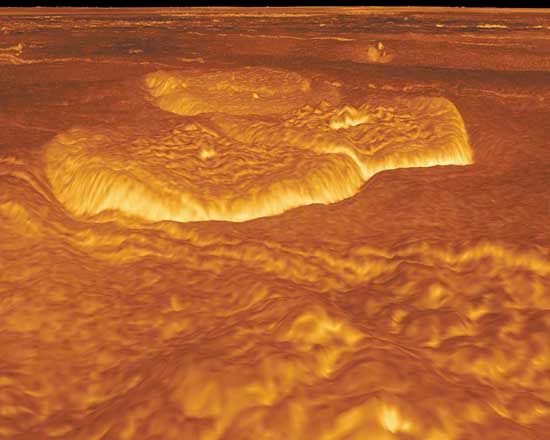
The relationship between volcanic domes and lava flows is defined primarily by the high viscosity of the lava involved. Unlike fluid basaltic eruptions that create extensive lava flows, dome-forming lavas—typically andesites, dacites, or rhyolites—are so viscous that they accumulate around the vent rather than flowing away.19
While domes are characterized by this lack of mobility, they interact with lava flows in several ways:
- Internal Growth: Domes often grow through the internal intrusion of new lava, which causes the structure to swell. Fractures in the dome’s solidified shell may allow small, thick lava flows to escape onto the flanks or base.19
- Distortion: Occasionally, thick lava flows may move short distances from the dome, distorting its generally circular or oval shape.9
- Debris Formation: As the dome expands, its crust breaks into angular rock fragments. These pieces roll down to form a heap of debris (breccia) at the base, which can eventually bury the solid portion of the dome.1
What are some famous examples of volcanic domes around the world?
Volcanic domes are steep-sided mounds formed by the accumulation of highly viscous lava that is unable to flow away from a vent. Several notable examples illustrate the formation and impact of these structures:111
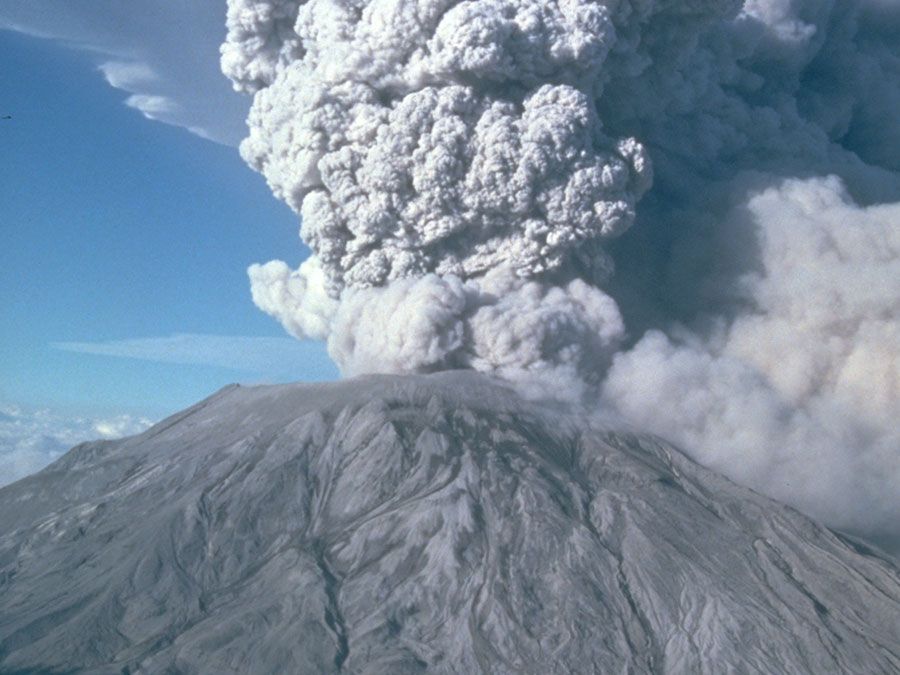
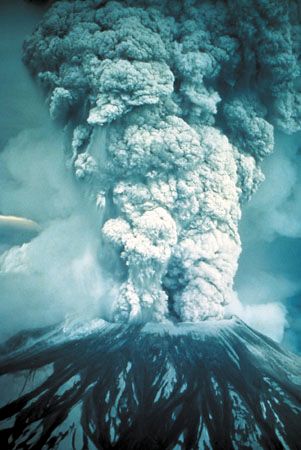
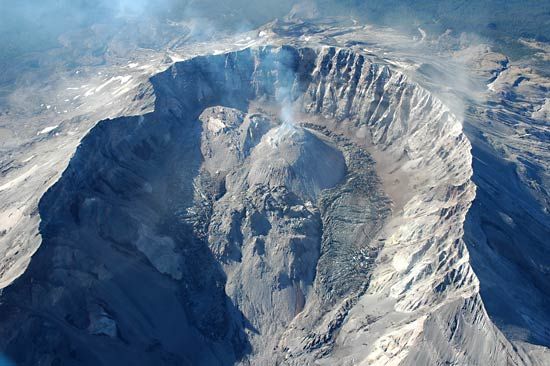
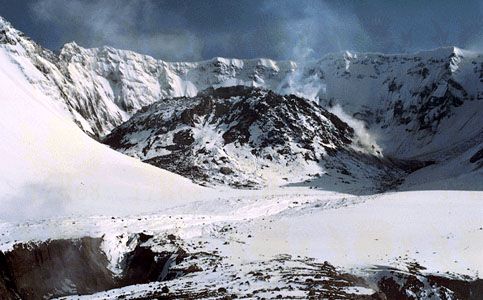
- Mount Saint Helens: Located in the Cascade Range of Washington, U.S., this volcano is well-known for its eruptive history of lava-dome construction. Following its cataclysmic 1980 eruption, a new lava dome grew intermittently within the crater between 1980 and 1986, with a more recent period of dome rebuilding occurring from 2004 to 2008.91
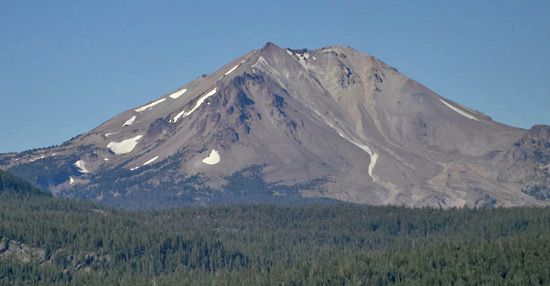
- Lassen Peak: Situated in northern California, this is one of the largest known volcanic domes. It rises more than 600 meters (2,000 feet) and spans approximately 3.2 kilometers (2 miles) in diameter.11
- Chaos Crags: Located just north of Lassen Peak, these features consist of a spectacular row of volcanic domes.11
These domes are often composed of andesite, dacite, or rhyolite, and their growth can lead to significant hazards, including structural instability and explosive eruptions.18
How do volcanic domes differ from other volcanic structures like shield volcanoes or stratovolcanoes?
Volcanic domes, shield volcanoes, and stratovolcanoes are distinguished primarily by their eruptive history, the viscosity of their lava, and their resulting physical shapes.
Volcanic Domes
Volcanic domes are steep-sided mounds formed by highly viscous lava—typically andesite, dacite, or rhyolite—that accumulates around the vent rather than flowing away. Growth occurs through internal swelling or repeated extrusions, often resulting in a crust of angular rock fragments (breccia) at the base. They are relatively small compared to other volcanic structures and can form independently or within the craters of larger volcanoes.11314
Shield Volcanoes
In contrast, shield volcanoes are built by fluid, low-viscosity basaltic lava that travels long distances. This creates broad, gently sloping mountains with profiles resembling a warrior’s shield. They are formed over long periods by numerous effusive eruptions.1514
Stratovolcanoes
Stratovolcanoes (or composite volcanoes) are tall, conical structures built by alternating layers of ash, pyroclastic material, and lava flows. Their composition is generally andesitic, and they are characterized by moderately explosive eruptions. Unlike the simple growth of a dome, a stratovolcano’s complex structure often incorporates various features, including volcanic domes within its summit crater.914
Sources
- volcanic dome — Encyclopædia Britannica
- nuée ardente — Encyclopædia Britannica
- volcano - Ash falls — Encyclopædia Britannica
- pyroclastic flow — Encyclopædia Britannica
- volcano - Pyroclastic flows — Encyclopædia Britannica
- volcano - Avalanches, tsunamis, and mudflows — Encyclopædia Britannica
- volcano - Explosions — Encyclopædia Britannica
- stratovolcano — Encyclopædia Britannica
- volcano - Lava domes — Encyclopædia Britannica
- volcano - Lava flows — Encyclopædia Britannica
- Mount Saint Helens — Encyclopædia Britannica
- Soufrière — Encyclopædia Britannica
- volcano - Shield volcanoes — Encyclopædia Britannica
- volcano - Determinants of size and shape — Encyclopædia Britannica
- volcano - Stratovolcanoes — Encyclopædia Britannica
Published on · 4 min read