Valley of Ten Thousand Smokes
The Valley of Ten Thousand Smokes is a profound example of the intense volcanic activity characteristic of Alaska, which is situated within the Ring of…
How does the Valley of Ten Thousand Smokes fit into the larger context of Alaska’s volcanic activity?
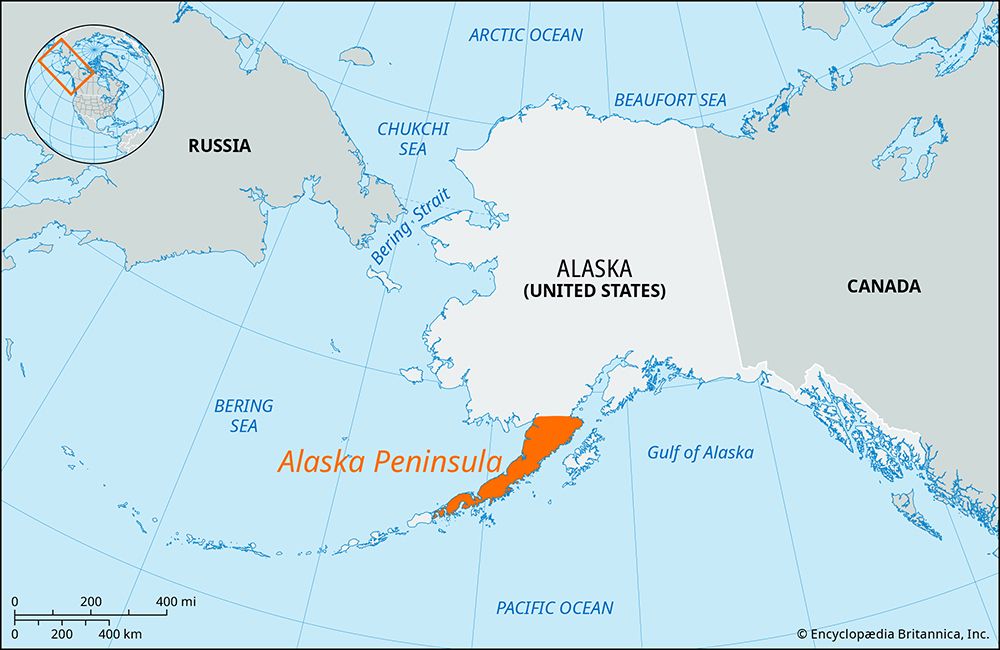
The Valley of Ten Thousand Smokes is a profound example of the intense volcanic activity characteristic of Alaska, which is situated within the Ring of Fire—a massive, seismically active belt surrounding the Pacific basin.12
Geologically, the valley is part of the Aleutian Range, a segment of the Pacific mountain system that stretches along the Alaska Peninsula. This region is defined by convergent plate boundaries where subducting oceanic plates generate the magma responsible for frequent volcanic eruptions. The 1912 eruption of Novarupta and Mount Katmai—the largest of the 20th century—transformed the landscape into the Valley of Ten Thousand Smokes, illustrating the volatile nature of this arc.3145
With over 130 volcanoes in the state, primarily concentrated along the Aleutian Islands and the Alaska Peninsula, the valley serves as a stark reminder of the ongoing geological processes that shape Alaska’s rugged terrain.63
How did the Valley of Ten Thousand Smokes get its name, and does it still look the same today?
The Valley of Ten Thousand Smokes earned its name following the massive 1912 eruption of Novarupta and Mount Katmai. When explorers first reached the site four years after the event, they discovered the valley floor filled with tens of thousands of fumaroles—fissures and vents that were actively spouting steam and gas, some reaching temperatures as high as 1,200° F (649° C).1
The landscape does not look the same today. The intense volcanic activity that defined the valley has largely subsided as the thick deposits of volcanic ash have cooled and settled. More than 60 years after the eruption, the number of active fumaroles had dropped to fewer than 12. While the region remains a scarred, desolate wasteland that once served as a training ground for U.S. astronauts, plant life—starting with moss and algae—has slowly begun to return to the valley floor.1
How did the 1912 eruption of Novarupta affect the surrounding landscape?
The 1912 eruption of Novarupta was a cataclysmic event that fundamentally reshaped the landscape of southern Alaska. Over 60 hours, the volcano ejected approximately 28 cubic kilometers of tephra, burying a vast green valley under hundreds of feet of ash and rock to create the Valley of Ten Thousand Smokes.
The environmental impact was severe:
- Destruction of Life: The eruption devastated local ecosystems, killing tens of thousands of birds and mammals through starvation and respiratory distress. Plant life was obliterated, and trees on nearby mountainsides were carbonized by scorching winds. The regional salmon fishery was severely impacted, taking years to recover.
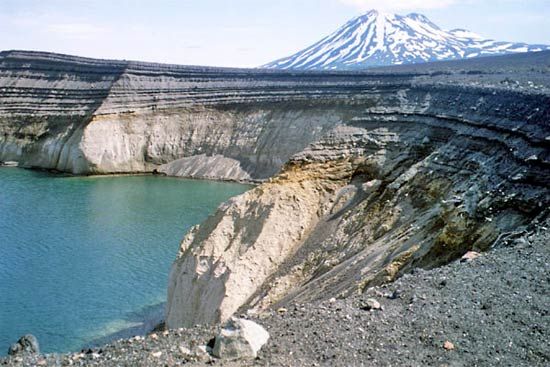
- Geological Transformation: The massive withdrawal of magma caused the summit of nearby Mount Katmai to collapse, forming a deep caldera. Additionally, the eruption nearly leveled surrounding peaks like Broken Mountain and Baked Mountain.
- Regional Consequences: Ash fell up to 30 cm deep as far as 160 km away in Kodiak, and the resulting atmospheric haze significantly reduced sunlight in the northern temperate zone. Several native villages were permanently abandoned due to the devastation.
What are some of the unique geological features found in the Valley of Ten Thousand Smokes?
The Valley of Ten Thousand Smokes, located in Katmai National Park and Preserve, is defined by several unique geological features resulting from the massive 1912 eruption of Novarupta:
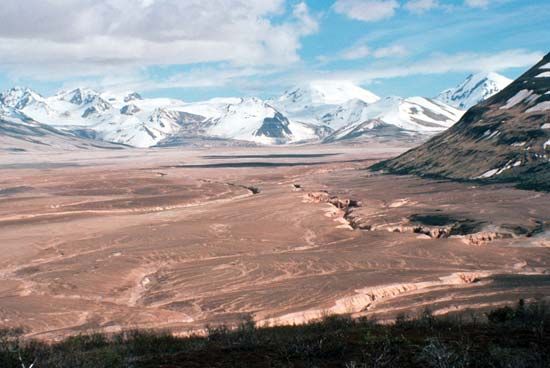
- Ash Deposits: The valley floor is covered by an immense layer of volcanic ash and rock, reaching depths of up to 700 feet (210 meters) in some areas. This material was deposited by pyroclastic flows that filled the V-shaped valley of Knife Creek.19
- Fumaroles: The region was named for the thousands of fumaroles—vents emitting steam and volcanic gases—that once blanketed the valley floor. While these were initially very active and reached temperatures up to 1,200° F (649° C), most have since subsided as the ash deposits cooled.1
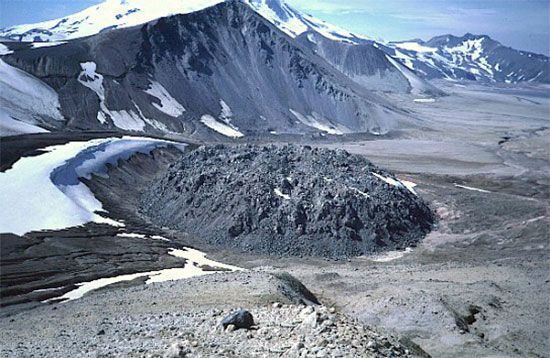
- Novarupta Vent: A new volcanic feature, Novarupta, rose in the valley during the eruption. It is characterized by a lava dome formed from the extrusion of incandescent acidic lava, or rhyolite.1
- Banded Pumice: Geologists have identified unique “hybrid” pumice in the area. This volcanic glass is believed to have formed when molten material from beneath Mount Katmai mingled with the rhyolite erupting from Novarupta.1
Sources
- Valley of Ten Thousand Smokes — Encyclopædia Britannica
- Novarupta — Encyclopædia Britannica
- Valley of Ten Thousand Smokes — Merriam-Webster
- Alaska: Top Questions — Encyclopædia Britannica
- Aleutian Range — Encyclopædia Britannica
- Alaskan mountains - Physiography of the central ranges — Encyclopædia Britannica
- Ring of Fire — Encyclopædia Britannica
- Ring of Fire: Top Questions — Encyclopædia Britannica
- fumarole — Encyclopædia Britannica
- mofette — Encyclopædia Britannica
- caldera — Encyclopædia Britannica
Published on · 3 min read