Soufrière
The term Soufrière, which is French for "sulfur mine," refers to several distinct geographical features in the Caribbean, often associated with volcanic…
What is Soufrière?
The term Soufrière, which is French for “sulfur mine,” refers to several distinct geographical features in the Caribbean, often associated with volcanic activity or sulfurous springs.123
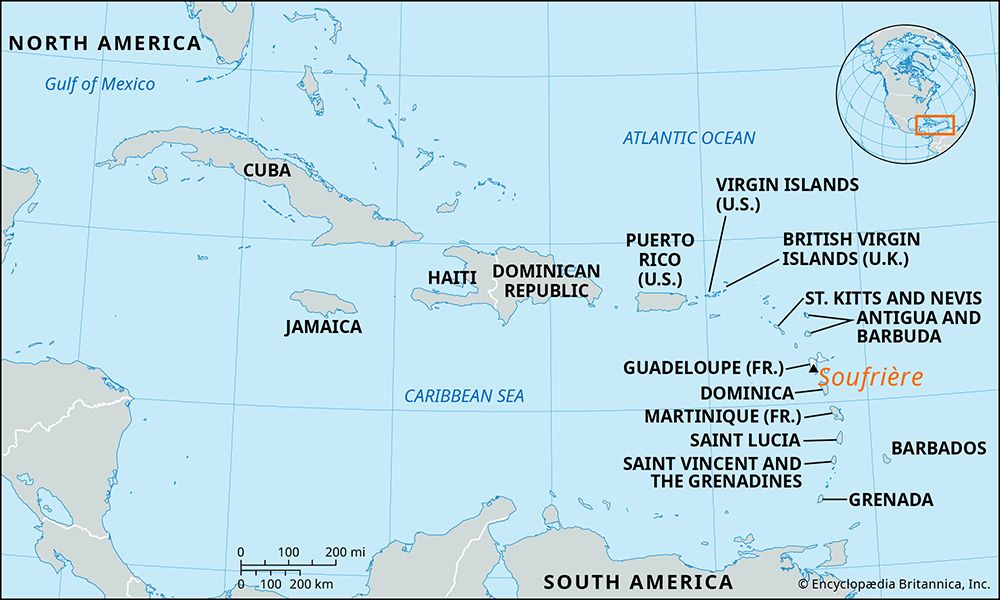
- Volcanoes: There are notable active volcanoes by this name on the islands of Saint Vincent (rising to 4,048 feet) and Guadeloupe (the highest point on Basse-Terre at 4,813 feet). Both have histories of significant eruptions that necessitated major evacuations.143
- Towns: Soufrière is also a picturesque town located on the west coast of Saint Lucia. It serves as a fishing port and agricultural hub, situated near boiling sulfur springs that originated from the ancient Qualibou Caldera.2
Because the name is shared by multiple sites across the Caribbean, it is important to specify the island when discussing these locations.
How do volcanoes form in the Caribbean?
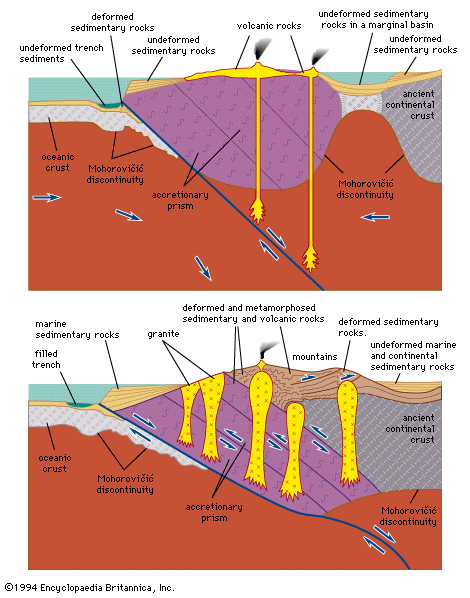
Volcanoes in the Caribbean are primarily formed through the process of subduction, where one tectonic plate is forced beneath another.56
The Lesser Antilles Volcanic Arc
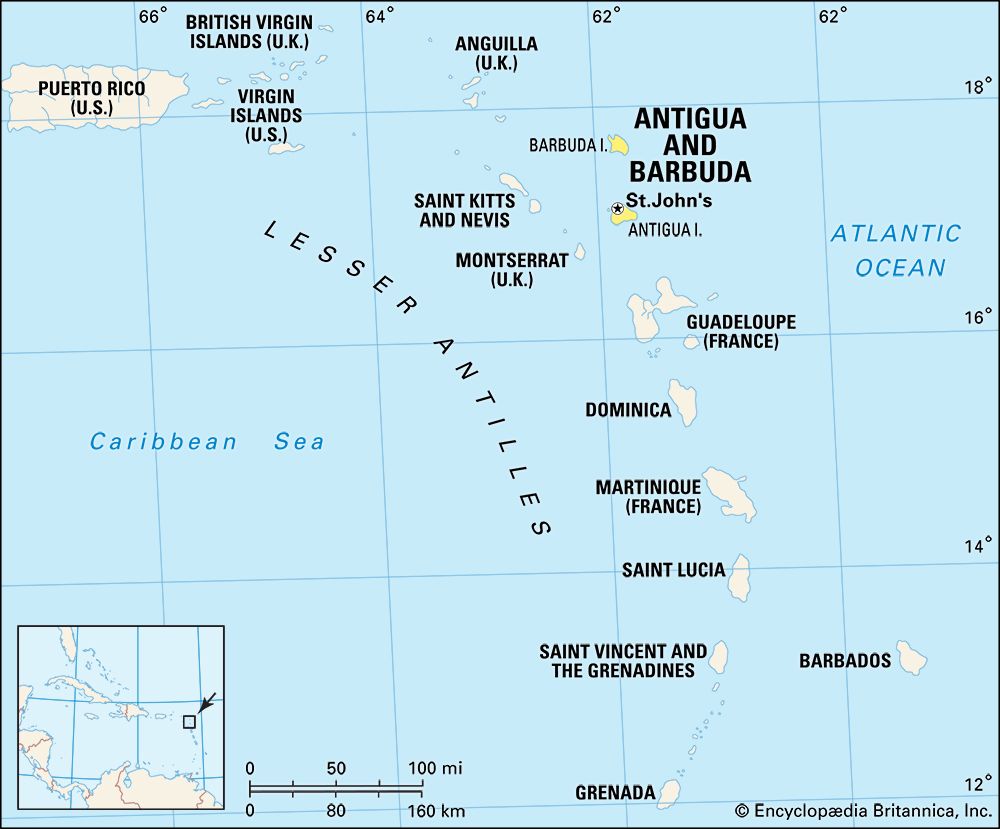
The most prominent example of this process is the Lesser Antilles, a classic island arc formed where the floor of the North Atlantic Ocean underthrusts the Caribbean Plate. As the oceanic plate descends into the mantle, it carries water-rich sediments with it. These compounds act as fluxes, lowering the melting temperature of the mantle rocks and generating magma. This magma, being buoyant, rises through the overriding plate to form volcanoes on the surface.578
Tectonic Context
- Plate Movement: The Caribbean Plate has moved eastward relative to North and South America for tens of millions of years, driving the overthrusting of the seafloor that sustains this volcanic activity.5
- Central America: Similarly, arc volcanism in Central America is driven by the subduction of the Pacific Ocean floor at the Middle America Trench8.
- Explosive Nature: Because subduction-zone magmas often have high viscosity and high gas content, Caribbean volcanoes are frequently characterized by their dangerously explosive nature.8
We could dive deeper into the specific history of the Lesser Antilles or explore how other geological features, such as ridges, were formed in the region.
What is a volcanic caldera?
A caldera is a large, bowl-shaped volcanic depression typically exceeding one kilometer in diameter. While often confused with a volcanic crater, a caldera is significantly larger and forms through a distinct geological process.1213
Rather than being “blown away” by an explosion, a caldera forms when the top of a volcanic cone or group of cones collapses inward. This collapse occurs because the underlying magma reservoir has been rapidly emptied, usually during a violent eruption of pumice and ash, leaving the surface without structural support. The resulting depression is rimmed by steep, inward-facing scarps.1412
Key characteristics include:
- Formation: Triggered by the withdrawal of magma, causing the ground above to drop into the void.1213
- Evolution: Subsequent minor eruptions may build smaller cones on the caldera floor, and the basin may eventually fill with water to form a lake, such as Crater Lake in Oregon.1412
- Distinction: A crater can exist within a caldera, but a caldera cannot exist within a crater.13
Why do many Caribbean islands have similar names?
Many Caribbean islands share similar naming conventions due to the influence of European exploration and colonization, particularly the legacy of Christopher Columbus and the Spanish Empire.
Upon his arrival in the New World, Columbus frequently named islands after religious figures, saints, or the specific day of the week he sighted them. For example, Dominica was named for dies dominica (the Lord’s day) because he spotted it on a Sunday. Similarly, he named the Virgin Islands in honor of St. Ursula and her legendary eleven thousand virgins.1617
As European powers—including England, France, and the Netherlands—competed for control of the West Indies throughout the 17th and 18th centuries, they often retained or adapted these religious names while establishing their own colonial administrations. This layered history of discovery and shifting imperial ownership resulted in the widespread use of “Saint” prefixes and religious nomenclature across the region.18
Sources
- Soufrière — Encyclopædia Britannica
- Soufrière — Encyclopædia Britannica
- Soufrière — Merriam-Webster
- Soufrière — Encyclopædia Britannica
- mountain - The Caribbean chains — Encyclopædia Britannica
- North America - 120 to 30 million years ago — Encyclopædia Britannica
- Caribbean Sea - Geology — Encyclopædia Britannica
- North America - Mesozoic and Cenozoic orogenic belts — Encyclopædia Britannica
- volcano - Subduction volcanoes — Encyclopædia Britannica
- Caribbean Sea - Study and exploration — Encyclopædia Britannica
- volcanism — Encyclopædia Britannica
- Did you know? — Merriam-Webster
- volcano - Major types — Encyclopædia Britannica
- caldera — Encyclopædia Britannica
- volcano - Calderas — Encyclopædia Britannica
- Dominica - History — Encyclopædia Britannica
- Virgin Islands - History of the Virgin Islands — Encyclopædia Britannica
- West Indies - Colonialism of the West Indies — Encyclopædia Britannica
- Antilles — Encyclopædia Britannica
Published on · 3 min read