Warble Fly
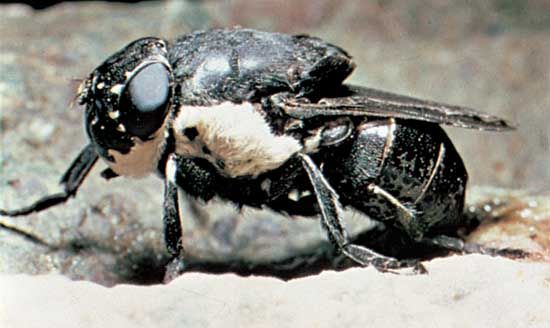
While warble flies (Hypoderma lineatum and H. bovis) are primarily known as parasites of cattle and reindeer, they are distinct from the human bot fly…
Are there any known cases of warble flies affecting humans?
While warble flies (Hypoderma lineatum and H. bovis) are primarily known as parasites of cattle and reindeer, they are distinct from the human bot fly (Dermatobia hominis), which is the species specifically noted for attacking humans, livestock, and deer.12
The term “warble fly” generally refers to members of the subfamily Hypodermatinae that cause characteristic lumps, or warbles, under the skin of their animal hosts. While these specific species focus on cattle, the broader family Oestridae includes various bot flies with diverse host preferences. In the case of the human bot fly, the female utilizes other insects, such as mosquitoes, to transport her eggs to a host; when the insect lands on a human, the warmth of the skin triggers the eggs to hatch, allowing the larvae to penetrate the skin.12
What role do warble flies play in the ecosystem, if any?
While warble flies are primarily recognized as parasitic pests that cause economic losses in livestock—such as reducing the quality of hides, meat, and milk—they occupy a specific niche within the broader order of Diptera.3
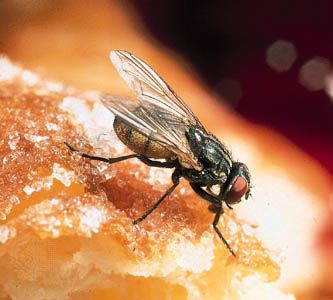
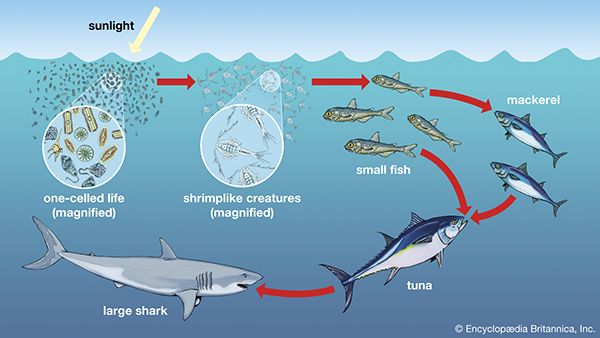
As members of the family Oestridae, warble flies function as internal parasites of mammals, including cattle and reindeer. In the wider context of the ecosystem, flies play a critical role in food chains by serving as a vital food source for various predators, including birds, amphibians, and small mammals. While many other dipteran larvae, such as maggots, are essential for breaking down and redistributing organic matter to provide nutrients for plants and fungi, the warble fly’s primary ecological interaction is its specialized parasitic relationship with its mammalian hosts.3451
Because they are often viewed as harmful to agricultural animals, control measures such as insecticides are frequently employed to manage their populations.3
In which geographic regions are warble flies most commonly found?
Warble flies, specifically the species Hypoderma lineatum and H. bovis, are widely distributed across Europe and North America.3
These insects are part of the family Oestridae, which includes various bot flies found in diverse regions. For instance, while the cattle-infesting warble flies are common in the aforementioned northern regions, other members of the family have different geographic ranges. The human bot fly, for example, is notably responsible for economic losses in tropical America.2
What methods are used to prevent and treat warble fly infestations?
To manage and prevent infestations of the warble fly, which causes significant economic damage to livestock by damaging hides, meat, and milk production, two primary methods are commonly employed in cattle management:3
- Oral Administration of Insecticides: This is a standard approach to treating infestations. By administering systemic insecticides, producers can target the larvae as they migrate through the animal’s body, effectively neutralizing the parasite before it can cause extensive damage to the hide.3
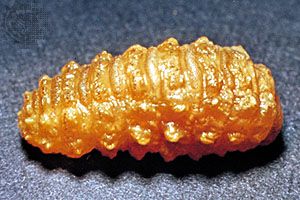
- Manual Removal: In cases where the larvae have already reached the animal’s back and created the characteristic “warble” or lump, the larvae can be manually extracted. This physical removal helps prevent the larvae from completing their development and dropping to the ground to pupate, thereby breaking the fly’s life cycle.3
These interventions are essential for maintaining the commercial value of livestock products in regions where these flies are prevalent.3
Sources
- warble fly — Merriam-Webster
- bot fly — Encyclopædia Britannica
- warble fly — Encyclopædia Britannica
- Diptera: Top Questions — Encyclopædia Britannica
- Diptera - Ecology — Encyclopædia Britannica
Published on · 2 min read