Water Shrew
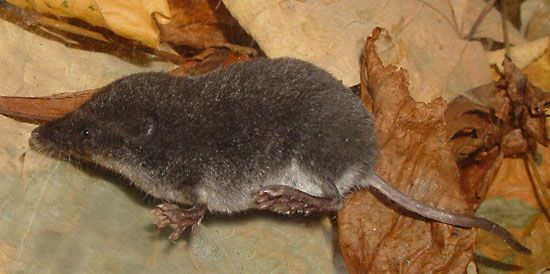
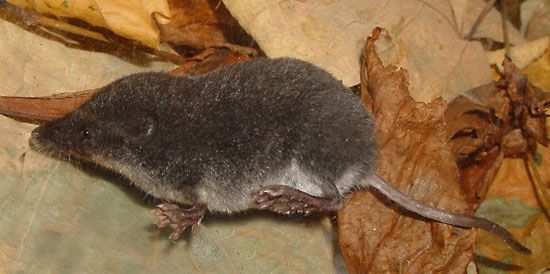
Water shrews are amphibious shrews characterized by a broad, fleshy muzzle, a large chest, and long hind legs and digits. Their physical adaptations for…
What are the distinguishing physical characteristics of water shrews?
Water shrews are amphibious shrews characterized by a broad, fleshy muzzle, a large chest, and long hind legs and digits. Their physical adaptations for aquatic life include:1
- Fur: They possess soft, dense, water-repellent fur that is typically blackish with paler or white underparts. The longer hairs are grooved and ridged, which helps trap air for insulation and buoyancy.1
- Sensory Organs: They have small eyes—sometimes covered by skin—and ears hidden within their fur. They rely on abundant, sensitive whiskers to locate prey underwater by touch rather than sight, smell, or hearing.12
- Locomotion: While they use all four feet to swim, their hind feet provide most of the propulsion. Some species, such as the elegant water shrew, feature webbed feet, stiff-haired fringes, and disklike palm pads to enhance agility and surface area.1
- Tail: Their tails are generally long and finely furred, with some species exhibiting specialized fringes that form a rudderlike shape.1
How have water shrews adapted to their semi-aquatic lifestyle?
Water shrews have evolved specialized physical and sensory adaptations to thrive in semi-aquatic environments. To manage heat loss while submerged, they possess dense, water-repellent fur composed of grooved, ridge-containing hairs that trap insulating air bubbles.1
Their sensory systems are uniquely tuned for underwater foraging. Because their vision and hearing are limited—with some species like the elegant water shrew being entirely blind and earless—they rely on abundant, highly sensitive whiskers to locate prey through touch.12
Locomotion is facilitated by large chests and powerful hind legs. While they use all four feet to swim, the hind feet provide the primary propulsive force. Certain species exhibit further aquatic specializations, such as:
- Webbing and Fringes: Digits are often fringed with stiff hairs and webbed to increase surface area for swimming.1
- Rudders: Some species have tail fringes that form a rudderlike shape to aid navigation.1
- Surface Tension: The North American water shrew can even skitter across the water’s surface, supported by air bubbles trapped in its feet and toe fringes.1
- Agility: Specialized palm pads enhance movement on wet, slippery surfaces.1
What is the diet of water shrews, and how do they hunt for food?
Water shrews are insectivores that primarily forage in clear, cold streams and rivers, though their specific diets vary by species and level of aquatic specialization.1
Hunting Methods
Water shrews do not rely on sight, smell, or hearing to hunt. Instead, they utilize their abundant, highly sensitive whiskers to locate prey underwater through touch. Their brains feature enlarged nerves specifically dedicated to processing this tactile information.1
Dietary Habits
The diet of a water shrew depends heavily on its habitat and physical adaptations:
- Specialized Species: The elegant water shrew, which is highly adapted for an aquatic life, feeds exclusively on aquatic insect larvae and nymphs.1
- Generalist Species: The North American water shrew, which is less specialized, maintains a more diverse diet. Approximately half of its food intake consists of aquatic insects, while the remainder includes terrestrial insects, earthworms, snails, slugs, vegetation, mice, fish, and salamanders.1
These animals are remarkably efficient hunters, with some species capable of remaining submerged for 45 seconds or more to secure their prey.1
What special adaptations do water shrews have for swimming and diving?
Water shrews have evolved several specialized physical adaptations to navigate and survive in semi-aquatic environments. To manage heat loss while submerged, they possess dense, water-repellent fur; unlike terrestrial shrews, their hairs are grooved and ridge-containing, which traps insulating air bubbles against the skin.1
For locomotion, water shrews utilize all four feet to swim, though the hind feet provide the primary propulsive force. Highly specialized species, such as the elegant water shrew, exhibit further adaptations including:
- Webbing and Fringes: Digits are often webbed and fringed with stiff hairs to increase surface area for swimming.1
- Rudders: Tail fringes may coalesce into a rudderlike shape to aid navigation.1
- Surface Tension: Some species, like the North American water shrew, can skitter across the water’s surface by utilizing air bubbles trapped in their feet and toe fringes.1
- Agility: Large, disklike palm pads enhance movement on wet, slippery surfaces.1
Additionally, they possess specialized sensory systems, relying on abundant, sensitive whiskers to locate prey through touch, as their vision and hearing are often reduced or absent.12
Sources
- water shrew — Encyclopædia Britannica
- shrew - Form and function — Encyclopædia Britannica
Published on · 3 min read