How Much Does an Elephant Weigh?
The weight of an elephant varies significantly depending on the species. There are three recognized species of elephants, each with distinct size ranges:
How much does an elephant weigh?
The weight of an elephant varies significantly depending on the species. There are three recognized species of elephants, each with distinct size ranges:
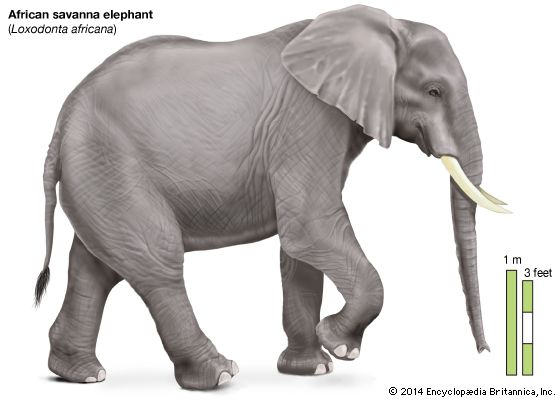
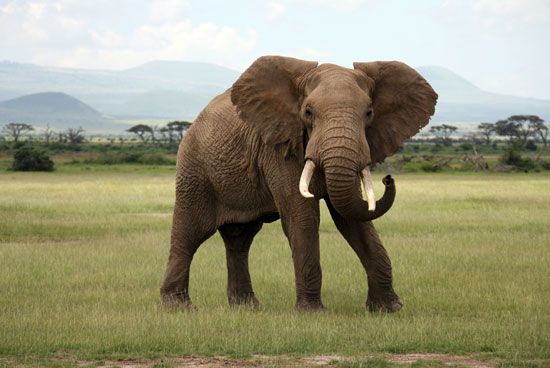
- African bush elephant (Loxodonta africana): As the largest living land animal, this species typically weighs between 9,900 and 13,500 pounds (4,500–6,100 kg), with some large males reaching up to 24,000 pounds (10,886 kg).1
- Asian elephant (Elephas maximus): These elephants generally weigh between 7,500 and 11,500 pounds (3,400–5,200 kg), though some individuals may range from 4,400 to 15,000 pounds (2,000–6,800 kg).234
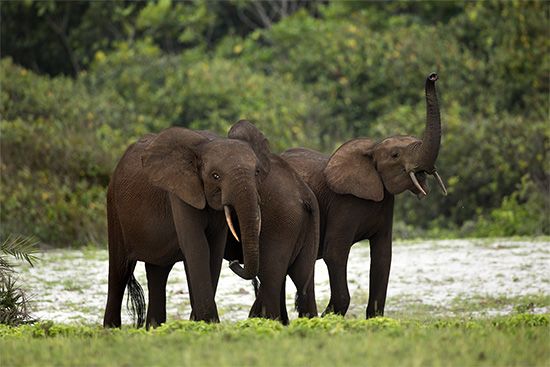
- African forest elephant (Loxodonta cyclotis): This is the smallest of the three species, typically weighing between 4,000 and 12,000 pounds (1,800–5,400 kg).1
For context, a newborn elephant weighs approximately 220 pounds (100 kg).5
What are the main physical differences between African and Asian elephants?
African and Asian elephants can be distinguished by several key physical characteristics:
- Ears: African elephants have much larger ears that are shaped somewhat like the continent of Africa, which helps them dissipate body heat. Asian elephants have smaller, rounder ears.42
- Head Shape: African elephants possess a rounded, singular-domed head. In contrast, Asian elephants have a twin-domed head, characterized by a visible divot line running up the center.426
- Trunk Projections: At the tip of the trunk, African elephants have two small, flaplike projections used for grasping and communication, whereas Asian elephants have only one.26
- Tusks: While both male and female African elephants can grow tusks, only male Asian elephants develop them, and even then, not all males do.42
- Size: African bush elephants are generally the largest, reaching up to 9 tons, while Asian elephants are typically smaller, weighing around 6 tons.4
These physical differences are adaptations to their respective environments and evolutionary histories.42
How do elephants use their trunks for daily survival?
The elephant trunk, or proboscis, is a highly versatile organ essential for daily survival. Anatomically a combination of the nose and upper lip, it contains nearly 150,000 muscle fascicles, providing the strength to lift heavy loads and the dexterity to perform delicate tasks.78
Essential Functions for Survival
- Feeding and Hydration: Elephants use their trunks to grasp grasses, leaves, and fruits, placing them into their mouths. For drinking, they suck up as much as 10 liters (2.6 gallons) of water and squirt it into their mouths.78
- Sensory and Communication: The trunk acts as an “olfactory periscope,” allowing elephants to sniff the air for information or danger. It is also used to produce various sounds for herd communication and to engage in “trunk-shakes” for social bonding.78
- Protection and Maintenance: Elephants spray water, mud, and dust onto their bodies to protect themselves from the sun and insect bites. Additionally, they use the trunk for breathing, as it is their primary respiratory pathway.78
- Tactile Exploration: Specialized whiskers on the trunk provide detailed environmental data, helping the elephant determine the location and texture of objects.8
Why are elephants considered an endangered species?
All living elephant species are currently classified as endangered or, in the case of the African forest elephant, as a critically endangered species by the International Union for Conservation of Nature and Natural Resources (IUCN). Their decline is driven by several critical factors:910
- Habitat Loss: As human populations expand, elephant habitats are increasingly fragmented or destroyed. This loss of space forces elephants into closer proximity with humans, leading to human-elephant conflict when animals consume or damage agricultural crops.26
- Poaching: The commercial demand for ivory remains a primary threat. Poachers target elephants for their tusks, a practice that has historically caused massive population crashes, such as the reduction of African elephant numbers by more than half between 1979 and 1989.9102
- Human-Related Hazards: Beyond direct poaching, elephants face threats from collisions with trains and the use of individuals as work animals in industries like logging.26
Protecting these intelligent, social animals is a moral imperative, as their survival is essential to the health of the ecosystems they inhabit.92
Sources
- How much does an elephant weigh? — Encyclopædia Britannica
- Asian elephant — Encyclopædia Britannica
- elephant — Encyclopædia Britannica
- What’s the Difference Between Asian and African Elephants? — Encyclopædia Britannica
- elephant - Reproduction and life cycle — Encyclopædia Britannica
- Asian elephant: Top Questions — Encyclopædia Britannica
- What are elephant trunks used for? — Encyclopædia Britannica
- elephant - The trunk (proboscis) — Encyclopædia Britannica
- elephant: Top Questions — Encyclopædia Britannica
- elephant - Conservation — Encyclopædia Britannica
Published on · 3 min read