Weimaraner
The Weimaraner is highly regarded for its trainability, often considered one of the easier breeds to train because it learns quickly and generally possesses…

How does the Weimaraner compare to other hunting dog breeds in terms of trainability and family compatibility?
The Weimaraner is highly regarded for its trainability, often considered one of the easier breeds to train because it learns quickly and generally possesses a strong desire to please its owners. While it can occasionally be distracted, its intelligence and eagerness make it a versatile participant in organized sports such as obedience, agility, and tracking.1
Regarding family compatibility, the Weimaraner is famously loving and loyal, making it a fun companion for children and generally gentle in their presence. However, it is an energetic and boisterous breed that requires at least an hour of daily exercise; without sufficient activity, it may become overly active indoors. Compared to many other sporting breeds, the Weimaraner is notably more protective and less friendly toward strangers and other dogs, serving effectively as a watchdog. It is an ideal choice for active adults who enjoy outdoor activities, though it may prove too energetic for some seniors unless they have assistance with its exercise needs.1
What are the physical characteristics of the Weimaraner dog breed?
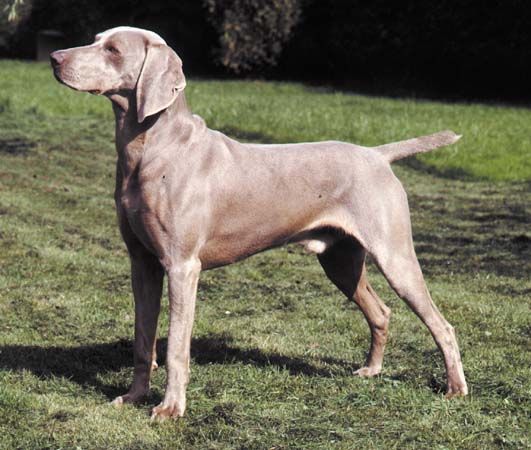
The Weimaraner is a graceful, medium-to-large sporting dog characterized by an alert and well-balanced stance. Its physical attributes include:13
- Height: 23–27 inches (58–68.5 cm) at the withers.1
- Weight: 55–90 pounds (25–40 kg).1
- Coat: A distinctive, short, and sleek coat that is mouse-gray or silver-gray in color.1
- Head and Features: The breed has hanging ears and eyes that can be blue, gray, or amber.1
Notably, Weimaraner puppies are born with stripes, which fade away within a few days of birth. While longhaired varieties exist, they are widely considered a separate breed. The dog is often referred to as the “Gray Ghost” due to its silvery-gray appearance and its stealthy hunting abilities.1

What are the typical personality traits and temperament of Weimaraners?
The Weimaraner is a spirited and multifaceted breed known for its distinct personality. It is characterized as energetic, bold, courageous, playful, and inquisitive. Often described as an “in your face” dog, the Weimaraner actively demands attention from its owners.1
Regarding its temperament, the breed is famously loving and loyal, making it a fun and generally gentle companion for children. However, its high energy levels mean it can become boisterous indoors if it does not receive at least an hour of daily exercise. Unlike many other sporting breeds, the Weimaraner is notably more protective and tends to be less friendly toward strangers and other dogs, which makes it an effective watchdog. While these traits are widely accepted generalizations, it is important to remember that individual dogs may vary in their specific behavior and temperament.1
Where did the Weimaraner breed originate, and what was its original purpose?
The Weimaraner breed originated in Germany during the early 19th century. It was developed by the nobles of the court of Weimar specifically for the purpose of hunting big game.1
Over time, the breed’s utility evolved, and it was later trained to serve as a bird dog and retriever for hunting activities. Today, the breed is recognized as a versatile sporting dog that remains highly valued for its hunting prowess, as well as its roles as a loyal companion and a protective watchdog.1
Sources
- Weimaraner — Encyclopædia Britannica
- dog - Working dogs — Encyclopædia Britannica
- sporting dog — Encyclopædia Britannica
Published on · 2 min read