Wessel Islands
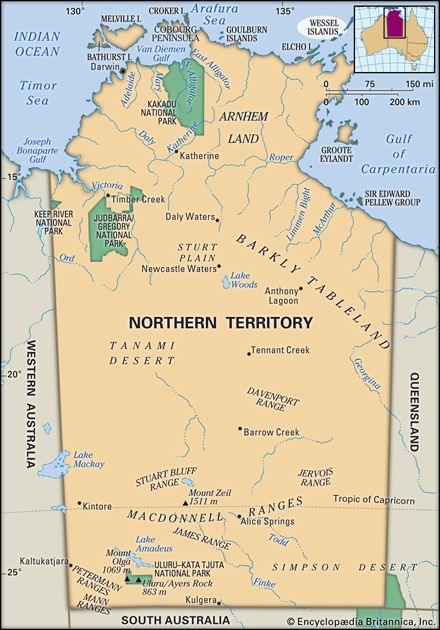
The Wessel Islands are a chain of small islands extending 75 miles (120 km) northeast from the Napier Peninsula in the Northern Territory of Australia into…
What is Wessel Islands?
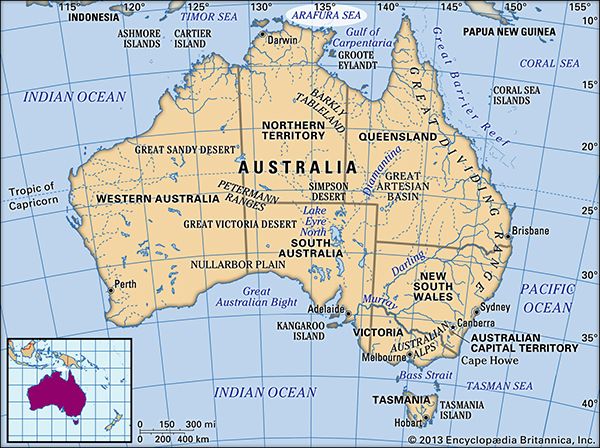
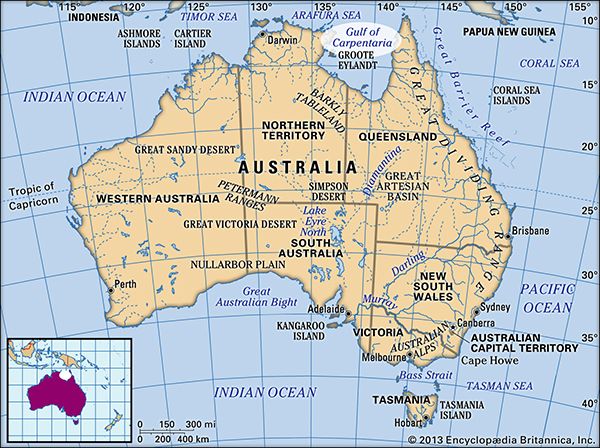
The Wessel Islands are a chain of small islands extending 75 miles (120 km) northeast from the Napier Peninsula in the Northern Territory of Australia into the Arafura Sea.1
It is important to distinguish these from the Wellesley Islands, which are a separate group located off the coast of Queensland in the Gulf of Carpentaria. The Wessel Islands were named after a Dutch ship that explored the region in 1636, and their northernmost point, Cape Wessel, serves as the western gateway to the Gulf of Carpentaria.12
The largest island in the chain, Marchinbar, contains undeveloped bauxite deposits. The entire group is situated within the Arnhem Land Aboriginal Reserve and is notable for caves featuring indigenous art.1
What is the significance of the Arnhem Land Aboriginal Reserve?
The Arnhem Land Aboriginal Reserve is a significant region in the Northern Territory of Australia that serves as a protected area for Aboriginal people. Its importance is defined by several key factors:34
- Cultural Preservation: The region is a vital center for indigenous culture, renowned for its traditional arts, including bark and rock paintings, carvings, and basketry. These artistic traditions have gained significant international recognition and help maintain the cultural heritage of the area’s inhabitants.5
- Historical Continuity: Occupied by Aboriginal peoples since the late Pleistocene, the land contains numerous sites with ancient rock carvings, providing a deep historical record of human presence in the region.3
- Land Stewardship: As a large reserve, it functions as a sparsely populated territory that allows for the continuation of traditional lifestyles and land management practices.34
- Economic and Environmental Context: While the region remains a protected reserve, it also contains significant natural resources, including bauxite and uranium, which have become important to the local economy since World War II.3
How did Dutch exploration influence the naming of places in Australia?
Dutch explorers played a foundational role in naming various regions of Australia during the 17th century, often commemorating their ships, patrons, or the circumstances of their discoveries.
Key examples of Dutch naming include:
- New Holland: The Dutch collectively referred to the newly encountered landmass as New Holland, a name that persisted for much of the continent for many years.67
- Van Diemen’s Land: Abel Tasman named the island now known as Tasmania after Anthony van Diemen, the Governor-General of the Dutch East Indies who commissioned his voyage.67
- Cape Keer-Weer: Willem Jansz named this location on the Cape York Peninsula in 1605; the name translates to “turn-again,” marking the point where his expedition turned back.67
- Shark Bay: Named by Dirck Hartog following his 1616 landing, this site in Western Australia remains one of the most famous landmarks associated with early Dutch contact.67
What are the primary uses and characteristics of bauxite?
Bauxite is a rock composed primarily of a mixture of hydrous aluminum oxides and serves as the principal ore of aluminum.89
Characteristics
Bauxite varies significantly in physical appearance based on its geologic history and composition. It can range from soft and structureless to hard, dense, and pisolitic (pealike). Its color is equally diverse, spanning yellowish white, gray, pink, dark red, or brown, depending on the presence of impurities like iron oxide, silica, and titania. It is typically found at or near the Earth’s surface, often in tropical or subtropical climates that provided the heavy rainfall and drainage necessary for its formation.9810
Primary Uses
- Aluminum Production: Approximately 90 percent of all mined bauxite is refined into alumina (aluminum oxide) via the Bayer process, which is then smelted to produce metallic aluminum.111012
- Industrial Applications: The remaining 10 percent is utilized in various industries, including the production of abrasives, refractories, and proppants used in crude oil recovery. Alumina itself is also a significant chemical used in the ceramic and petroleum sectors.1012
Sources
- Wessel Islands — Encyclopædia Britannica
- Wellesley Islands — Encyclopædia Britannica
- Arnhem Land — Encyclopædia Britannica
- Northern Territory - The arts — Encyclopædia Britannica
- Arnhem Land — Merriam-Webster
- Australia - The Dutch — Encyclopædia Britannica
- Colonization of Australia - Early exploration — Encyclopædia Britannica
- aluminum processing - Ores — Encyclopædia Britannica
- aluminum processing - Extraction and refining — Encyclopædia Britannica
- bauxite — Encyclopædia Britannica
- aluminum processing - Mining — Encyclopædia Britannica
- aluminum processing - Refining the ore — Encyclopædia Britannica
Published on · 3 min read