Wellesley Islands
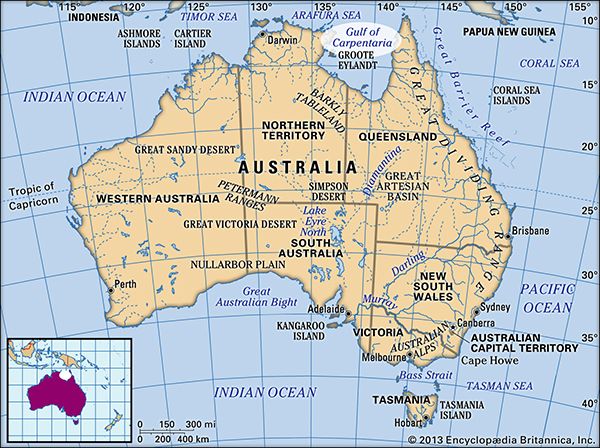
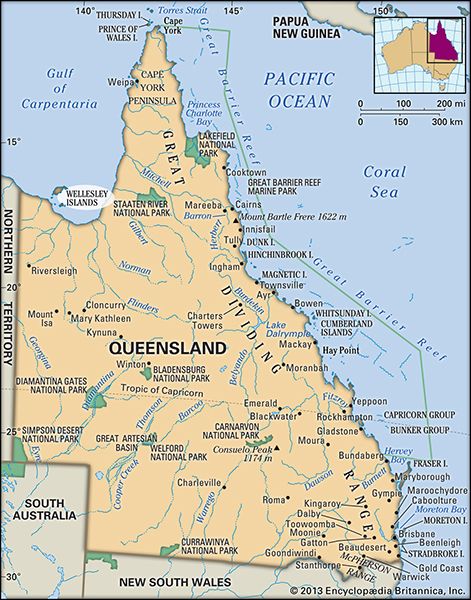
The Wellesley Islands are a group of islands located off the northwestern coast of Queensland, Australia, within the Gulf of Carpentaria.
What is Wellesley Islands?
The Wellesley Islands are a group of islands located off the northwestern coast of Queensland, Australia, within the Gulf of Carpentaria.1
Sighted by the Dutch navigator Abel Tasman in 1644, the islands were later charted by Matthew Flinders between 1802 and 1803 and named in honor of the Marquess Wellesley, the governor-general of India at the time. The islands are generally characterized by rocky or sandy terrain covered in scrub and mangrove forests.1
The group is divided into two main sections:
- Northern Group: Mornington is the largest island, spanning 250 square miles (648 square km). It features an airport and a mission station for Aborigines.1
- Southern Group: This area includes Bentinck and Sweers, which are the largest islands in the southern cluster.1
Who was Matthew Flinders and what were his contributions to Australian exploration?
Matthew Flinders (1774–1814) was a distinguished English navigator and cartographer whose work was instrumental in defining the geography of Australia. Entering the Royal Navy in 1789, he became one of the most significant post-settlement explorers of the continent.56
His primary contributions include:
- Circumnavigation and Charting: Flinders conducted extensive surveys of the Australian coastline. In 1798, alongside George Bass, he circumnavigated Tasmania, proving it was an island separated from the mainland by what is now known as the Bass Strait.567
- Defining the Continent: As commander of the Investigator, he surveyed the entire southern coast and later circumnavigated the Australian mainland (1801–1803). His efforts left no doubt that Australia was a single landmass.56
- Naming Australia: Flinders was a strong advocate for replacing the name “New Holland” with “Australia,” a change that received official support in 1817.6
His legacy is documented in his work, A Voyage to Terra Australis, published shortly before his death.5
What is the significance of the Gulf of Carpentaria in Australian geography?
The Gulf of Carpentaria is a significant shallow, rectangular inlet of the Arafura Sea that indents Australia’s northern coast. Geologically, it is a rare modern example of an epicontinental sea—a shallow sea situated atop a continent—which provides a unique window into Earth’s historical geography.8
The region’s significance is defined by several key factors:
- Economic Resources: The gulf has become internationally important due to its vast mineral and biological wealth. It contains massive deposits of bauxite at Weipa and Gove Peninsula, as well as significant manganese deposits on Groote Eylandt. Additionally, it supports a major prawn fishing industry centered in Karumba.8
- Regional Connectivity: The surrounding Gulf Country is a vital lowland region for the Australian cattle industry, with rivers supporting extensive breeding and fattening operations.9
- Geomorphology: The gulf floor is part of a shared continental shelf between Australia and New Guinea, characterized by a very low gradient and complex estuary systems that create unique salt pan environments.estuary) systems that create unique salt pan environments.8
How do mangrove forests support island ecosystems?
Mangrove forests are essential to the health and stability of island ecosystems, acting as a vital buffer between marine and terrestrial environments.1011
Their contributions include:
- Coastal Protection: Mangroves shield shorelines from storm surges, flooding, and damaging winds. By trapping sediments with their complex root systems, they reduce erosion and stabilize the land, which can significantly decrease the impact of severe weather events like hurricanes on coastal communities.1011
- Water Quality: Their roots act as natural filters, trapping pollutants and sediments. This process improves water clarity, which is crucial for maintaining the health of nearby coral reefs and seagrass beds.1011
- Biodiversity and Nurseries: Mangroves serve as critical habitats and nursery grounds for a wide variety of fish, crabs, shrimp, and shellfish. They also provide nesting sites for many birds, supporting the overall biodiversity of the island.1011
Because they support so many species and provide such essential services, mangroves are considered keystone species that allow life to flourish in otherwise challenging coastal conditions.1011
We could dive deeper into how mangroves help mitigate climate change or explore the specific adaptations that allow them to thrive in saltwater.
Sources
- Wellesley Islands — Encyclopædia Britannica
- Wessel Islands — Encyclopædia Britannica
- Wellesley — Encyclopædia Britannica
- Wellesley — Merriam-Webster
- Matthew Flinders — Encyclopædia Britannica
- Australia - Later explorations — Encyclopædia Britannica
- Today in History—February 5: The Life and Disappearance of George Bass — Encyclopædia Britannica
- Gulf of Carpentaria — Encyclopædia Britannica
- Gulf Country — Encyclopædia Britannica
- mangrove: Top Questions — Encyclopædia Britannica
- Mangroves Matter - Learn more — Encyclopædia Britannica
- Amazing Mangroves — Encyclopædia Britannica
Published on · 3 min read