Why Do Snakes Flick Their Tongues?
Snakes flick their tongues primarily to "smell" their environment, a behavior essential for hunting, navigation, and social interaction. Contrary to…
Why do snakes flick their tongues?
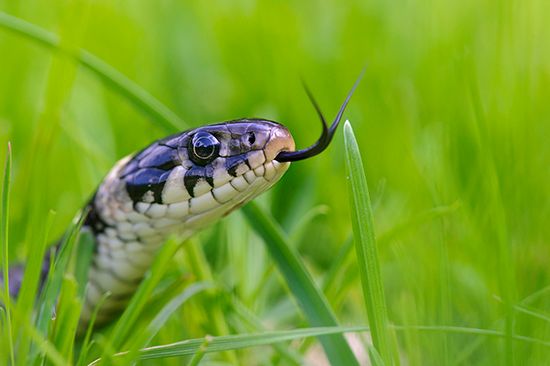
Snakes flick their tongues primarily to “smell” their environment, a behavior essential for hunting, navigation, and social interaction. Contrary to historical misconceptions that the tongue is a venomous weapon, it serves as a sophisticated sensory tool.1
When a snake flicks its tongue, it captures scent particles from the air or ground. Upon retraction, the tongue deposits these molecules onto paired pads on the floor of the mouth, which then transfer the particles to the Jacobson’s organ (or vomeronasal organ) located on the roof of the mouth. This specialized chemoreceptor analyzes the chemical information and transmits sensory messages to the brain.12
The forked shape of the tongue provides a “stereo” sense of smell. Each tip samples odor molecules from different locations, allowing the snake to detect directional chemical gradients. This capability enables snakes to track prey trails, identify potential mates, and detect predators or environmental threats with high precision, even in total darkness.12
How do pit vipers use heat-sensing organs to hunt in the dark?
Pit vipers possess specialized heat-sensing organs, known as facial pits, located on their heads just below and behind the nostrils. These pits consist of two chambers separated by a thin membrane that is densely supplied with nerve fibers and blood vessels. This structure allows the snakes to function as highly sensitive infrared detectors, capable of identifying temperature differences of less than 0.6 °C (1.1 °F).2
While these snakes may initially detect the presence of prey through ground vibrations, smell, or sight, the pit organs are crucial for hunting in the dark. Because many pit vipers are nocturnal and feed on warm-blooded animals like birds and mammals, these infrared receptors allow them to confirm the identity of their prey and aim their strikes with high accuracy once the target is within range.2
What is the flehmen response in mammals and how is it similar to a snake’s tongue flicking?
The flehmen response is a specialized behavior observed in many mammals, such as cats, elephants, and bats, used to investigate chemical signals like pheromones. During this behavior, an animal curls back its lips and opens its mouth, often while inhaling, to draw scent molecules toward the Jacobson’s organ—a sensory structure located on the roof of the mouth.456
This behavior is functionally similar to a snake’s tongue flicking because both serve as mechanisms to transport environmental chemicals to the Jacobson’s organ for analysis. While mammals use the flehmen response to facilitate airflow or fluid movement into the organ, snakes rely on their tongues to capture scent particles from the environment and deliver them to the organ’s openings on the roof of the mouth.56
Both strategies allow animals to bypass the primary olfactory system to gather nuanced information about their surroundings, such as mating readiness, territorial boundaries, and prey detection, effectively acting as a bridge between taste and smell.456
Why do some reptiles, like turtles, lack a functional Jacobson’s organ?
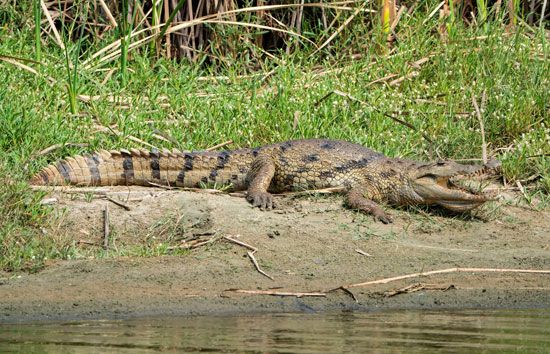
The Jacobson’s organ, also known as the vomeronasal organ, is a chemosensory structure found in many tetrapods that detects non-airborne chemical signals, such as pheromones. While this organ is well-developed in groups like snakes and lizards, it is absent or substantially underdeveloped in several other groups, including turtles, birds, and crocodilians.375
The evolutionary loss of a functional Jacobson’s organ in turtles is a result of their specific evolutionary trajectory. While the organ originates in the embryonic stages of all tetrapods as an outpocketing of the nasal sac, it does not persist in a functional state in adult turtles. Instead, turtles rely on other sensory modalities, such as vision and a general sense of smell, to navigate their environments, locate food, and avoid predators. Unlike snakes, which have evolved to rely heavily on the vomeronasal system for tracking prey and social communication, turtles have not developed this specialized chemosensory pathway to the same degree.358
Sources
- Why do snakes flick their tongues? — Encyclopædia Britannica
- reptile - Chemoreception — Encyclopædia Britannica
- Jacobson’s organ — Encyclopædia Britannica
- Why do cats open their mouths after smelling something? — Encyclopædia Britannica
- Chemoreception - Terrestrial vertebrates — Encyclopædia Britannica
- Chemoreception - Pheromones — Encyclopædia Britannica
- lizard - Evolution and classification — Encyclopædia Britannica
- vomeronasal organ — Merriam-Webster
- turtle - Form and function — Encyclopædia Britannica
Published on · 3 min read