Younger Dryas
The Younger Dryas was an abrupt cooling period that occurred between approximately 12,900 and 11,600 years ago, interrupting the warming trend at the end of…
What is the Younger Dryas?
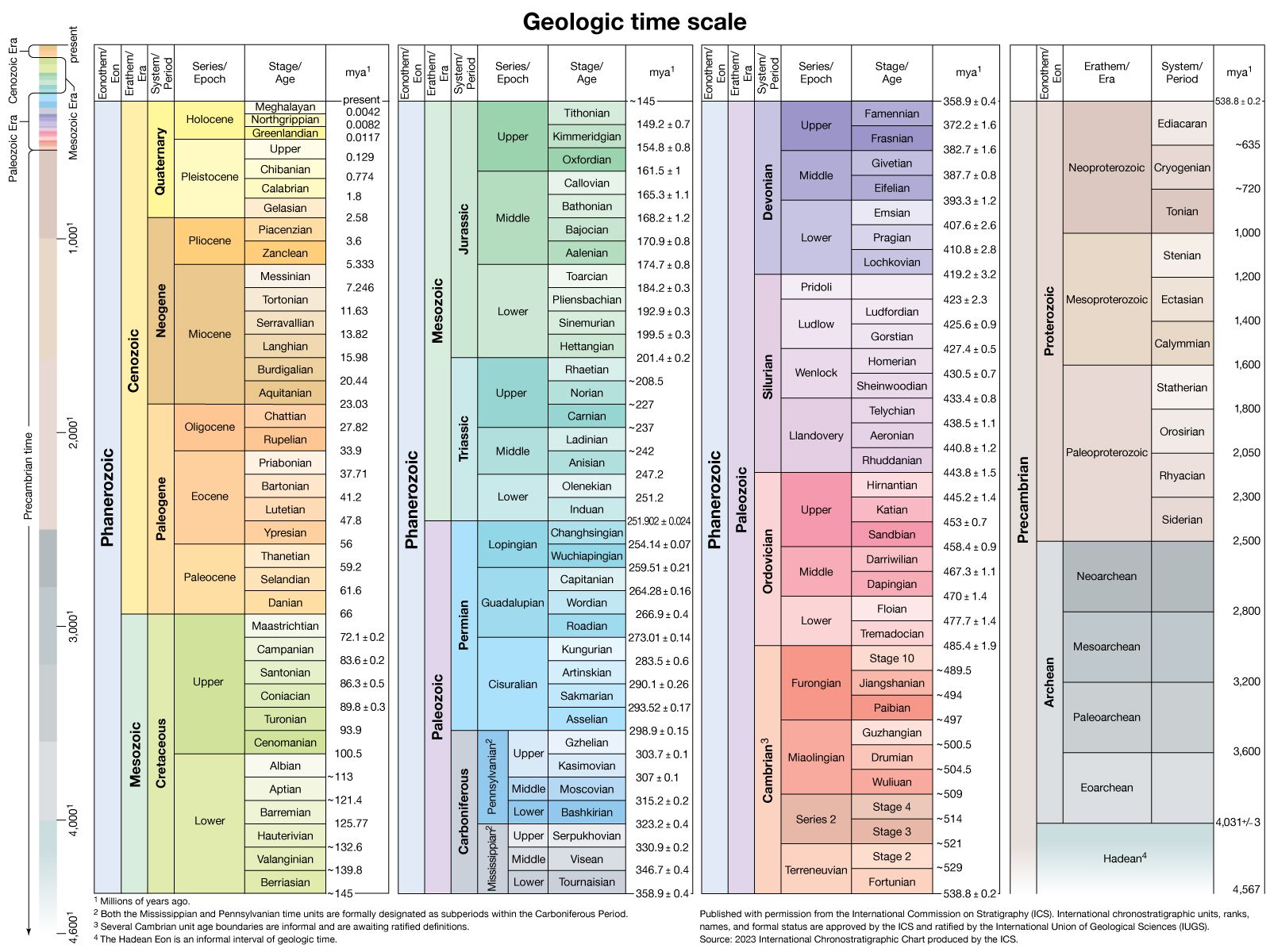
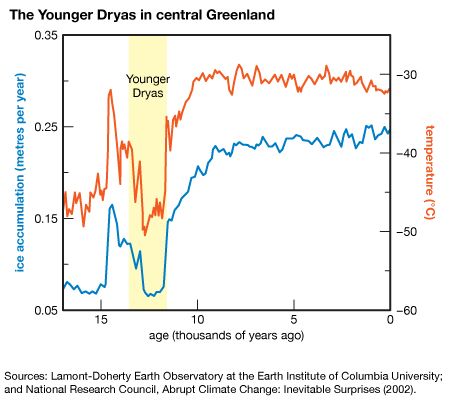
The Younger Dryas was an abrupt cooling period that occurred between approximately 12,900 and 11,600 years ago, interrupting the warming trend at the end of the Pleistocene Epoch. During this interval, parts of Europe and North America experienced a return to ice age conditions, characterized by the expansion of glaciers and the replacement of forests with tundra vegetation.1
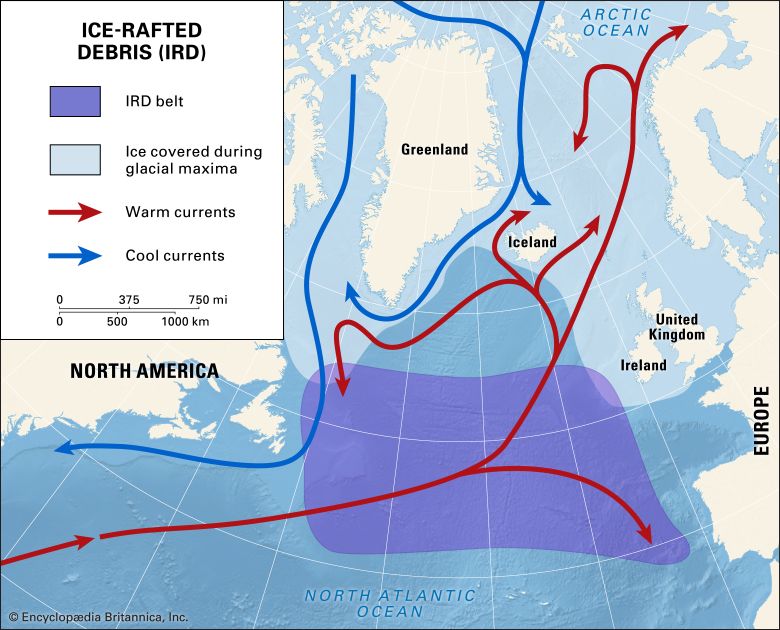
While the exact cause remains a subject of scientific debate, the leading hypothesis suggests that a massive discharge of fresh water from Lake Agassiz into the North Atlantic disrupted thermohaline circulation, a system responsible for distributing global heat. Other proposed factors include volcanic eruptions, comet impacts, or changes in atmospheric circulation.1
The period ended as rapidly as it began, leading into the Holocene Epoch and the modern climate. Interestingly, while the Northern Hemisphere cooled, many tropical and Southern Hemisphere regions experienced warmer and wetter conditions.1
When did the Younger Dryas period occur?
The Younger Dryas was a cool climate interval that occurred between approximately 12,900 and 11,600 years ago. This period interrupted the warming trend that was taking place in the Northern Hemisphere at the end of the Pleistocene Epoch, lasting for roughly 1,300 years before giving way to the Holocene Epoch.1
What major climate changes happened during the Younger Dryas?
The Younger Dryas was a period of abrupt climatic reversal that interrupted the warming trend at the end of the Pleistocene Epoch. The major climate changes associated with this interval include:
- Abrupt Cooling: The Northern Hemisphere, particularly the North Atlantic region, experienced a rapid return to ice age conditions. Central Greenland temperatures are estimated to have been nearly 14 °C (24.5 °F) colder than today.1
- Glacial Expansion: Alpine glaciers in the Northern Hemisphere expanded, and continental ice sheets—including the Laurentide and Scandinavian ice sheets—advanced.1
- Vegetation Shifts: In many areas, forests were replaced by tundra vegetation, reflecting the shift to a colder climate.1
- Regional Variability: While the North Atlantic cooled, many regions in the tropics and the Southern Hemisphere experienced warmer and wetter conditions, with evidence of declining glacier coverage in the Andes and the Southern Alps of New Zealand.1
How did the Younger Dryas affect plants and animals?
The Younger Dryas, a period of abrupt cooling in the Northern Hemisphere, significantly altered ecosystems and influenced the distribution of plants and animals.
Impact on Vegetation
As temperatures plummeted, the environment in many regions underwent a dramatic transformation. Evidence from pollen records indicates that forests were replaced by tundra vegetation in areas of Europe and North America. The period is named after Dryas octopetala, a wildflower typical of cold, open Arctic environments, which thrived as the climate shifted toward ice age conditions. Additionally, shifts in plant communities in the southwestern United States have been linked to the onset of prolonged cooler and drier conditions during this interval.1
Impact on Fauna
The environmental instability of the late Pleistocene, which included the Younger Dryas, is closely associated with the extinction of many large animal species. While the exact cause of these extinctions remains a subject of debate—with theories ranging from climate change to human impact—researchers have noted that the formation of new biotic communities at the end of the Pleistocene likely contributed to the loss of many faunal forms. The transition away from the more equable, less seasonal climate of the late Pleistocene forced species to adapt to new, more modern biotic conditions.3
Sources
- Younger Dryas — Encyclopædia Britannica
- Little Ice Age — Encyclopædia Britannica
- Holocene Epoch - Faunal change — Encyclopædia Britannica
- Holocene Epoch - “ Medieval ” Cool Period — Encyclopædia Britannica
Published on · 3 min read