What Causes Sinkholes?
Sinkholes are surface depressions primarily caused by the dissolution of soluble bedrock, such as limestone, by groundwater. This process is most common in…
What causes sinkholes?
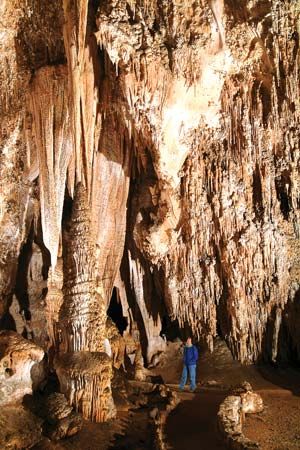
Sinkholes are surface depressions primarily caused by the dissolution of soluble bedrock, such as limestone, by groundwater. This process is most common in karst topography, where slightly acidic water infiltrates the ground, chemically weathering the rock to create underground voids and cave systems.123
Sinkholes generally form in two ways:
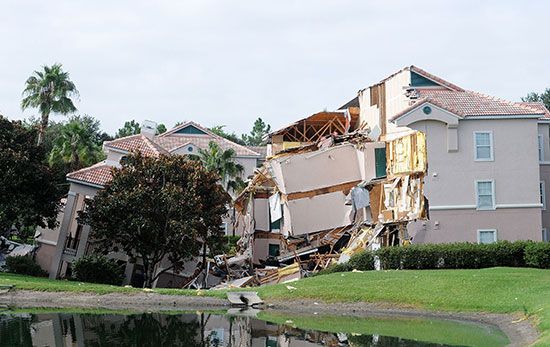
- Cover-collapse: The roof of an underground cavern becomes too thin to support the weight above it, leading to a sudden collapse.12
- Cover-subsidence: Soil gradually fills widening cracks in the bedrock, causing a slow depression at the surface.2
Fluctuations in water levels also trigger formation. A drop in the water table removes the physical support provided to underground cavities, while heavy rainfall can increase pressure on the surface. Human activities—including mining, construction, and excessive groundwater extraction—can further weaken the ground and accelerate these collapses. In some regions, similar features called pseudokarst form in weak sediments like loess when subsurface pipes collapse.13
What is the difference between cover-collapse and cover-subsidence sinkholes?
The primary difference between cover-collapse and cover-subsidence sinkholes lies in the speed and mechanism of their formation.
Cover-Collapse Sinkholes
These occur when an underground cavern grows large enough that its roof can no longer support the weight of the overlying rock and soil. This results in a sudden collapse, typically creating a feature with steep, rocky sides.43
Cover-Subsidence Sinkholes
These form through a more gradual process. As groundwater dissolves the limestone bedrock, cracks widen and are slowly filled by the soil mantle above. As more soil migrates downward into these voids, a depression forms at the surface over time. These sinkholes are generally shallower than cover-collapse varieties and often receive local drainage, which can sometimes lead to the formation of small ponds or lakes if a clay layer develops at the base.43
How do human activities like mining or irrigation trigger sinkholes?
Human activities can significantly accelerate the formation of sinkholes by altering the stability of the ground and the natural flow of groundwater.
- Groundwater Extraction: Excessive removal of water for irrigation or other uses lowers the water table. This removes the physical support that water provides to underground cavities, increasing the risk that the ceiling of a cavern will collapse under the weight of the surface material.1
- Ground Disturbance: Activities such as mining, building construction, and drilling directly disturb the earth. These actions can weaken the structural integrity of the surface, making the ground more susceptible to collapse, especially in areas with karst topography where soluble bedrock already contains natural voids.1
By modifying the landscape and disrupting the balance between subsurface cavities and the surface, these human interventions often trigger collapses that might not have occurred under natural conditions.1
What are cenotes and how do they relate to sinkholes?
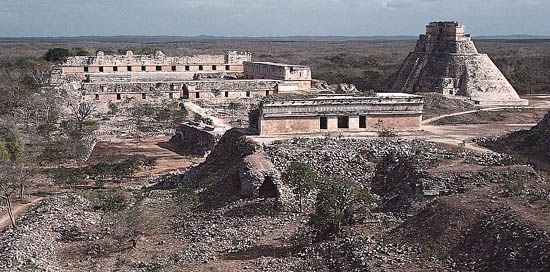
A cenote is a specific type of deep sinkhole found in limestone terrain, characterized by a pool of water at the bottom. The term originates from the Yucatec Maya word ts’onot and is most commonly associated with the Yucatán Peninsula.789
Cenotes are essentially a subset of sinkholes formed through the same geological process: the dissolution of soluble bedrock by groundwater creates underground cavities. When the surface layer of limestone above these voids loses its structural integrity, it collapses, exposing the water table beneath.198
While all cenotes are sinkholes, they are distinguished by their depth and the presence of a permanent water reservoir. Historically, these features served as vital water sources for the ancient Maya civilization and held significant cultural importance, often serving as sites for ritual offerings.789
Sources
- What causes sinkholes? — Encyclopædia Britannica
- karst — Encyclopædia Britannica
- sinkhole — Encyclopædia Britannica
- sinkhole: Top Questions — Encyclopædia Britannica
- What causes soil erosion? — Encyclopædia Britannica
- cave - Pavement karst — Encyclopædia Britannica
- Cenote — Encyclopædia Britannica
- cenote — Merriam-Webster
- 12 Lovely and Unusual Words for the Natural World | Cenote — Merriam-Webster
- sinkholes — Merriam-Webster
- cave - Initiation phase — Encyclopædia Britannica
Published on · 3 min read