Cave
Caves are categorized based on the geological processes that create them. The primary types include:
What are the main types of caves and how do they form?
Caves are categorized based on the geological processes that create them. The primary types include:
- Solution Caves: The most common and largest caves, formed by the chemical dissolution of soluble bedrock like limestone, dolomite, gypsum, or salt by acidic groundwater.1
- Volcanic Caves: Primarily lava tubes, which form as channels within flowing lava, particularly in fluid pahoehoe basalt.23
- Tectonic Caves: Created by the mechanical movement of bedrock, often due to gravity sliding, which pulls rocks apart along fractures to form narrow fissures.4
- Sea Caves: Formed by the mechanical erosion of coastal cliffs through the hydraulic pressure of breaking waves.56
- Glacier Caves: Tunnels created near the base of glaciers as meltwater drains through crevasses and melts the surrounding ice.7
- Other Types: These include eolian caves (scoured by wind), rock shelters (formed by differential erosion), and talus caves (openings between piled boulders).26
How have caves been used by humans throughout history?
Throughout history, humans have utilized caves for a variety of practical, symbolic, and religious purposes.
Shelter and Habitation
Prehistoric people likely engaged in the earliest forms of tunneling by enlarging natural caves to create more suitable living spaces. During the Upper Paleolithic period, caves and rock shelters provided protection, and evidence suggests that populations increasingly invested energy in constructing more permanent features within these sites, such as hearths and pavements.89
Symbolic and Religious Expression
Caves have long served as significant sites for human expression and ritual:
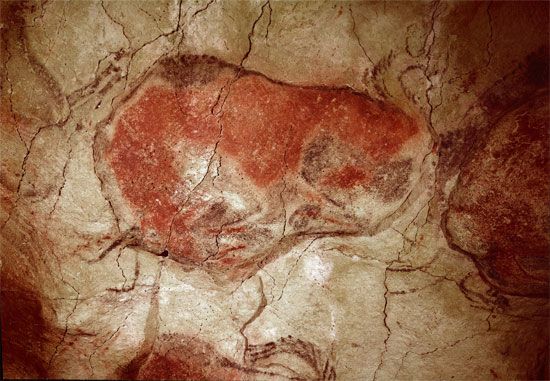
- Cave Art: Between 40,000 and 14,000 years ago, humans created extensive paintings and engravings in deep, dark caves, such as Lascaux and Altamira. These works, which often feature formidable animals, are believed to have served symbolic or religious functions, potentially linked to shamanic practices or initiation rituals.109
- Sanctuaries: In later civilizations, caves were used as templates for religious architecture. Mithraic sanctuaries, for example, were often designed as artificial caves illuminated by light shafts to facilitate initiation ceremonies.11
Engineering and Utility
Beyond natural formations, ancient civilizations developed sophisticated tunneling techniques to modify rock for infrastructure:
- Water Management: Tunnels were essential for irrigation, drainage, and aqueducts, such as the 6th-century BCE tunnel on Samos tunnel on Samos.12
- Monumental Architecture: Ancient cultures, including the Egyptians, excavated elaborate temple rooms directly into rock cliffs, exemplified by the Abu Simbel Temple.8
What are some of the most famous cave systems in the world and what makes them unique?
Several cave systems around the world are renowned for their immense scale, unique geological features, and historical significance.
Notable Cave Systems
- Mammoth Cave National Park (Kentucky, U.S.): This is the longest cave system in the world, with over 400 miles (650 km) of explored passages. It is a World Heritage site formed by the dissolution of limestone. It is unique for its diverse subterranean ecosystem, including eyeless fish and crayfish, and its history as a site for mining and medical treatment.1314
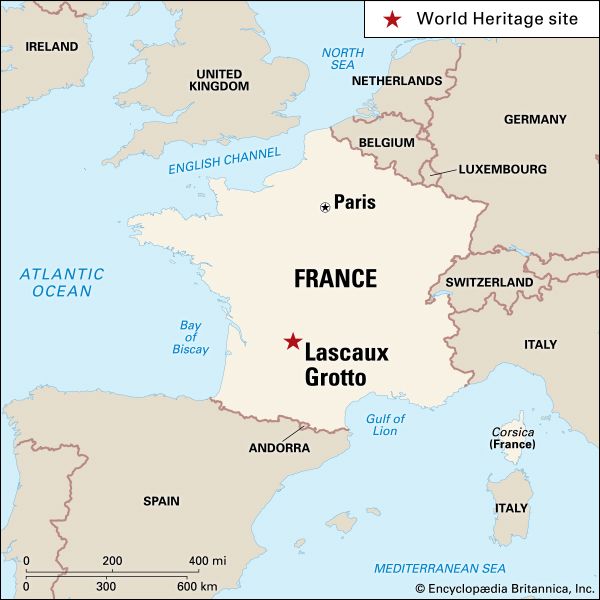
- Lascaux (France): While not the largest, Lascaux is world-famous for its extraordinary collection of prehistoric art. The cave contains approximately 600 paintings and 1,500 engravings of animals and symbols, some dating back 17,000 years, providing a rare window into early human symbolic expression.15
- Postojna Cave (Slovenia): Considered Europe’s premier example of karst phenomena, this system features spectacular stalactite and stalagmite formations. It is also the habitat of the Proteus anguinus, a rare, eyeless, snakelike amphibian.16
- Waitomo Caves (New Zealand): These limestone caves are famous for their elaborate rock formations and the Glowworm Grotto, where visitors can travel by boat under a ceiling illuminated by thousands of bioluminescent glowworms.17
How do stalactites and stalagmites form in caves?
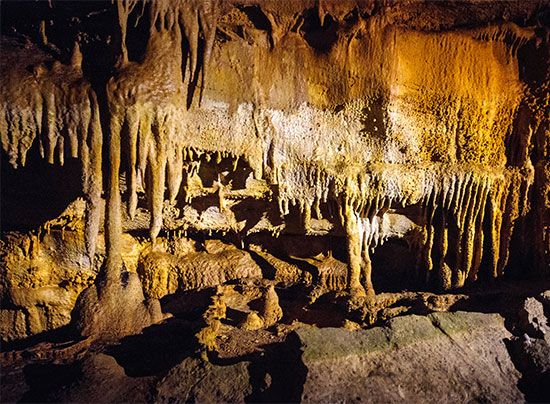
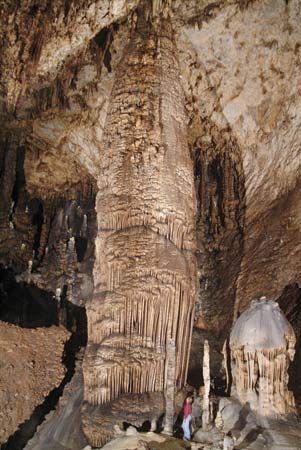
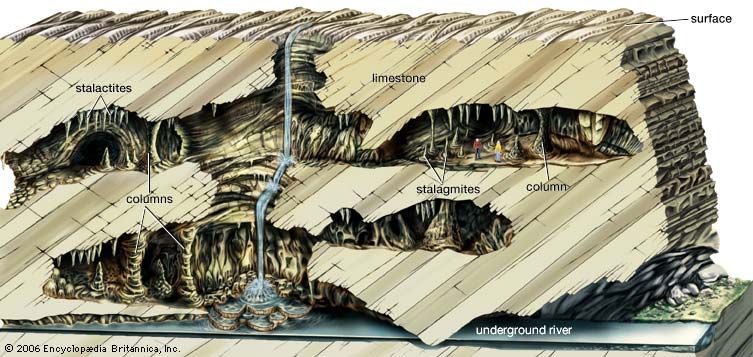
Stalactites and stalagmites are types of speleothems—secondary mineral deposits formed by water in caves. Their creation is a chemical process driven by the movement of calcium carbonate through limestone bedrock.1920
The Chemical Process
As rainwater infiltrates the soil, it absorbs carbon dioxide, forming a dilute carbonic acid. This acidic water dissolves calcium carbonate from the limestone as it travels through fractures in the rock. When this mineral-rich water reaches the cave environment, the carbon dioxide escapes into the cave atmosphere, reducing the water’s ability to hold the mineral in solution and causing the calcite to precipitate.192120
Formation of Features
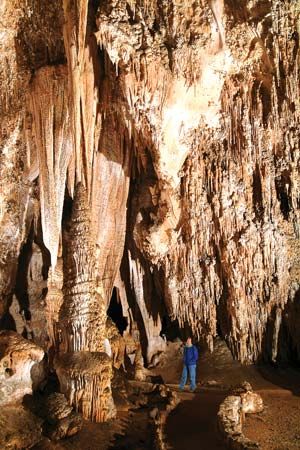
- Stalactites: These hang from the ceiling. As a water drop emerges from a joint, it leaves a tiny ring of calcite behind before falling. Over time, these rings build a hollow, icicle-like tube.1922
- Stalagmites: These rise from the floor. They form when the mineral-rich water drops fall from the ceiling or a stalactite, depositing additional calcite upon impact. Unlike stalactites, they do not have a central canal and are typically thicker in proportion.1922
When a stalactite and stalagmite grow to meet, they form a column.22
Sources
- cave - Cave types — Encyclopædia Britannica
- sea cave — Encyclopædia Britannica
- cave - Solution caves — Encyclopædia Britannica
- cave - Sea caves, eolian caves, rock shelters, and talus caves — Encyclopædia Britannica
- cave - Lava tubes — Encyclopædia Britannica
- cave - Glacier caves — Encyclopædia Britannica
- cave - Tectonic caves — Encyclopædia Britannica
- Cave art — Encyclopædia Britannica
- mystery religion - Architecture — Encyclopædia Britannica
- history of Europe - Upper Paleolithic developments — Encyclopædia Britannica
- 11 Caves That Made History — Encyclopædia Britannica
- tunnels and underground excavations - Ancient tunnels — Encyclopædia Britannica
- Mammoth Cave National Park — Encyclopædia Britannica
- Lascaux — Encyclopædia Britannica
- cave - Major caves and cave systems — Encyclopædia Britannica
- Postojna — Encyclopædia Britannica
- 7 Wonders of America — Encyclopædia Britannica
- Waitomo — Encyclopædia Britannica
- cave - Depositional materials and features — Encyclopædia Britannica
- stalactite and stalagmite — Encyclopædia Britannica
- cave deposit — Encyclopædia Britannica
- oxyacid - Carbonate and hydrogen carbonate salts — Encyclopædia Britannica
Published on · 4 min read