What’s the Difference Between Rabbits and Hares?
While often used interchangeably, rabbits and hares are distinct animals. Confusion often arises from common names; for example, jackrabbits are actually…
What’s the Difference Between Rabbits and Hares?
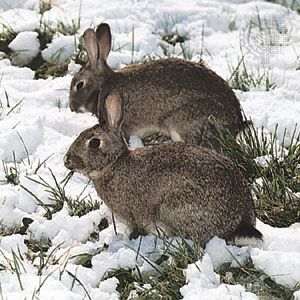
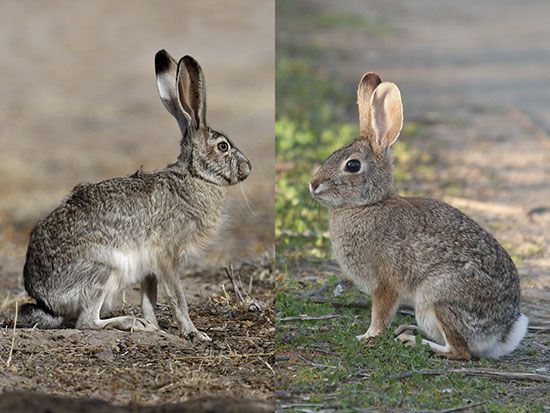
While often used interchangeably, rabbits and hares are distinct animals. Confusion often arises from common names; for example, jackrabbits are actually hares, while hispid hares are rabbits.12
The primary differences include:
- Physical Traits: Rabbits are generally smaller with shorter ears. Hares are larger and possess longer ears.12
- Life History: Rabbits are born altricial—without fur and with closed eyes—after a gestation period of 30–31 days. Hares are born precocial, meaning they are fully developed with fur and open eyes, following a longer gestation of about 42 days.12
- Habitat and Behavior: Rabbits prefer areas with trees and shrubs, where they dig burrows for shelter and hide from predators. Hares are runners that prefer open habitats like prairies, where they nest in small, open depressions.12
Both belong to the family Leporidae and share features like powerful hind legs for bounding locomotion, but their distinct developmental and behavioral strategies set them apart.23
What are pikas and how are they related to rabbits and hares?
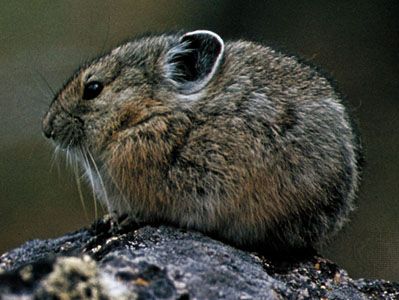
Pikas (genus Ochotona) are small, round-eared, and virtually tailless mammals native to mountainous regions in Asia and North America. While they are often mistaken for rodents, they are actually lagomorphs, belonging to the order Lagomorpha, which also includes rabbits and hares.45
Pikas are the sole living members of the family Ochotonidae, while rabbits and hares belong to the family Leporidae. They differ from their relatives in several key ways:43
- Anatomy: Unlike rabbits and hares, pikas lack specialized skeletal features such as a highly arched skull, an upright head posture, and elongated limbs. Their hind limbs are not significantly longer than their forelimbs.43
- Behavior: Most pikas are diurnal and adapted to cold alpine environments, whereas rabbits and hares are more varied in their activity patterns and habitats.4
- Social Structure: Depending on the species, pikas may be solitary, territorial rock-dwellers or social, burrow-dwelling family groups.4
Despite these differences, they share fundamental lagomorph traits, such as practicing coprophagy to maximize nutrient intake from their forage.4
How do rabbits and hares use their ears to survive in the wild?
Rabbits and hares primarily use their prominent ears as a vital adaptation for detecting predators in the wild. By having large, sensitive ears, these animals can better monitor their surroundings for potential threats, allowing them to react quickly to danger.2
While both groups are known for their long ears, there are notable differences in their physical characteristics and survival strategies:
- Ear Size: In general, rabbits possess shorter ears compared to the longer ears found on hares.26
- Survival Tactics: Because they occupy different environments, their ears serve as part of a broader survival toolkit. Rabbits, which often live in burrows within wooded or shrubby areas, rely on their ears to detect threats while they remain close to their shelters. Hares, which inhabit open areas like prairies, are built for running; their ears help them stay alert in exposed landscapes where they cannot rely on burrows for protection.26
What does the term ‘digitigrade locomotion’ mean for these animals?
The term digitigrade locomotion refers to a specific type of foot posture in which an animal walks or runs on its toes (the phalanges), while the ankle and wrist remain elevated above the ground.7
For rabbits, this form of movement is a key physical adaptation. By moving on the tips of their digits rather than the entire foot, these animals can achieve greater efficiency and speed, which is essential for their survival in the wild. This posture contrasts with plantigrade locomotion, seen in humans or bears, where the entire surface of the foot touches the ground, and unguligrade locomotion, where animals like horses walk only on the tips of their hooves.87
Sources
- What’s the Difference Between Rabbits and Hares? — Encyclopædia Britannica
- rabbit — Encyclopædia Britannica
- rabbit - Evolution and classification — Encyclopædia Britannica
- pika — Encyclopædia Britannica
- Lagomorpha — Merriam-Webster
- lagomorph — Encyclopædia Britannica
- Locomotion - Cursorial vertebrates — Encyclopædia Britannica
- foot — Encyclopædia Britannica
Published on · 3 min read