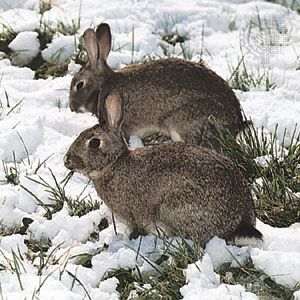
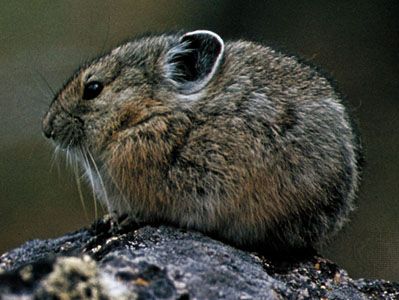
Lagomorph
The order Lagomorpha—which includes rabbits, hares, and pikas—has a distinct evolutionary history separate from rodents, despite their superficial…
What is the evolutionary history of lagomorphs?
The order Lagomorpha—which includes rabbits, hares, and pikas—has a distinct evolutionary history separate from rodents, despite their superficial resemblance and historical misclassification within the same order.1
The first fossil evidence of mammals exhibiting lagomorph-like characteristics dates back to the Paleocene Epoch (65 to 54.8 million years ago), a period marked by the diversification of many mammalian orders. By the Eocene Epoch, approximately 40 million years ago, the family Leporidae (rabbits and hares) was well-documented in the fossil record. During this time, these animals entered North America, where they underwent the majority of their early development.12
By the Miocene Epoch, about seven million years ago, leporids had become reestablished in Asia and expanded into Europe, establishing their modern global distribution. Throughout their evolution, lagomorphs developed unique anatomical traits, such as a second pair of peglike incisors located behind the primary pair in the upper jaw, which distinguishes them from rodents.213
How many species of lagomorphs exist, and where are they found around the world?
There are 87 recognized species within the order Lagomorpha, which are categorized into two families: Leporidae (rabbits and hares) and Ochotonidae (pikas).1
Distribution and Diversity
- Family Leporidae (58 species): This family includes 30 species of hares (genus Lepus) and 28 species of rabbits across 10 genera. They have a nearly worldwide distribution, inhabiting every continent except Antarctica, and have been introduced to regions such as Australia and New Zealand.16
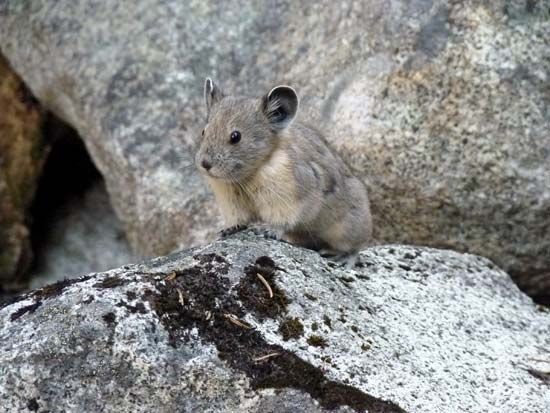
- Family Ochotonidae (29 species): Represented by a single genus, Ochotona, pikas are found exclusively in the mountainous regions of western North America and much of Asia, with a significant concentration in China.13
While lagomorphs are widely distributed, it is important to note that nearly 30 percent of all species are currently classified as endangered, highlighting the critical need for conservation efforts to protect these diverse terrestrial herbivores.1
How have lagomorphs impacted human culture and ecosystems throughout history?
Lagomorphs have significantly influenced human culture and ecosystems throughout history, serving as both vital resources and disruptive invasive species.
Cultural and Economic Impact
- Subsistence and Trade: Since the Pleistocene Epoch, humans have hunted lagomorphs for meat and fur. By the 1st century BCE, the Roman author Marcus Terentius Varro documented the keeping of rabbits as livestock. Today, they remain an important source of protein and are raised for pelts and felt.9
- Symbolism and Folklore: Hares and rabbits have long been associated with fertility and rebirth. In ancient Europe, they were linked to religious rites and deities, such as the Roman goddess Diana and the Greek goddess Aphrodite. This symbolism evolved into modern traditions like the Easter Bunny, which incorporates folk customs of hiding eggs to represent new life.10
- Scientific Utility: Due to their ease of breeding in captivity, domestic rabbits are widely used as laboratory animals for medical and scientific research.9
Ecological Impact
- Food Chains: As prolific breeders, lagomorphs are essential prey for numerous predators, including wolves, foxes, and various birds of prey, making them a cornerstone of many terrestrial food chains.911
- Invasive Consequences: When introduced to new environments, lagomorphs can become devastating pests. In Australia, the introduction of European rabbits in 1859 led to widespread agricultural damage and the decline of native flora and fauna. Similarly, on Macquarie Island, introduced rabbits destroyed native vegetation, triggering complex ecological imbalances that required intensive, multi-species eradication strategies.91
What is the typical diet and digestive process of lagomorphs?
Lagomorphs—which include rabbits, hares, and pikas—are terrestrial herbivores that have evolved specialized digestive strategies to process fibrous plant material.12
Dietary Habits
As herbivores, lagomorphs consume a variety of plant matter. Because they lack the enzymes necessary to break down cellulose, they rely on symbiotic bacteria to ferment their food, allowing them to extract nutrients from plant cell walls.1312
The Digestive Process
Lagomorphs are classified as hindgut fermenters. Their digestive process involves several key stages:
- Cecal Fermentation: Undigested food residues pass into the cecum, a large side pocket at the end of the small intestine. Here, bacteria ferment the material, producing short-chain fatty acids that the animal can absorb for energy.13
- Coprophagy: A defining feature of lagomorph digestion is coprophagy, or reingestion. They produce two types of feces: hard, round droppings and soft, nutrient-rich pellets. The soft pellets, produced in the cecum, contain high concentrations of vitamins and nutrients that were not absorbed during the initial passage through the digestive tract.1412
- Nutrient Recovery: By consuming these soft pellets, lagomorphs pass the material through their system a second time, ensuring they derive maximum nutrition from their diet.12
Sources
- lagomorph — Encyclopædia Britannica
- rabbit — Encyclopædia Britannica
- rabbit - Evolution and classification — Encyclopædia Britannica
- Lagomorpha — Merriam-Webster
- lagomorph — Merriam-Webster
- hare — Encyclopædia Britannica
- pika — Encyclopædia Britannica
- rabbit - Diversity and conservation status — Encyclopædia Britannica
- rabbit - Natural history — Encyclopædia Britannica
- What Does the Easter Bunny Have to Do with Jesus? — Encyclopædia Britannica
- Macquarie Island — Encyclopædia Britannica
- nutrition - Herbivores — Encyclopædia Britannica
- mammal - Digestive system — Encyclopædia Britannica
- ruminant — Encyclopædia Britannica
- artiodactyl - Digestive system — Encyclopædia Britannica
Published on · 3 min read