Why Do Dogs Eat Poop?
The consumption of feces by dogs, known as coprophagy, is a behavior observed in approximately 16 percent of domesticated dogs. While it may seem puzzling…
Why Do Dogs Eat Poop?
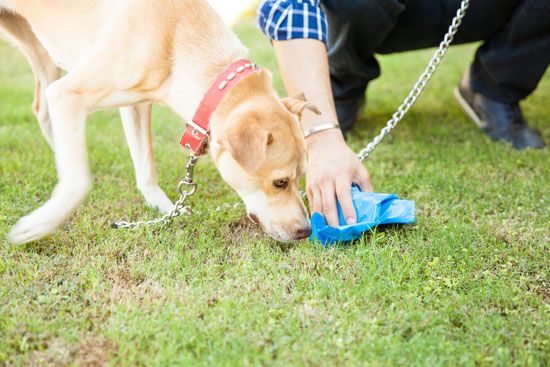
The consumption of feces by dogs, known as coprophagy, is a behavior observed in approximately 16 percent of domesticated dogs. While it may seem puzzling, the reasons are often rooted in learned behavior, instinct, or environmental factors.1
- Learned Behavior: Puppies may mimic their mothers, who naturally clean their offspring by eating their feces. Additionally, dogs may confuse the scent of their food with fecal matter if fed in close proximity to it.1
- Instinctual Drives: Ancestral behaviors, such as clearing territory of other animals’ waste to eliminate competing claims, may persist in modern dogs.1
- Nutritional Needs: Dogs may consume feces to supplement their nutrition if their regular diet is insufficient for their activity levels.1
- Stress and Anxiety: Dogs may eat their waste to hide it after being punished for housebreaking accidents, or as a response to isolation or overcrowding.1
- Health Issues: In some cases, this behavior can signal underlying medical conditions, such as parasites, diabetes, or thyroid disease.1
How do mother dogs teach their puppies?
Mother dogs do not “teach” their puppies in the human sense of formal instruction; rather, they guide development through instinctual care, socialization, and the weaning process.
During the early stages of behavioral development, the dam provides essential warmth and nourishment. As puppies grow, the dam facilitates their transition toward independence through several key actions:
- Socialization: Between three and seven weeks, the dam ensures puppies interact with their littermates, which is vital for developing social skills.
- Weaning: The dam initiates weaning by first regurgitating food for the puppies and gradually restricting their access to nursing.
- Encouraging Independence: As puppies become more curious, the dam begins to leave them alone for brief periods, allowing them to investigate their surroundings.
- Setting Boundaries: By 12 to 16 weeks, the puppy naturally declares its independence from the mother, marking a shift in their relationship as the dog enters a period of rapid growth.
While the dam provides the foundation, the environment and human interaction become increasingly critical for a dog’s education and training as they mature.
What are common signs of stress in dogs?
Dogs communicate their internal states through various vocalizations and behaviors. When a dog experiences stress, particularly separation anxiety, they may exhibit persistent howling.
While howling is a natural form of animal communication rooted in their ancestry, it serves different functions depending on the context. In a domestic setting, if a dog continues to howl after being left alone, it is often an attempt to reestablish contact with their owners, signaling that they are feeling distressed or anxious due to the separation.3
Beyond vocalizations, stress in dogs can manifest in various ways, though the provided information focuses specifically on how howling serves as an indicator of separation-related anxiety.3
How does a dog’s sense of smell influence its behavior?
A dog’s sense of smell is its most acute sense and serves as a primary driver of its behavior and interaction with the world. With approximately 1 billion olfactory receptor cells and up to 5,000 glomeruli in the olfactory bulb, dogs possess a highly sophisticated system for processing environmental information.45
This olfactory capability influences behavior in several key ways:
- Communication: Dogs use scent-producing glands to leave information in their urine, feces, and paw prints. This allows them to communicate their sex, age, and mood to other dogs.6
- Social and Innate Responses: Beyond the primary olfactory system, dogs possess a vomeronasal organ (Jacobson’s organ). This system separates innate behavioral and physiological responses from the cognitive processing of the primary olfactory system, playing a role in pheromone perception and habitat selection.7
- Task Performance: Because dogs can distinguish between specific scents and track them over time, they are trained for specialized tasks, including locating missing persons, detecting drugs, and identifying toxic substances drugs, and identifying toxic substances.48
- Hunting and Exploration: Hunting dogs use scent to identify and track prey, often employing techniques like rapid sniffing to increase air turbulence and maximize odor detection.45
Sources
- Why Do Dogs Eat Poop? — Encyclopædia Britannica
- dog - Aging and behavioral development — Encyclopædia Britannica
- 16 Questions About Pets Answered - Why does my dog sometimes howl? — Encyclopædia Britannica
- dog - Senses — Encyclopædia Britannica
- 16 Questions About Pets Answered - Why do dogs bark? — Encyclopædia Britannica
- Chemoreception - Terrestrial vertebrates — Encyclopædia Britannica
- vomeronasal organ — Merriam-Webster
- Chemoreception - Smell — Encyclopædia Britannica
- Chemoreception - Dogs — Encyclopædia Britannica
Published on · 3 min read