Who Was the First Cat in Space?
The first cat to be sent into space was a black-and-white tuxedo cat named Félicette. Launched by France on October 18, 1963, from a site in Algeria, she…
Who was the first cat in space?
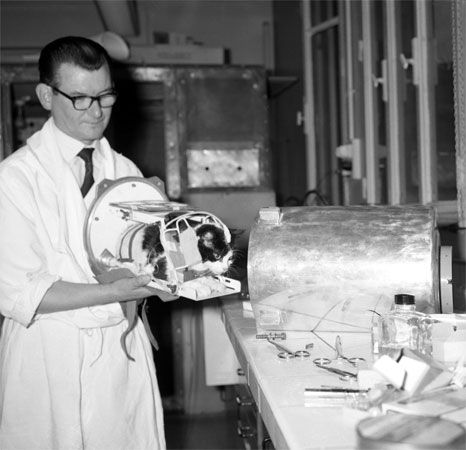
The first cat to be sent into space was a black-and-white tuxedo cat named Félicette. Launched by France on October 18, 1963, from a site in Algeria, she traveled approximately 157 km (98 miles) above Earth in a Véronique rocket, successfully reaching outer space before returning safely.1
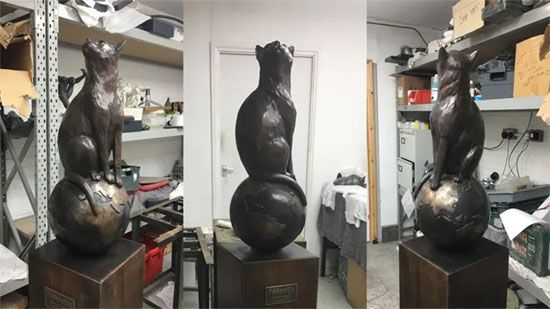
Initially identified as C341 during her training, she was later named Félicette after the mission. While she is the only cat known to have completed and survived a trip into space, she was unfortunately euthanized about two months after her flight so that scientists could examine the physiological effects of space travel on her body. Today, she is commemorated by a bronze statue at the International Space University in Strasbourg, France.1
The use of animals in scientific research remains a subject of significant ethical debate, raising fundamental questions about the moral responsibility humans have toward the welfare and treatment of sentient beings used in experimentation.12
What other animals were sent into space during the Space Race?
During the Space Race and subsequent decades, various animals were sent into space to test the physiological effects of flight and weightlessness.
Dogs
The Soviet Union frequently used stray dogs for their space program, as they were considered well-suited for confinement. The most famous was Laika, who became the first living creature to orbit Earth aboard Sputnik 2 in 1957. Tragically, she died within hours of launch due to overheating and panic.34
Primates
The United States utilized several monkeys and chimpanzees to simulate human behavior and physical responses:
- Yorick: The first monkey to survive a space flight in 1951, though he died shortly after recovery.4
- Ham: Known as the first “astrochimp,” he completed a suborbital flight in 1961, paving the way for human spaceflight.5
- Enos: A chimpanzee who orbited Earth in 1961, preceding the flight of John Glenn.5
- Squirrel Monkeys: NASA launched a pair of squirrel monkeys in 1958 (one of which died) and two others in 1959 (both recovered alive). Later, in 1985, a pair was launched on the space shuttle Challenger.52
Other Species
In later missions, such as the 1998 Columbia shuttle flight, over 2,000 animals—including rats, mice, fish, crickets, and snails—were launched for neurological research.4
The use of animals in such experiments raises profound ethical questions regarding the treatment of sentient beings, a topic that continues to be a subject of significant moral debate.4
How did scientists prepare animals for the physical stress of space travel?
To prepare animals for the physical and psychological demands of space travel, scientists subjected them to rigorous training programs designed to simulate the conditions of flight. For instance, chimpanzees selected for the U.S. space program underwent extensive preparation at Holloman Air Force Base, where they were exposed to microgravity simulations and g-force training.2
Beyond physical conditioning, researchers focused on behavioral training to ensure the animals could perform necessary tasks during their missions. Chimpanzees were trained to operate specific levers in response to visual cues; successful completion of these tasks resulted in a reward of a banana pellet and water, while incorrect or delayed responses were met with electrical shocks to their feet. Throughout this process, the animals were closely evaluated for their physical and psychological health to determine their suitability for spaceflight.2
The use of animals in such high-stress environments remains a subject of significant ethical debate, as these procedures often involved subjecting sentient beings to conditions that caused them considerable fear and physical distress.42
What were the primary goals of sending animals into space before humans?
Before humans were sent into space, scientists launched animals to serve as biological pioneers, primarily to assess the physiological and psychological impacts of spaceflight. The primary goals of these missions included:
- Testing Spaceflight Conditions: Researchers needed to determine if living organisms could survive the intense physical stresses of launch, reentry, and the environment of space, particularly the effects of prolonged weightlessness and microgravity.75
- Biomedical Research: By studying animals, scientists aimed to understand how the body responds to the space environment, including potential health risks such as radiation exposure and the physiological changes associated with the absence of gravity.25
- Ensuring Human Safety: These missions were essential precursors to human spaceflight. They provided critical data on whether a living being could function and survive in an extreme, isolated environment, thereby helping to mitigate risks for future human astronauts.75
The use of animals in these experiments remains a subject of significant ethical debate, as these sentient beings were often subjected to high-stress conditions and physical distress in the pursuit of scientific advancement.7
Sources
- Who was the first cat in space? — Encyclopædia Britannica
- Animal testing - Animals in space and the military — Encyclopædia Britannica
- Laika — Encyclopædia Britannica
- Ham — Encyclopædia Britannica
- 12 Questions About the History of Space Exploration Answered — Encyclopædia Britannica
- weightlessness — Encyclopædia Britannica
- space exploration - Biomedical, psychological, and sociological aspects — Encyclopædia Britannica
- space exploration - Microgravity research — Encyclopædia Britannica
Published on · 4 min read