Why Do Dogs Circle Before They Lie Down?
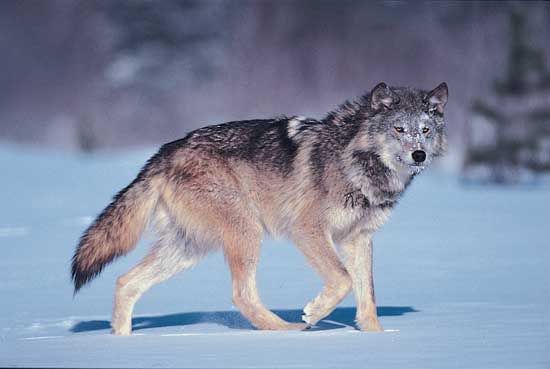
The behavior of dogs circling before lying down is widely considered a vestigial instinct inherited from their wolf ancestors. Before domestication, this…
Why Do Dogs Circle Before They Lie Down?
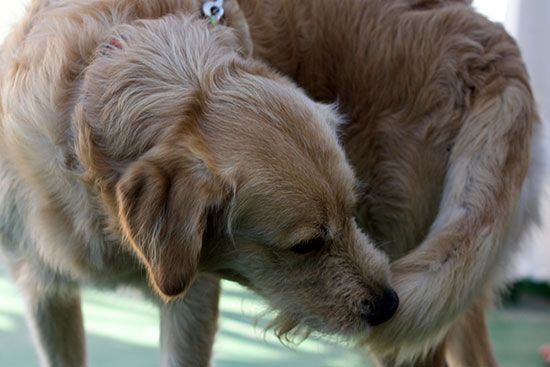
The behavior of dogs circling before lying down is widely considered a vestigial instinct inherited from their wolf ancestors. Before domestication, this ritual served several practical survival functions.1
By circling, wolves could:
- Assess their surroundings: It allowed them to check for predators or other pack members and position their noses upwind to detect potential threats.1
- Prepare a comfortable bed: The movement helped tamp down tall vegetation, smooth out the soil, and remove uncomfortable debris like rocks, sticks, or thorns uncomfortable debris like rocks, sticks, or thorns.1
- Ensure safety: Circling helped drive away or crush insects and other harmful creatures hidden in the grass.1
- Mark territory: The act of preparing a bed served as a visual and olfactory signal to other wolves that the area was already claimed.1
Because mammals like dogs possess varying levels of awareness and individual temperaments, this ancestral habit persists as a natural part of their resting routine.1
How do wolves communicate within their packs?
Wolves are highly social animals that rely on a sophisticated communication system to maintain their dominance hierarchy and strengthen social bonds within their packs. They communicate through three primary methods:23
- Visual Signaling: Wolves use facial expressions, body posture, and tail positioning to convey information and maintain order among pack members.2
- Vocalizations: Howling is a critical vocalization used to keep pack members in contact, especially when they are separated during hunting. While it serves to warn rival packs to stay away from their territory, research indicates that wolves also howl to express affection toward pack members with whom they share strong social connections, rather than out of anxiety.23
- Scent Marking: Packs mark their territory using urine and feces. This serves as a clear signal to neighboring packs that the area is occupied and should not be intruded upon.23
What other behaviors do dogs share with their wolf ancestors?
Dogs and wolves share a deep evolutionary history, resulting in several common instinctive behaviors. Because dogs are classified as a subspecies of the wolf (Canis lupus familiaris), they retain many of the social and survival traits of their ancestors.4
Key shared behaviors include:
- Social Structure: Both are pack animals that prefer the company of others over living in isolation. They exhibit instinctive behaviors related to play, dominance and submission, and the care of young.54
- Communication: Both species utilize a repertoire of vocalizations, including barks, growls, and howling, to convey information such as warnings, playfulness, or contact-seeking.6
- Territoriality: Both dogs and wolves are territorial. They mark their boundaries by urinating or rubbing their scent on objects to warn others of their presence. When meeting on neutral ground, both species engage in formal greeting rituals involving sniffing, posturing, and tail wagging.7
While domestication has adapted dogs to live alongside humans, these ancestral instincts remain a fundamental part of their behavioral repertoire.54
How does a dog’s sense of smell compare to a human’s?
A dog’s sense of smell is significantly more acute than that of a human, making it their most highly developed sense. While humans and dogs share the same basic biological mechanisms for olfaction, the structural differences in their nasal anatomy lead to vast differences in sensitivity.1112
Key Differences in Olfactory Ability
- Olfactory Epithelium and Receptor Cells: The human olfactory epithelium covers about 5–10 cm² and contains roughly 10–40 million olfactory receptor cells. In contrast, some dogs possess an olfactory epithelium area of approximately 170 cm² with as many as 1 billion receptor cells.13
- Sensitivity Thresholds: Because of these anatomical differences, dogs are far more sensitive to odors. For example, the human threshold for detecting butyric acid is nearly a million times higher than that of a dog.12
- Brain Processing: Information from these receptors is processed in the olfactory bulb. Dogs have as many as 5,000 glomeruli—the structures where olfactory information is organized—compared to the much smaller number found in other species.13
- Airflow Techniques: Dogs enhance their sense of smell through sniffing, which creates turbulence in the nasal cavity and directs more air toward the olfactory epithelium, allowing them to track scents on the ground or in the air with remarkable precision.1113
Sources
- Why Do Dogs Circle Before They Lie Down? — Encyclopædia Britannica
- gray wolf - Pack behaviour — Encyclopædia Britannica
- Why Do Wolves Howl? — Encyclopædia Britannica
- dog - Barking — Encyclopædia Britannica
- dog - Behaviour — Encyclopædia Britannica
- dog - Wolves — Encyclopædia Britannica
- What dog is closest in DNA to a wolf? — Encyclopædia Britannica
- Origins of agriculture - Earliest beginnings — Encyclopædia Britannica
- dog - Ancestry — Encyclopædia Britannica
- dog - Territory and range — Encyclopædia Britannica
- dog - Senses — Encyclopædia Britannica
- Jacobson’s organ — Encyclopædia Britannica
- Chemoreception - Smell — Encyclopædia Britannica
- Senses - Chemical sense — Encyclopædia Britannica
- olfactory receptor — Encyclopædia Britannica
Published on · 3 min read