Why Do Wolves Howl?
Wolves use howling as a primary form of vocalization to communicate within their social structures. Because these animals often separate while hunting across…
Why Do Wolves Howl?
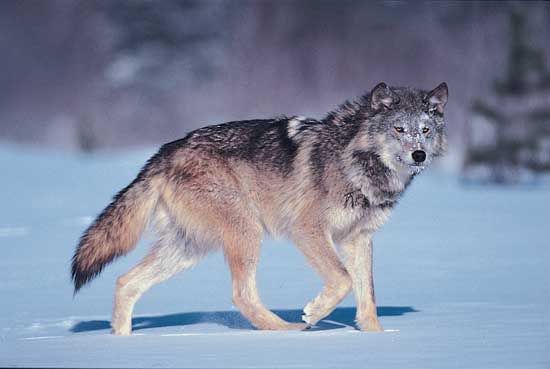
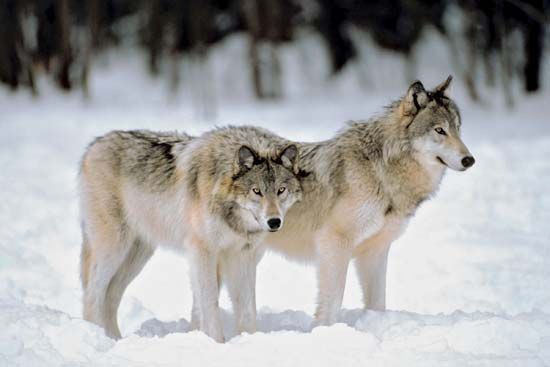
Wolves use howling as a primary form of vocalization to communicate within their social structures. Because these animals often separate while hunting across vast territories, howling serves as an effective way to signal their location to other pack members. In open tundra, these sounds can carry up to 16 kilometers (10 miles).1
Beyond location tracking, howling functions as a territorial warning. Packs use aggressive howls to ward off rival packs and protect their resources from intruders.1
Interestingly, research also suggests that howling is a display of social bonding. A 2013 study indicated that wolves are more likely to howl toward pack members with whom they share a close connection. Tests measuring cortisol levels confirmed that this behavior is driven by affection rather than anxiety or stress.1
How do wolf packs establish their social hierarchy?
Wolf packs are fundamentally family groups, typically consisting of an adult breeding pair—the alpha male and alpha female—and their offspring of various ages. This structure relies on the ability of wolves to form strong social bonds, which are essential for the pack’s cohesion.45
To maintain order, the pack establishes a dominance hierarchy. The alpha pair continually asserts their status over subordinates and guides the group’s activities. Within this hierarchy, roles are often divided by sex: the female typically leads in the care and defense of pups, while the male predominates in foraging, food provisioning, and associated travel.45
Young wolves generally remain with the pack for two or more years before leaving to find a mate and establish their own territory. Those that choose to stay may eventually replace a parent to become a breeding alpha themselves. This system of hierarchy and cooperation allows the pack to function as a unified unit for hunting and territorial defense.564
What other methods do wolves use to communicate besides howling?
Beyond howling, wolves utilize a sophisticated repertoire of communication methods to maintain social order and defend their territory. These can be categorized into three primary forms:
Visual Signaling
Wolves rely heavily on visual cues to convey information to one another. This includes:
- Facial expressions: Subtle changes in the face can signal intent or mood.
- Body position: The posture of a wolf indicates its status within the dominance hierarchy and its current level of aggression or submission.
- Tail position: The angle and movement of the tail serve as clear indicators of a wolf’s social standing and emotional state.4
Scent Marking
To define and protect their territory, which can span up to 3,000 square kilometers, wolves use chemical signaling. They mark their boundaries using urine and feces. This serves as a clear warning to neighboring packs to avoid intrusion.41
Other Vocalizations
While howling is the most prominent, wolves also use a variety of other vocalizations, including barks and growls, to communicate specific messages like warnings or playfulness to other pack members.7
How do wolves work together to hunt large prey?
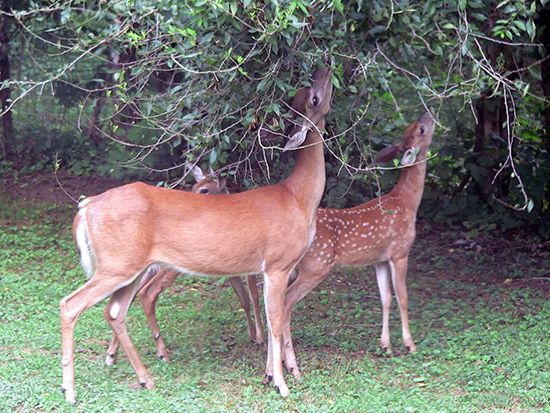
Wolves are highly effective predators that rely on their physical capabilities and cooperative behavior to hunt large herbivores, such as elk, moose, bison, and caribou.45
When hunting, wolves utilize their keen senses and ability to reach speeds of up to 60 km (37 miles) per hour to pursue their targets. The hunting process typically involves a coordinated effort where pack members chase, seize, and eventually pull the prey to the ground. While both male and female wolves are active in attacking and killing prey, the pack’s success is bolstered by their ability to work as a unified group.845
Often, wolves target animals that are young, old, or in poor condition, which increases the likelihood of a successful hunt. Once a kill is made, the pack gorges on the meat—consuming between 3 and 9 kg (7 to 20 pounds) per animal—before moving on to search for their next meal.85
Sources
- Why Do Wolves Howl? — Encyclopædia Britannica
- wolf — Merriam-Webster
- werewolf - Characteristics — Encyclopædia Britannica
- gray wolf - Pack behaviour — Encyclopædia Britannica
- wolf - Gray wolf — Encyclopædia Britannica
- gray wolf - Breeding — Encyclopædia Britannica
- dog - Barking — Encyclopædia Britannica
- gray wolf - Predators and prey — Encyclopædia Britannica
Published on · 3 min read