Why Do People Eat Cereal with Milk?
The practice of eating breakfast cereal with milk originated in the 1860s out of necessity. Early cereal predecessors, such as "granula," were extremely…

Why Do People Eat Cereal with Milk?
The practice of eating breakfast cereal with milk originated in the 1860s out of necessity. Early cereal predecessors, such as “granula,” were extremely hard—often described as “wheat rocks”—and required soaking in liquid to become edible.12
Over time, the combination became a cultural standard for several reasons:
- Practicality and Texture: Milk served as a functional tool to soften dry, crunchy grains, making them palatable.2
- Marketing and Health: In the 20th century, manufacturers like Kellogg’s promoted the pairing by emphasizing the nutritional benefits of both cereal and milk, framing them as a “perfect match” for a healthy breakfast.2
- Nostalgia: For many adults, the ritual of eating cereal with milk is deeply tied to childhood memories. It is often viewed as a comforting, dependable, and nostalgic meal that evokes feelings of familiarity.2
While some have experimented with alternatives, the pairing remains a deeply ingrained habit, reinforced by decades of advertising and personal tradition.2
Who were the key figures in the early breakfast cereal industry?
The early breakfast cereal industry was largely shaped by health-conscious pioneers in the late 19th century, particularly those associated with the Battle Creek Sanitarium in Michigan.34
Key figures include:
- James Caleb Jackson: In the 1860s, he created “granula,” a hard, twice-baked mixture of graham flour that required soaking in milk to be edible. This product is widely considered the precursor to modern breakfast cereals.14
- John Harvey Kellogg: A physician and health-food advocate, he developed various grain-based products for his sanitarium patients, including “Granose” and cornflakes. He was instrumental in establishing the flaked-cereal industry.34
- W.K. Kellogg: John’s brother, he cofounded the Sanitas Food Company with him in 1900. After a dispute, he established his own firm, the Battle Creek Toasted Corn Flake Company (later the Kellogg Company), which became a global powerhouse.35
- C.W. Post: A former patient at the Battle Creek Sanitarium, he recognized the commercial potential of cereal beyond its health-food origins. He founded the Postum Cereal Co. Ltd. and invented popular products like Grape-Nuts in 1897.614
How did advertising change the way people view breakfast cereal?
Advertising played a transformative role in the breakfast cereal industry, shifting it from a niche health-food product into a dominant mass-market staple. Prior to the mid-1950s, the market for ready-to-eat cereals was relatively small, but through skillful product diversification and aggressive promotion, manufacturers successfully reshaped consumer habits.1
Advertising strategies were carefully segmented to appeal to different demographics:
- Targeting Children: Manufacturers revolutionized the market by creating emotional connections between children and their products. This was achieved by including prizes in every package and associating specific cereals with popular cartoon characters, such as Tony the Tiger or Toucan Sam.15
- Appealing to Parents: Marketing efforts directed at adults emphasized the convenience and nutritional value of fortified cereals. Companies also utilized manufacturer-sponsored contests to engage parents directly.1
- Health Positioning: While companies often marketed cereals as health foods, this approach sometimes led to controversy. For example, some brands faced scrutiny from the Federal Trade Commission for making unsubstantiated claims regarding cognitive benefits or immunity support, leading to legal settlements.5
By the 1990s, these promotional efforts helped the industry sell billions of bowls of cereal annually, far surpassing the market for traditional hot cereals.1
What are the differences between hot and cold breakfast cereals?
The primary difference between hot and cold breakfast cereals lies in their preparation and state at the time of consumption.
Hot Cereals
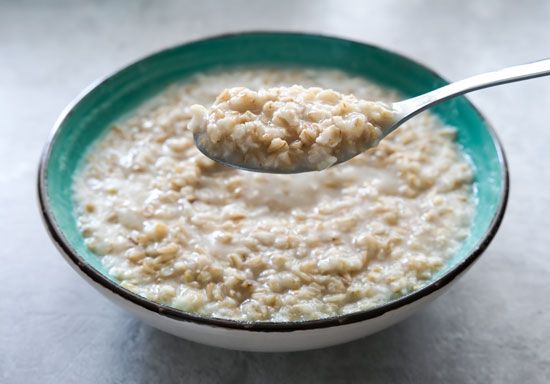
Hot cereals, such as oatmeal and farina, are typically made from grains like oats or wheat that require cooking in a heated liquid, such as water or milk, before serving. While traditional forms require boiling, modern “instant” varieties have been processed to significantly reduce preparation time. These cereals are often served as a warm porridge and can be customized with various toppings like fruit, nuts, and spices.17
Ready-to-Eat (Cold) Cereals
Ready-to-eat cereals are precooked during manufacturing, making them convenient for immediate consumption with milk or cream. They are produced in several distinct forms:87
- Flaked: Grains are broken into grits, cooked, and pressed into flakes.8
- Puffed: Grains are expanded in a pressure chamber.8
- Shredded: Cooked wheat is squeezed into strands and cut into biscuits.8
- Granular: A dough mixture is baked, crumbled, and rebaked.8
While hot cereals were once the standard, ready-to-eat products have become the dominant choice in the breakfast market due to successful product diversification and marketing.87
Sources
- breakfast cereal — Encyclopædia Britannica
- Why Do People Eat Cereal with Milk? — Encyclopædia Britannica
- John Harvey Kellogg — Encyclopædia Britannica
- C.W. Post — Encyclopædia Britannica
- Kellogg’s — Encyclopædia Britannica
- Cereal processing - Origins — Encyclopædia Britannica
- oatmeal — Encyclopædia Britannica
- Cereal processing - Types of breakfast cereal — Encyclopædia Britannica
Published on · 3 min read