Pawpaw
The pawpaw (Asimina triloba) is a deciduous tree or shrub belonging to the custard apple family. It is important to note that while the name is sometimes…
How does the pawpaw tree look, and what are its unique characteristics?
The pawpaw (Asimina triloba) is a deciduous tree or shrub belonging to the custard apple family. It is important to note that while the name is sometimes applied to the papaya, the two are unrelated species.12
Physical Characteristics
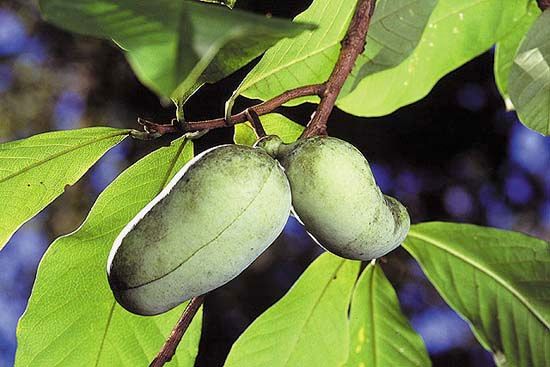
The pawpaw can reach heights of up to 12 meters (40 feet). Its leaves are pointed, broadly oblong, and drooping, growing up to 30 cm (12 inches) long. In the spring, before the leaves emerge, the plant produces malodorous, purple flowers measuring about 5 cm (2 inches)1.
Unique Features
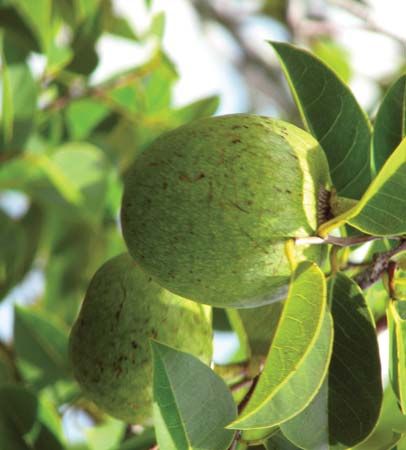
- Fruit: The pawpaw produces the largest tree-borne fruit native to North America. These fruits resemble stubby bananas, ranging from 8 to 18 cm (3 to 7 inches) in length, with skin that turns black as they ripen. The interior features golden, custard-like flesh and glossy, dark seeds.1
- Flavor: The fruit is known for a tropical flavor reminiscent of mango and bananas.1
Are there any cultural or historical significance associated with pawpaw in North America?
The pawpaw (Asimina triloba) holds a significant place in North American history, having been a traditional food source for Native Americans and early settlers long before the modern era.1
Despite its historical importance, the plant faced a decline in prominence due to colonial deforestation driven by the expansion of agriculture, which decimated much of the wild population. Furthermore, because the fruit is highly perishable, easily bruised, and has a very short harvest season, commercial interest waned throughout the 1900s, leaving the pawpaw largely to foragers and hobbyists.1
In the 21st century, however, there has been a resurgence of interest in the species. Both professional and amateur growers are now working to cultivate sturdier varieties, aiming to restore this unique native fruit to a more prominent role in North American agriculture.1
How is the pawpaw fruit used in culinary applications?
The pawpaw (Asimina triloba) is a versatile fruit known for its golden, custard-like flesh and a tropical flavor profile often compared to a blend of bananas and mango.13
In culinary applications, the fruit is valued for its creamy texture, which makes it suitable for various preparations. Beyond being eaten fresh, the fruit can be used to create an alcoholic beverage. Because the fruit is highly perishable and bruises easily, it has historically been a staple for foragers and hobbyists rather than a mass-market commercial product, though modern efforts are underway to breed sturdier varieties for broader culinary use.31
While the pawpaw is a member of the custard apple family, it is distinct from its tropical relatives like the soursop or sugar apple, which are more commonly processed into custards, ice creams, and juices in other parts of the world.3
What is the pawpaw fruit, and where does it naturally grow?
The pawpaw (Asimina triloba) is a deciduous tree or shrub belonging to the custard apple family. It produces the largest tree-borne fruit native to North America, which features golden, custard-like flesh and a tropical flavor often compared to mango and bananas.1
The plant is native to the United States, with a range extending from the Atlantic coast north to New York and west to Michigan and Kansas. While the name is sometimes mistakenly applied to the unrelated papaya, the true pawpaw is a distinct species that has been utilized by Native Americans and early settlers for centuries.1
Due to its short shelf life and tendency to bruise easily, the fruit is not widely commercialized, though there is growing interest in breeding sturdier varieties for cultivation.1
Sources
- pawpaw — Encyclopædia Britannica
- pawpaw — Merriam-Webster
- Magnoliales - Fruit — Encyclopædia Britannica
- 8 Delicious Words for Uncommon Fruits and Vegetables | Pawpaw — Merriam-Webster
Published on · 3 min read