Why Do Wet Dogs Have A Wet Dog Smell?
The distinct "wet dog smell" is not caused by the dog itself, but rather by the yeast and bacteria that naturally inhabit its fur.
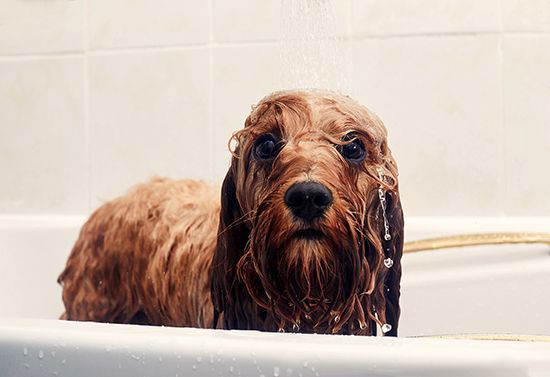
Why Do Wet Dogs Have A Wet Dog Smell?
The distinct “wet dog smell” is not caused by the dog itself, but rather by the yeast and bacteria that naturally inhabit its fur.1
These microorganisms are a normal part of a canine’s microbiome and constantly release volatile compounds. While these are typically not noticeable on a dry dog, the presence of water changes the situation. When a dog gets wet, these chemicals become more pungent, and as the water evaporates, it carries these odor molecules into the air. Furthermore, because humid air is more effective at holding odor molecules than dry air, the scent becomes much more pronounced.1
To minimize this odor, it is helpful to dry your dog quickly, which also prevents these microorganisms from multiplying in the damp environment.1
What is a dog’s microbiome?
A dog’s microbiome refers to the complex community of microorganisms—including bacteria and yeast—that naturally inhabit a dog’s body, such as on its skin and in its fur. These microorganisms are a normal, healthy part of a canine’s biological makeup and are not typically a cause for concern.2
While these microbes are generally innocuous, they constantly produce volatile compounds as part of their life cycle. Under normal conditions, these compounds are not particularly noticeable to humans, contributing only to a dog’s natural, musky scent. However, when a dog’s fur becomes damp, these chemicals can become more pungent, and the evaporation of water helps carry these odor molecules into the air, creating the familiar “wet dog smell”.2
In addition to the skin and fur, microorganisms also reside in other areas, such as the ear canal. In some cases, if moisture becomes trapped in these areas, it can lead to an overgrowth of yeast, which may cause discomfort or infections.1
How can you properly groom a dog to manage odors?
To properly manage odors through grooming, the primary goal is to minimize the time a dog’s fur remains damp, as moisture encourages the rapid growth of the bacteria and yeast that cause the “wet dog smell.”1
Effective grooming practices include:
- Thorough Drying: After a bath or exposure to rain, dry your dog as quickly and completely as possible. Using a high-velocity dryer or absorbent towels helps prevent the moisture-rich environment that allows odor-causing microorganisms to multiply.1
- Regular Maintenance: Consistent grooming helps remove debris and excess oils that can trap these microorganisms against the skin, keeping the dog’s natural microbiome in balance.1
- Environmental Control: Since humid air holds more odor molecules, keeping your dog in a well-ventilated area after they get wet can help dissipate any lingering scents more efficiently.1
By focusing on moisture control, you can significantly reduce the pungent compounds released by the microbes living in your pet’s fur.1
Do all dog breeds have the same types of skin bacteria?
It is a common misconception that specific dog breeds possess unique types of skin bacteria; rather, the microorganisms that contribute to a dog’s scent are a standard component of the canine microbiome across the species.
All dogs naturally host a community of bacteria and yeast within their fur and on their skin as part of their normal biological makeup. These microorganisms are not breed-specific; instead, they are universal inhabitants of the dog microbiome that produce volatile compounds as a byproduct of their life cycles. While these compounds typically result in only a mild, musky scent, they become more pungent when the dog is wet, as moisture facilitates the release of these molecules into the air.1
Because these microbes are a normal part of a dog’s physiology, their presence is not a cause for concern, regardless of the breed.1
Sources
- Why Do Wet Dogs Have A Wet Dog Smell? — Encyclopædia Britannica
- Human microbiome — Encyclopædia Britannica
- dog - Ailments — Encyclopædia Britannica
Published on · 3 min read