Welsh Terrier
The Welsh terrier is a breed of dog native to Wales, historically developed for hunting foxes, otters, and badgers.
What is Welsh terrier?
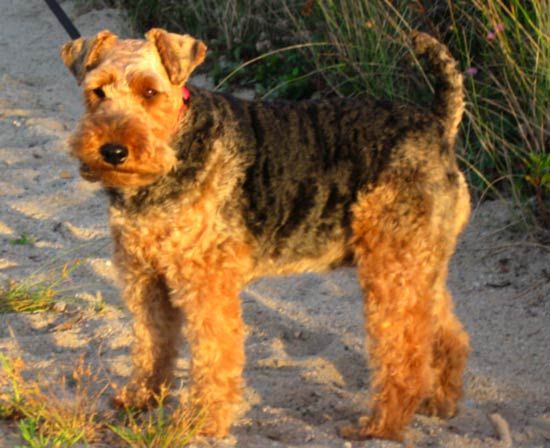
The Welsh terrier is a breed of dog native to Wales, historically developed for hunting foxes, otters, and badgers.12
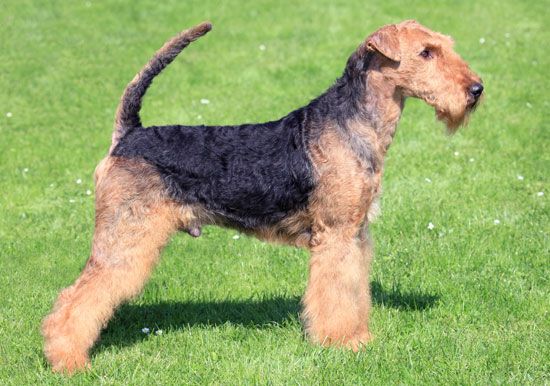
Physically, the breed is characterized by its hard, wiry coat, which is typically black-and-tan in color. It bears a resemblance to the Airedale terrier but is smaller in stature, standing approximately 15 inches (38 cm) tall and weighing about 20 pounds (9 kg). The breed is known for its energetic and game temperament, with a flat skull and wide-set eyes that contribute to its distinctive, intelligent expression.12
How does the Welsh terrier compare to the Airedale terrier?
The Welsh terrier and the Airedale terrier share a similar appearance, often leading the Welsh terrier to be described as a smaller, Airedale-like dog. Despite these visual similarities, they differ significantly in size and specific physical specifications.12
Comparison Table
Feature
Welsh Terrier
Airedale Terrier
Height
~15 inches (38 cm)
~23 inches (58 cm)
Weight
~20 pounds (9 kg)
40–50 pounds (18–23 kg)
Coat
Hard, wiry, black-and-tan
Wiry, dense, black-and-tan
Origin
Wales
England
Key Distinctions
- Purpose and Size: While both breeds belong to the terrier group, the Welsh terrier was developed in Wales specifically for hunting foxes, otters, and badgers. The Airedale is the largest of the terrier breeds and is noted for its high intelligence, having been utilized in roles such as law enforcement.134
- Physical Traits: Both breeds possess a characteristic wiry coat and a black-and-tan color pattern. However, the Welsh terrier’s smaller frame distinguishes it from the much larger, well-muscled Airedale.14
What are the common traits of the terrier group of dogs?
The terrier group comprises a diverse collection of breeds, primarily originating in the United Kingdom, that share a common ancestry and distinct behavioral traits.35
Common Traits and Characteristics
- Temperament: Terriers are renowned for their spirited, energetic, and tenacious personalities. Because they were historically bred to confront prey that often fought back, they are fearless, vocal, and naturally inclined to chase and confront. While generally playful and affectionate, their strong prey drive can make them quarrelsome with other dogs or small pets.35
- Physical Build: Form follows function in this group. Terriers bred for underground work often have shorter legs to fit into burrows, while those working aboveground tend to have squarer proportions. Common physical features include a long head, strong, square jaw, and deep-set eyes.53
- Coat: Many terriers possess a tough, wiry coat designed for protection, which requires specific grooming such as hand-stripping to maintain its texture.35
- Purpose: These dogs were historically developed for tasks such as vermin control in barns and stables, foxhunting, and, in some cases, dogfighting.35
What other dog breeds originated in Wales?
In addition to the Welsh terrier, several other dog breeds originated in Wales:
- Cardigan Welsh Corgi: Traced back to dogs brought to Cardiganshire by the Celts around 1200 BCE, this breed is known for its long, low body, large ears, and long tail.78
- Pembroke Welsh Corgi: Descended from dogs brought to Pembrokeshire between the 10th and 12th centuries, this breed is typically smaller than the Cardigan and is characterized by a docked or naturally short tail.78
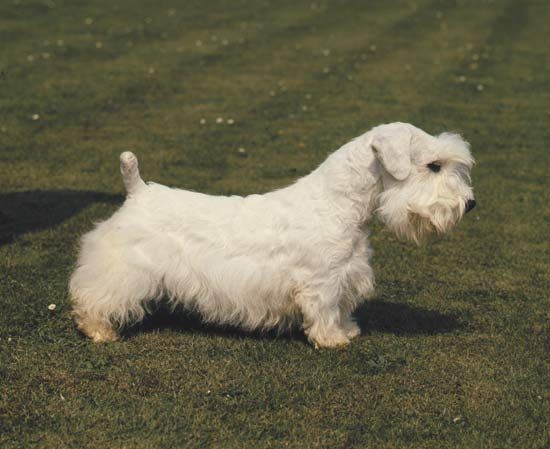
- Sealyham terrier: Developed in the latter half of the 19th century by Captain John Edwardes at his estate in Wales, this sturdy, short-legged breed was specifically bred for hunting foxes, otters, and badgers.9
Sources
- Welsh terrier — Encyclopædia Britannica
- Welsh terrier — Merriam-Webster
- terrier — Encyclopædia Britannica
- Skye terrier — Encyclopædia Britannica
- dog - Origin of breeds — Encyclopædia Britannica
- dog - Terriers — Encyclopædia Britannica
- Sealyham terrier — Encyclopædia Britannica
- Welsh Corgi — Encyclopædia Britannica
- herding dog — Encyclopædia Britannica
Published on · 3 min read