Why Do Yaks Have Long Hair on Their Bodies?
Yaks possess long hair primarily because it is essential for their survival in the extreme cold of high-altitude environments, such as the Himalayas and the…
Why do yaks have long hair on their bodies?
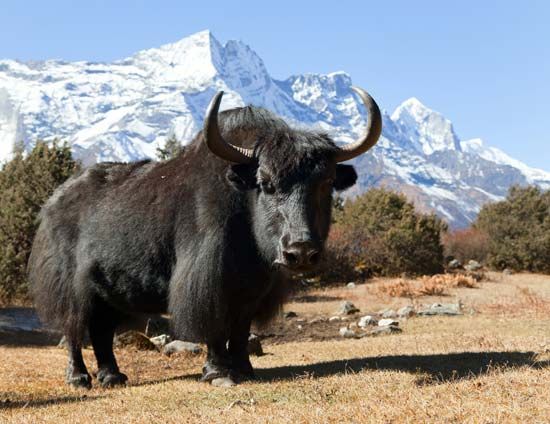
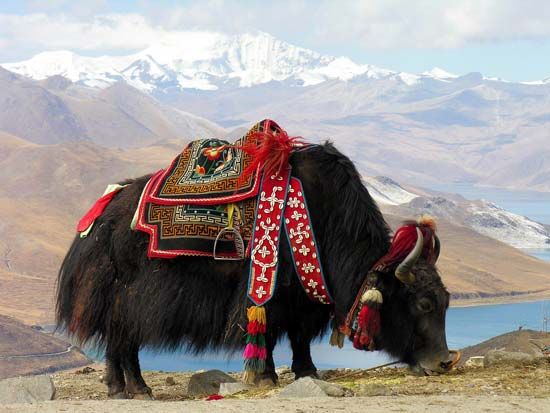
Yaks possess long hair primarily because it is essential for their survival in the extreme cold of high-altitude environments, such as the Himalayas and the Tibetan Plateau.1
Their coat is dense and double-layered, consisting of a coarse outer layer and a soft undercoat. This structure effectively traps body heat and provides a critical barrier against chilling winds and snow, enabling the animals to thrive in temperatures as low as −40 °C (−40 °F). Because of this specialized insulation and their limited number of sweat glands, yaks struggle to survive in warmer conditions at lower elevations.12
How do yaks adapt to the low oxygen levels at high altitudes?
Yaks are genetically adapted to thrive in the low-oxygen environments of high altitudes, distinguishing them from humans who rely on physiological acclimatization.
Their primary adaptations include:
- High Oxygen Affinity: Their hemoglobin possesses a high affinity for oxygen, allowing their blood to reach full saturation even when the partial pressure of oxygen in the environment is low.1
- Enhanced Lung Capacity: Yaks have a lung capacity approximately three times larger than that of cattle.3
- Blood Composition: They possess a greater number of smaller red blood cells, which significantly improves the blood’s overall efficiency in transporting oxygen to their tissues.3
Unlike humans who may experience increased blood pressure or changes in their carotid bodies when exposed to high altitudes, yaks maintain stable physiological functions, such as normal blood pressure in the lungs and small carotid bodies, as these traits are heritable and deeply ingrained in their biology.1
What are the main differences between wild and domestic yaks?
Wild and domestic yaks are closely related, though they are sometimes classified as separate species: the wild yak as Bos mutus and the domestic yak as Bos grunniens.2
The primary differences between them include:
- Size: Wild yaks are significantly larger than their domestic counterparts. Bulls in the wild can stand up to 2 metres tall at the shoulder and weigh over 800 kg, whereas domestic yaks are generally smaller.2
- Coloration: Wild yaks typically feature a uniform blackish or brown coat. In contrast, domestic yaks exhibit much more variable coloration, with white splotches being a common trait.2
- Temperament and Utility: Domestic yaks have been selectively bred for tractability, making them suitable for use as beasts of burden, plowing, and threshing. They are also valued for high milk production, meat, hides, and fur. Wild yaks, by nature, are not domesticated and live in migratory herds.2
Despite these differences, the two groups are capable of interbreeding, a practice that currently poses a conservation threat to the genetic purity of the wild population.2
How do yaks obtain water in their freezing mountain habitats?
In their freezing, high-altitude habitats, yaks have developed a simple yet effective strategy for hydration: they obtain water by eating snow when necessary.1
Sources
- Why do yaks have long hair on their bodies? — Encyclopædia Britannica
- yak — Encyclopædia Britannica
- human respiratory system - High altitudes — Encyclopædia Britannica
Published on · 2 min read