Beef Cattle Breeds
Modern beef cattle breeds are primarily derived from the species Bos taurus (European) or Bos indicus (Zebu), or crosses between the two. These breeds were…
What is Beef cattle breeds?
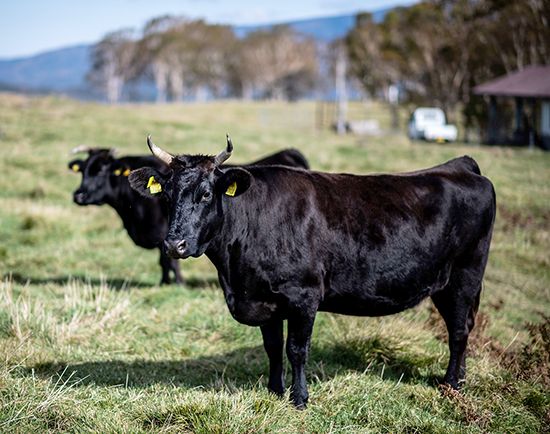
Modern beef cattle breeds are primarily derived from the species Bos taurus (European) or Bos indicus (Zebu), or crosses between the two. These breeds were developed through generations of selective breeding to enhance specific traits such as disposition, fertility, weight, conformation, and hardiness to meet the global demand for beef.12
While the definition of a “breed” can be complex, it generally refers to animals selectively bred over time to possess and perpetuate distinctive characteristics like color, size, and function. The British Isles were historically influential in developing foundational breeds, though significant varieties have originated worldwide, including in France, Switzerland, Japan, and India.21
Ethical considerations regarding intensive animal farming and the environmental impact of commercial meat production remain important topics of contemporary debate.2
Selected Beef Cattle Breeds
Name
Origin
Characteristics
Angus
Scotland
Hornless, black, compact
Brahman
India
Gray, large shoulder hump
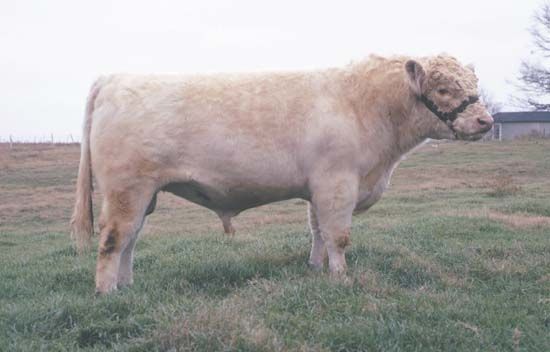
Charolais
France
Unusually large, white
Hereford
England
Red and white, compact
Shorthorn
England
Red or roan, rapid maturity
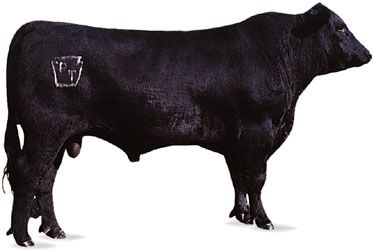
What is the difference between Bos taurus and Bos indicus cattle?
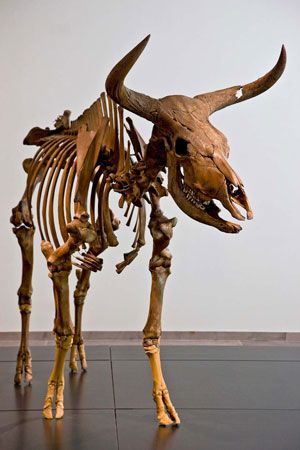
All modern domestic cattle are categorized into two primary species: Bos taurus and Bos indicus. These species originated from the aurochs, a wild ancestor that was domesticated 8,000 to 10,000 years ago in the Fertile Crescent.456
Key Differences
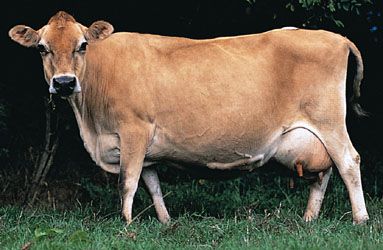
- Bos taurus: Often referred to as European or humpless cattle, these breeds were historically developed in regions like the British Isles and continental Europe. Examples include the Shorthorn, Jersey, and Hereford.6574
- Bos indicus: Also known as Zebu or humped cattle, these breeds originated in India. They are physically distinguished by a pronounced hump of fat and muscle above the shoulders, drooping ears, and horns that typically curve up and back.6371
These species are often crossbred to combine desirable traits, such as the hardiness and heat tolerance of Bos indicus with the meat or milk production qualities of Bos taurus. Notable examples of such crosses include the Santa Gertrudis and the Brangus.174
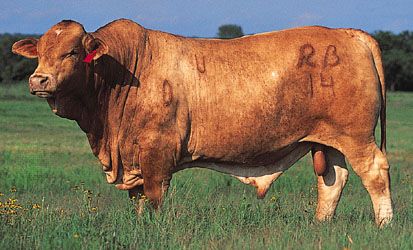
Why do farmers choose to crossbreed different cattle varieties?
Farmers choose to crossbreed different cattle varieties primarily to enhance the economic value of their livestock by combining complementary traits and leveraging the benefits of heterosis, or hybrid vigor.8
Key Reasons for Crossbreeding
- Complementary Traits: Breeders select parent breeds that possess different strengths. For example, crossing Angus cattle, known for high-quality beef, with Charolais, known for their large size, results in offspring that exhibit both desirable quality and increased growth.8
- Hybrid Vigor: Crossbreeding often produces offspring that outperform the average of their parent breeds in traits such as fertility, growth rate, and overall size. This effect is particularly pronounced when the parent breeds are genetically dissimilar.8
- Environmental Adaptation: Crossbreeding is used to introduce hardiness into herds. For instance, the Santa Gertrudis and Brangus breeds were developed by crossing standard cattle with Brahman cattle to gain resistance to heat and insects, allowing the animals to thrive in challenging climates.9
Because the benefits of heterosis often diminish in subsequent generations, farmers typically maintain purebred lines to continue producing high-performing crossbred stock.8
What are the main differences between beef cattle and dairy cattle?
The primary difference between beef and dairy cattle lies in the specific traits for which they have been selectively bred over generations. While all cattle descend from the same ancestral aurochs, modern breeds are specialized to optimize either meat or milk production.1112
Key Differences
- Primary Purpose: Dairy cattle, such as the Holstein-Friesian, are bred to produce large quantities of milk. In contrast, beef cattle, such as the Hereford and Angus, are bred to produce muscle and reach a target weight efficiently.11
- Physical Characteristics: Beef cattle tend to be much heftier than dairy cows, as they are selected for conformation and growth rate. Dairy cows often have a more angular, wedge-shaped body structure.111
- Management Systems: Dairy operations are typically more intensive because cows must be handled daily for milking. Beef cattle are generally farmed in less intensive systems, often requiring minimal handling and housing, as they are raised primarily on pasture.1113
- Life Cycle: Dairy cows are kept for their milk production, which lasts about 10 months after calving. When their milk yield declines, they are often culled from the herd and used for meat. Beef cattle are raised specifically for their carcasses, with calves often weaned at eight to ten months.1113
Sources
- Beef cattle breeds — Encyclopædia Britannica
- Cow - Beef cattle breeds — Encyclopædia Britannica
- Cattle — Encyclopædia Britannica
- Cattle: Top Questions — Encyclopædia Britannica
- Milk - 8000 BC - Origins of the domestic cow — Encyclopædia Britannica
- humped cattle — Merriam-Webster
- Brahman — Encyclopædia Britannica
- Animal breeding - Crossbreeding — Encyclopædia Britannica
- Origins of agriculture - Beef cattle — Encyclopædia Britannica
- Animal breeding - Breeding and variation — Encyclopædia Britannica
- Cow - Domestication and economic production — Encyclopædia Britannica
- Dairy cattle breeds — Encyclopædia Britannica
- Livestock farming - Beef cattle management — Encyclopædia Britannica
Published on · 3 min read