Dairy Cattle Breeds
Dairy cattle breeds are specific types of cattle developed through selective breeding to maximize the production of milk, butterfat, and protein. While early…
What is Dairy cattle breeds?
Dairy cattle breeds are specific types of cattle developed through selective breeding to maximize the production of milk, butterfat, and protein. While early cattle were primarily raised for meat, modern dairy cows have seen dramatic increases in yield, with some producing up to 10,000 liters annually.1
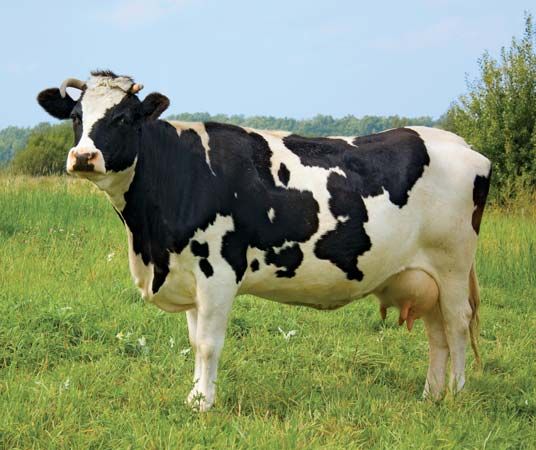
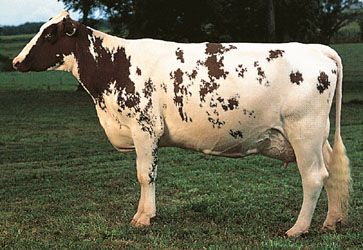
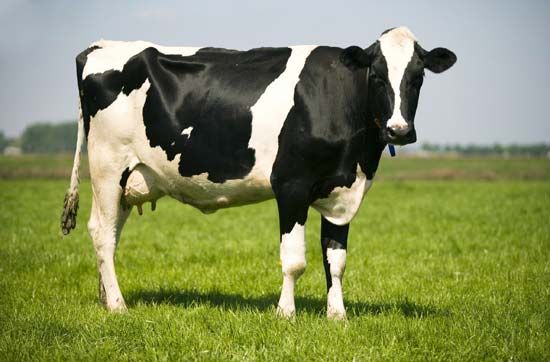
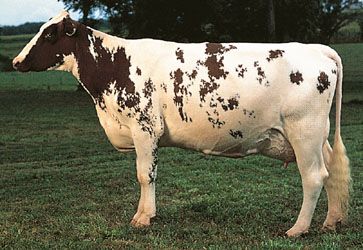
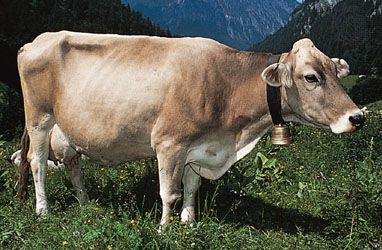
The industry recognizes five major breeds:
- Holstein-Friesian: Known for the highest milk volume; they are the most common dairy breed globally.12
- Ayrshire: A hardy breed with a deep, fleshy body.1
- Brown Swiss: A hardy, wedge-shaped breed.1
- Guernsey: Valued as an excellent milk producer.1
- Jersey: A docile, efficient breed that produces milk with high fat and solid concentrations.12
Additionally, dual-purpose breeds like the Milking Shorthorn are used for both milk and meat production.1
How does selective breeding improve milk production in cattle?
Selective breeding improves milk production in cattle by systematically identifying and propagating the genotypes responsible for high-yield traitsgenotypes](https://www.britannica.com/science/genotype) responsible for high-yield traits. Because milk production is a sex-limited character, breeders focus on selecting bulls with superior genetic merit to sire the next generation of cows.534
The process relies on several key methods:
- Progeny Testing: Breeders evaluate a bull’s genetic value by comparing the milk-production records of his daughters to their mothers. To ensure high accuracy, young sires are mated to enough cows to produce 60 to 80 progeny; the best 10 percent are then used extensively to produce commercial cows.53
- Artificial Insemination: This technology allows a single genetically superior bull to sire tens of thousands of daughters, rapidly spreading desirable traits throughout the population.53
- Genomic Testing: Modern breeders use DNA analysis to estimate a bull’s milk-producing potential before his daughters even mature, significantly accelerating the rate of genetic gain compared to waiting for traditional production records.3
By consistently applying these selection procedures, the industry has achieved steady, long-term increases in milk yield, ensuring that modern dairy cows produce significantly more than their ancestors.543
What are the main differences between dairy and beef cattle?
The primary distinction between dairy and beef cattle lies in their selective breeding, which has optimized them for different economic purposes.
Key Differences
- Primary Function: Dairy cattle are specifically bred to produce large quantities of milk, whereas beef cattle are bred to produce muscle (meat).67
- Physical Characteristics: Beef cattle tend to be much heftier than dairy cows, which are often described as having a wedge-shaped or deep, fleshy body.67
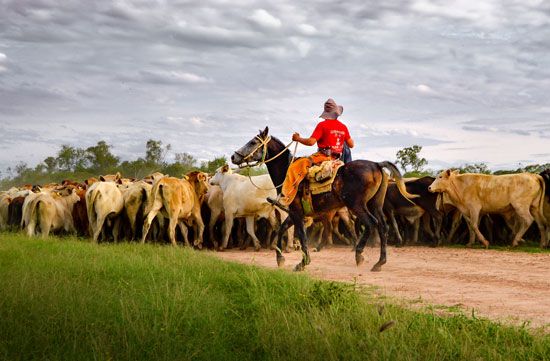
- Management Systems: Dairy operations are intensive, as cows are handled daily for milking. In contrast, beef cattle are typically farmed in less intensive systems, often grazing on pasture with minimal handling.68
- Breeding Practices: Because dairy bulls can be aggressive and challenging to manage, most breeding in the dairy industry is conducted via artificial insemination. Beef cattle management often utilizes pasture breeding, where bulls are kept with herds, though artificial insemination is also used in some commercial operations.68
- Life Cycle: Dairy cows are milked for about 10 months following calving. When their milk yield declines, they are often culled from the herd and used for meat. Beef cattle are raised specifically for their growth rate and carcass quality, with calves typically weaned at eight to ten months.68
How has artificial insemination changed the dairy industry?
Artificial insemination has fundamentally transformed the dairy industry by enabling the rapid and widespread dissemination of superior genetic traits. By allowing a single genetically elite bull to sire tens of thousands of daughters—compared to only 30 to 50 through natural mating—this technology has become the primary driver of consistent, long-term increases in milk production.3122
The integration of artificial insemination has changed the industry in several key ways:
- Genetic Control: Approximately 70 percent of dairy cattle are now bred via artificial insemination, meaning a small number of progeny-tested sires effectively control the genetic destiny of the population.3
- Efficiency and Scale: Advances in semen cryopreservation (freezing) allow genetic material to be stored indefinitely and transported globally, facilitating the use of the best sires across vast distances.122
- Selection Accuracy: The technology works in tandem with progeny testing and genomic testing, ensuring that only the most productive genetic lines are propagated.313
This collaborative effort between producers and breeding organizations has enabled modern dairy cows to achieve significantly higher lifetime milk yields than their predecessors.3132
Sources
- Dairy cattle breeds — Encyclopædia Britannica
- Why are Holstein cows so popular? — Encyclopædia Britannica
- Animal breeding - Progeny testing — Encyclopædia Britannica
- Are all dairy cattle female? — Encyclopædia Britannica
- selective breeding — Encyclopædia Britannica
- Cow - Domestication and economic production — Encyclopædia Britannica
- Cow - Beef cattle breeds — Encyclopædia Britannica
- Beef cattle breeds — Encyclopædia Britannica
- Livestock farming - Beef cattle management — Encyclopædia Britannica
- Livestock farming - Beef cattle feed — Encyclopædia Britannica
- Cattle — Encyclopædia Britannica
- Animal breeding - Accuracy of selection — Encyclopædia Britannica
- artificial insemination — Encyclopædia Britannica
- Origins of agriculture - Artificial breeding — Encyclopædia Britannica
- artificial insemination — Merriam-Webster
Published on · 3 min read