Wild Mango
Wild mango refers to trees in the genus Irvingia, which are native to tropical Africa and belong to the family Irvingiaceae. While they produce an edible…
What is wild mango?
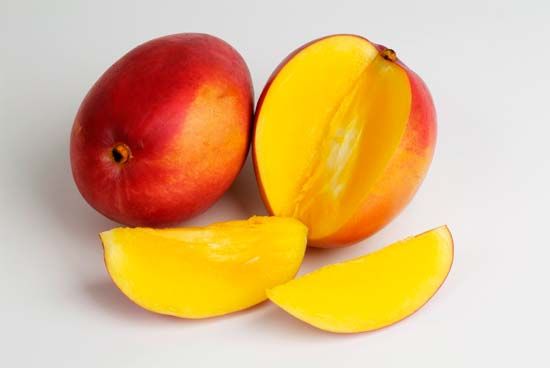
Wild mango refers to trees in the genus Irvingia, which are native to tropical Africa and belong to the family Irvingiaceae. While they produce an edible yellow fruit that bears a superficial resemblance to the common mango (Mangifera indica), the two are not closely related.12
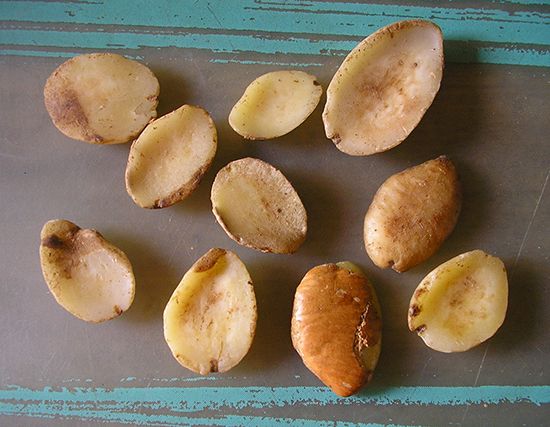
These trees are particularly valued for their oil-rich seeds, which are used locally to produce a type of butter and a food product known as dika bread. Additionally, the wood of the wild mango is notably hard, heavy, and resistant to termite attacks, making it a useful material for local building construction.12
How is dika bread made from the seeds?
Dika bread is a traditional food staple prepared from the seeds of the dika tree (Irvingia gabonensis), also known as the wild mango.561
The preparation process involves several steps:
- Processing the Kernels: The seed kernels are typically roasted, similar to the process used for coffee beans.6
- Grinding and Seasoning: The roasted kernels are ground into a paste, which is often mixed with pepper and other spices to enhance the flavor.5
- Molding: The resulting mixture is pounded and poured into a mold to form the bread.6
- Culinary Use: This paste, which is described as somewhat acid and astringent, is frequently added to boiling meat and vegetables as a thickening agent or flavoring.56
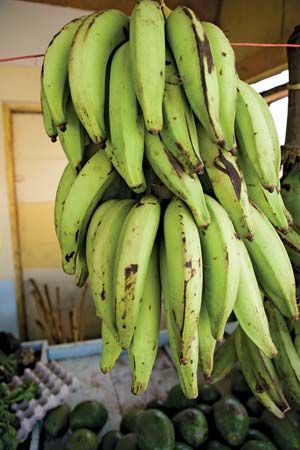
Beyond its use as a bread, the seeds are also ground into flour, used to extract fat for soap and candlemaking, or prepared as a relish to be eaten with plantains.6
What are the main differences between wild mango and common mango?
While the wild mango and the common mango share a name and a superficial resemblance in their yellow fruit, they are distinct plants with significant biological and functional differences.
Biological Classification
- Common Mango (Mangifera indica): A member of the cashew family (Anacardiaceae), this tree is indigenous to southern Asia, particularly regions in India and Myanmar.2
- Wild Mango (genus Irvingia): These trees belong to the family Irvingiaceae and are native to tropical Africa. They are not closely related to the common mango.41
Primary Uses
- Common Mango: Primarily cultivated for its juicy, sweet-spicy fruit, which is a rich source of vitamins A, C, and B complex. It is widely used in culinary applications, including jams, jellies, and drinks.2
- Wild Mango: While the fruit is edible, the tree is especially valued for its oil-rich seeds. These seeds are processed into dika bread and butter. Additionally, the tree provides a hard, heavy wood that is highly resistant to termite attacks, making it a valuable material for local building construction.41
Why is the wood of the wild mango tree so valuable?
The wood of the wild mango tree is highly valued primarily due to its physical durability and resilience in tropical environments.
Key characteristics that contribute to its value include:
- Hardness and Density: The wood is classified as hard and heavy, providing the structural integrity necessary for reliable building construction.12
- Termite Resistance: A critical feature of the wood is its exceptional resistance to termite attacks. In regions where termites are a significant threat to wooden structures, this natural defense makes the wood a preferred material for local building projects.2
- Practical Utility: Because of its strength and durability, it serves as a vital resource for local communities, offering a sustainable and effective option for construction that withstands environmental pressures.12
Sources
- wild mango — Encyclopædia Britannica
- wild mango — Merriam-Webster
- Mango: Top Questions — Encyclopædia Britannica
- Mango — Encyclopædia Britannica
- dika bread — Merriam-Webster
- Dika — Encyclopædia Britannica
Published on · 3 min read