Witch Hazel
Witch hazel refers to any of the five species of shrubs or small trees belonging to the genus Hamamelis. These plants are characterized by their deciduous…
What is witch hazel and where does it naturally grow?
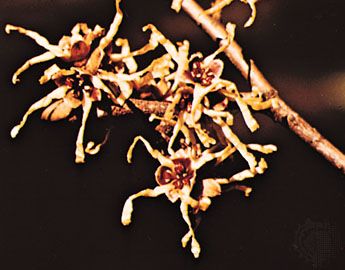
Witch hazel refers to any of the five species of shrubs or small trees belonging to the genus Hamamelis. These plants are characterized by their deciduous, oval leaves and distinctive yellow flowers with four narrow, ribbonlike petals that bloom in late fall, winter, or early spring.12
Regarding their natural habitat, witch hazel species are native to eastern North America and eastern Asia. The common witch hazel (H. virginiana), which is native to eastern North America, is particularly well-known for its use in producing a fragrant, astringent liniment derived from its dried leaves, bark, and twigs. The name itself originates from the historical use of the plant’s forked twigs for dowsing, a practice intended to locate underground water.12
What are the distinctive features of the witch hazel plant?
Witch hazel plants, belonging to the genus Hamamelis, are defined by several distinct botanical characteristics:
- Growth Habit: They are deciduous shrubs or small trees that typically reach heights of up to 4.5 meters (15 feet).1
- Foliage: The plants feature oval, toothed leaves that are prominently veined.1
- Flowers: A primary ornamental feature, the flowers grow in small clusters close to the branches. They are characterized by four narrow, twisted, ribbonlike petals that appear in shades of yellow or reddish-yellow. Depending on the species, these blooms emerge during late fall, winter, or early spring.13
- Fruit: The plants produce explosive fruits that typically ripen in the year following the flowering period.1
- Structure: Common witch hazel (H. virginiana) possesses a persistent, cuplike calyx that remains on the plant throughout the winter.1
These plants are members of the Hamamelidaceae family, which is known for woody fruits and alternate simple leaves.4
What are the different species of witch hazel and how do they differ?
The genus Hamamelis consists of five species of shrubs and small trees native to eastern North America and eastern Asia. While the genus is defined by shared traits—such as deciduous, prominently veined leaves and clusters of four-petaled, ribbonlike flowers—the species differ primarily in their blooming times and physical stature.1
Key species include:
- American, or common, witch hazel (H. virginiana): Native to eastern North America, this species grows up to 4.5 meters (15 feet) tall. It is distinct for blooming in the late fall, with its explosive fruits ripening the following year. Its yellow, cuplike calyx persists throughout the winter.1
- Vernal witch hazel (H. vernalis): A smaller species, typically reaching about 2 meters in height, which blooms in late winter or early spring.1
- Chinese witch hazel (H. mollis): A large deciduous shrub native to China, noted for its large, fragrant yellow flowers.2
Note that while some plants like Loropetalum chinense are sometimes referred to as “Chinese witch hazel,” they belong to a different genus within the Hamamelidaceae family.2
What are some common products that contain witch hazel and why is it included?
Witch hazel is a well-known astringent solution derived from the dried leaves, bark, and twigs of the American witch hazel plant (Hamamelis virginiana).12
Common Uses and Benefits
Because of its chemical properties, witch hazel is frequently included in a variety of personal care and medicinal products. Its primary function is to act as a soothing and mildly astringent lotion. Common applications include:2
- Skin Care: It is widely used in facial toners and cleansers to help tighten pores and remove excess oil from the skin.
- Medicinal Liniments: Due to its soothing nature, it is often found in topical treatments designed to relieve minor skin irritations, inflammation, and itching.
- Aftershave: Many aftershave products incorporate witch hazel to help calm the skin and reduce redness or irritation following shaving.
The effectiveness of these products stems from the plant’s natural compounds, which provide a cooling sensation and help cleanse the skin without causing excessive dryness.2
Sources
- witch hazel — Encyclopædia Britannica
- witch hazel — Merriam-Webster
- Hamamelidaceae — Encyclopædia Britannica
- Japanese witch hazel — Merriam-Webster
- Chinese witch hazel — Merriam-Webster
Published on · 3 min read