Squirting Cucumber
The squirting cucumber (Ecballium elaterium) is a trailing herbaceous plant belonging to the gourd family (Cucurbitaceae). Native to the Mediterranean, it is…
What is squirting cucumber?
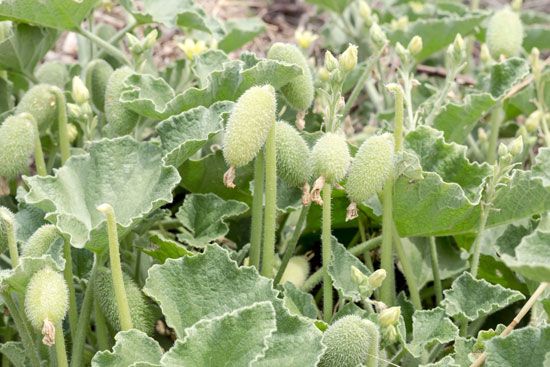
The squirting cucumber (Ecballium elaterium) is a trailing herbaceous plant belonging to the gourd family (Cucurbitaceae). Native to the Mediterranean, it is often grown as a garden curiosity due to its unique reproductive mechanism.12
The plant features hairy, rough stems and yellow, bell-shaped flowers. Its most notable characteristic is its fruit, which measures about 4–5 cm in length. When the fruit reaches maturity, it detaches from the stem and explosively ejects its seeds, which can travel up to 6 meters (20 feet) away.12
It is important to note that the squirting cucumber contains toxic compounds known as cucurbitacins. All parts of the plant are poisonous, and ingestion can be fatal; therefore, it should be handled with caution and never consumed.1
What other plants use explosive seed dispersal?
Plants that utilize explosive force to disperse their seeds are known as active ballists. Beyond the squirting cucumber, several other species employ this strategy through various mechanisms:
- Osmotic Pressure: The dwarf mistletoe builds up high internal osmotic pressure to blast seeds laterally up to 15 meters away at high velocities.34
- Drying and Warping: In plants like Scotch broom and gorse, the drying of dead tissues in seed pod valves causes them to warp. On hot days, this tension leads to an audible, explosive separation of the valves, violently releasing the seeds. Similarly, certain violets use the tension from drying fruits to fling their seeds.345
- High-Velocity Ejection: The sandbox tree is a notable champion of this method, with exploding capsules that can launch seeds up to 100 meters away at speeds reaching 70 meters per second. Other active ballists include geraniums, wood sorrel, witch hazel, touch-me-not, and acanthus.534
What are some common plants in the gourd family?
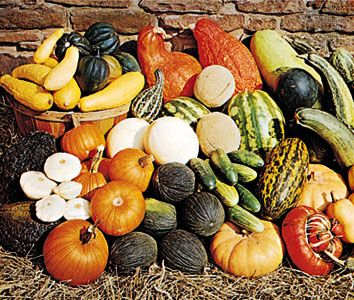
The Cucurbitaceae family, commonly known as the gourd family, includes approximately 975 species of flowering plants that are primarily fast-growing, vining herbs. These plants are widely cultivated for food and ornamental purposes.78
Common plants in this family include:
- Melons and Cucumbers: Cucumber, watermelon, muskmelon, and gherkin.8
- Squashes and Pumpkins: Various types of squash (genus Cucurbita), including zucchini, pumpkin, butternut squash, and acorn squash.89
- Gourds and Others: Bottle gourd, wax gourd, snake gourd, chayote, loofah, and bryony.8
Most of these species are sensitive to freezing temperatures and are characterized by their tendrils, which help support their vining stems, and their large, fleshy fruits known as pepos.78
How do poisonous plants protect themselves from herbivores?
Plants protect themselves from herbivores through a diverse array of chemical and structural defenses. While many plants are known for being poisonous, these defenses are often part of a broader strategy to deter consumption or signal threats to other plants.1011
Chemical Defenses
Many plants produce secondary metabolites—complex chemicals such as alkaloids, terpenes, and cardiac glycosides—that are stored in their tissues. These substances can sicken or kill herbivores, or simply make the plant taste unpalatable. For instance, cardenolides found in milkweed trigger vomiting in vertebrate predators, teaching them to avoid the plant in the future. Additionally, some plants use idioblasts, specialized cells that act like landmines by firing sharp crystals or releasing venomous enzymes when a herbivore bites into them.1211
Structural and Other Defenses
Beyond chemistry, plants employ physical barriers to discourage browsing:
- Armature: Structures like thorns, spines, and prickles provide a mechanical deterrent against larger animals.11
- Trichomes: These tiny, hair-like projections can impale small insects or, in the case of stinging nettles, inject painful toxins.11
- Defensive Mutualisms: Some plants, such as certain acacia trees, house and feed aggressive ants that actively defend the plant from herbivores.11
- Communication: When under attack, plants may release volatile organic compounds to warn neighboring plants, which may then increase their own chemical defenses or attract predators of the attacking pest.11
Sources
- squirting cucumber — Encyclopædia Britannica
- squirting cucumber — Merriam-Webster
- Seed - Self-dispersal — Encyclopædia Britannica
- Falling Far from the Tree: 7 Brilliant Ways Seeds and Fruits Are Dispersed — Encyclopædia Britannica
- Seed dispersal — Encyclopædia Britannica
- Seed dispersal - Self-dispersal — Encyclopædia Britannica
- Cucurbitaceae — Encyclopædia Britannica
- list of plants in the family Cucurbitaceae — Encyclopædia Britannica
- Squash — Encyclopædia Britannica
- Eating the rainforest — Encyclopædia Britannica
- Botanical Barbarity: 9 Plant Defense Mechanisms — Encyclopædia Britannica
- insecticide - Modes of penetration — Encyclopædia Britannica
- mimicry - The chemical basis for repulsion — Encyclopædia Britannica
Published on · 3 min read