Can the Cold Really Cause Trees to Explode?
Yes, extreme cold can indeed cause trees to "explode," a phenomenon known as frost cracking. When temperatures drop rapidly, the water within a tree's sap…
Can the Cold Really Cause Trees to Explode?
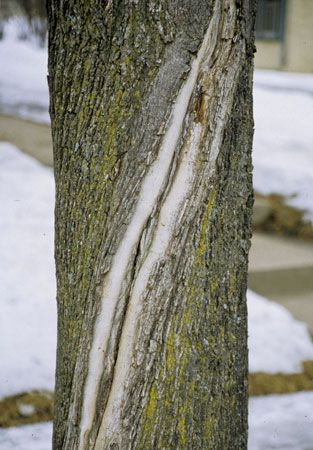
Yes, extreme cold can indeed cause trees to “explode,” a phenomenon known as frost cracking. When temperatures drop rapidly, the water within a tree’s sap and vascular tissues freezes and expands, much like water in a sealed container.1
Simultaneously, the tree’s outer bark contracts at a different rate than the inner tissues, creating significant mechanical stress. When this pressure becomes too great, the tree trunk or branches split, often producing a loud noise similar to a gunshot.1
While these events do not involve fire or smoke, they are technically explosions—defined as a rapid bursting out. These cracks pose safety hazards, as they can cause branches to fall, and they threaten the tree’s health by creating entry points for insects, fungi, and bacteria during the spring thaw.1
How do trees protect themselves from freezing temperatures?
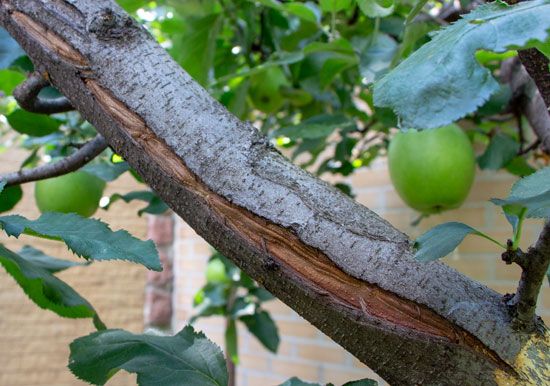
Trees employ several sophisticated strategies to survive freezing temperatures, primarily by managing energy and physical structure.
Leaf Shedding and Abscission
Deciduous trees protect themselves by shedding their leaves before winter. Because thin leaves are highly susceptible to freezing—which would rupture their cells as water expands—dropping them prevents damage and conserves energy. This is a controlled process called abscission, where a specialized layer of cells forms to detach the leaf without leaving an open wound. By shedding leaves, trees also reduce their surface area, preventing breakage from high winds or the weight of accumulated snow.23
Dormancy
Trees enter a state of dormancy, a period of reduced metabolic activity. This adaptive mechanism allows them to conserve energy and survive environmental stress.45
Specialized Adaptations
While deciduous trees shed their leaves, evergreen plants utilize different protections, such as thick waxes and resins, to insulate their foliage against freezing and fracturing.3
What are some other ways plants disperse their seeds?
Plants have evolved a variety of ingenious methods to disperse their seeds away from the parent plant, ensuring the survival and colonization of new habitats. Beyond the common agents of wind and water, these mechanisms include:
- Animal Dispersal (Zoochory): Many plants rely on animals to move their seeds. This occurs through endozoochory, where animals consume fleshy fruits and later excrete the seeds, often at a distance from the parent. Other plants utilize passive transport, where seeds or fruits adhere to an animal’s fur or claws.67
- Explosive Mechanisms: Some plants, such as the touch-me-not and witch hazel, possess explosive capsules that forcefully eject seeds into the air when mature.6
- Water Dispersal (Hydrochory): Plants in aquatic or coastal environments often produce buoyant seeds or fruits. For example, the coconut palm uses its fibrous husk to float across oceans, while other species utilize specialized air-containing tissues called aerenchyma to stay afloat.869
- Splash-Cup Mechanism: Similar to some fungi, certain plants like pearlwort and miterwort use an open fruit capsule that releases seeds when struck by raindrops.89
How do insects and fungi damage a tree after a frost crack?
When a tree experiences a frost crack—a rupture caused by the rapid expansion of freezing sap and the contraction of outer bark—it suffers a significant breach in its natural defenses. These splits expose the tree’s tender inner tissues, creating a vulnerable entry point for various pathogens and pests.1
- Fungal Infection: The exposed wood provides an ideal gateway for fungi, particularly those responsible for heartrot. Once these fungi gain entrance through such wounds, they can begin to decay the tree’s internal wood, which can significantly shorten the tree’s lifespan and structural integrity.114
- Insect Infestation: The crack also serves as an accessible site for insects to colonize. Many destructive insects, such as bark beetles, are adapted to exploit damaged areas. By boring into the tree, they can disrupt the flow of nutrients and food to the roots, which often leads to the death of the tree.114
Because these wounds bypass the tree’s protective bark, they effectively remove the primary barrier that otherwise keeps these organisms in check, turning a cold-weather injury into a long-term health risk.114
Sources
- Can the Cold Really Cause Trees to Explode? — Encyclopædia Britannica
- Deciduous forest: Top Questions — Encyclopædia Britannica
- Why Do Leaves Fall in Autumn? — Encyclopædia Britannica
- Dormancy — Encyclopædia Britannica
- Dormancy - Value of dormancy — Encyclopædia Britannica
- Seed dispersal - Hydrochory: dispersal by water — Encyclopædia Britannica
- Seed - Dispersal by wind — Encyclopædia Britannica
- Seed dispersal — Encyclopædia Britannica
- Angiosperm - Mechanisms of dispersal — Encyclopædia Britannica
- Seed dispersal - Anemochory: wind dispersal — Encyclopædia Britannica
- Seed dispersal - Zoochory: animal dispersal — Encyclopædia Britannica
- Seed - Dispersal by water — Encyclopædia Britannica
- Fruit - Dispersal — Encyclopædia Britannica
- forestry - Insect and disease control — Encyclopædia Britannica
Published on · 3 min read