Woolly Spider Monkey
The woolly spider monkey, or muriqui (Brachyteles), is an extremely rare primate native to the Atlantic forests of southeastern Brazil. These animals are…
What are the main threats to the survival of woolly spider monkeys, and what conservation efforts are in place to protect them?
The woolly spider monkey, or muriqui (Brachyteles), is an extremely rare primate native to the Atlantic forests of southeastern Brazil. These animals are currently considered critically endangered.1
Threats to Survival
The primary threat to the survival of the woolly spider monkey is the extreme fragmentation of its forest habitat. As these monkeys rely on the treetops for their survival—gathering leaves, seeds, and fruit while remaining in the canopy—the destruction and clearing of these forests directly compromise their ability to forage and maintain viable social groups. While the provided search results do not detail specific ongoing conservation programs, the classification of these primates as critically endangered highlights the urgent need for habitat preservation to prevent their extinction.1
It is a moral imperative to protect these unique species and their ecosystems from further degradation, as the loss of biodiversity diminishes the natural heritage of our planet.
Where is the natural habitat of the woolly spider monkey, and what is its current conservation status?
The woolly spider monkey (genus Brachyteles) is found exclusively in the remaining Atlantic forests of southeastern Brazil. These primates are divided into two distinct species based on their geographic range: the southern muriqui (B. arachnoides), located in the states of Rio de Janeiro and São Paulo, and the northern muriqui (B. hypoxanthus), found in Bahia, Minas Gerais, and Espírito Santo.1
Regarding their conservation status, woolly spider monkeys are classified as critically endangered. Their survival is severely threatened by the extreme fragmentation of their forest habitats, which restricts their ability to forage and maintain social groups. Protecting these habitats is a moral necessity, as the preservation of such rare species is essential to maintaining global biodiversity and the integrity of the natural world.1
What is the scientific name of the woolly spider monkey, and why is it called by this name?
The scientific name for the woolly spider monkey is the genus Brachyteles.1
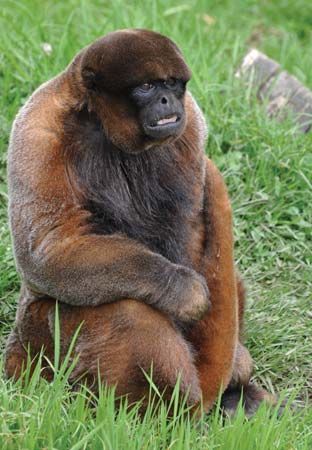
The common name “woolly spider monkey” is derived from the fact that the animal is structurally and physically intermediate between two other groups of New World monkeys: the woolly monkeys (genus Lagothrix) and the spider monkeys (genus Ateles).1
Its physical characteristics reflect this hybrid-like appearance:
- Resemblance to woolly monkeys: It possesses thick fur, a heavy body, and a protruding abdomen.1
- Resemblance to spider monkeys: It features long limbs and reduced or absent thumbs.1
While the name suggests a direct relationship to both, the woolly spider monkey is actually more closely related to the woolly monkey than to the spider monkey, though all three belong to the family Atelidae.1
How does the woolly spider monkey’s anatomy adapt to its arboreal lifestyle?
The woolly spider monkey (Brachyteles) is highly specialized for an arboreal lifestyle, navigating the treetops of the Atlantic forests through several key anatomical adaptations:
- Prehensile Tail: The monkey possesses a long, powerful tail that functions as a “fifth limb.” This adaptation allows the animal to hang securely from branches, providing stability while foraging for leaves, seeds, and fruit in the canopy.14
- Limb Structure: Similar to true spider monkeys, the woolly spider monkey has evolved long limbs that facilitate movement through the trees. While they are considered semibrachiators, these long limbs assist in reaching across gaps between branches and moving efficiently through the forest environment.154
- Reduced Thumbs: A notable adaptation is the reduction or total absence of the thumb. In the southern muriqui (B. arachnoides), the thumb is entirely absent, while the northern muriqui (B. hypoxanthus) possesses a rudimentary one. This anatomical trait is associated with their specialized mode of locomotion, which emphasizes swinging and reaching rather than the precision grasping required by other primates.12
These features collectively allow the woolly spider monkey to remain almost exclusively in the treetops, where it spends its life moving among the highest branches.14
Sources
- woolly spider monkey — Encyclopædia Britannica
- spider monkey — Encyclopædia Britannica
- woolly spider monkey — Merriam-Webster
- Locomotion - Brachiation — Encyclopædia Britannica
- brachiation — Encyclopædia Britannica
Published on · 3 min read