Woolly Monkey
Woolly monkeys (genus Lagothrix) are densely furred primates characterized by their sturdy, thick bodies and protruding bellies, which earned them the…
What are the distinguishing physical characteristics of woolly monkeys?
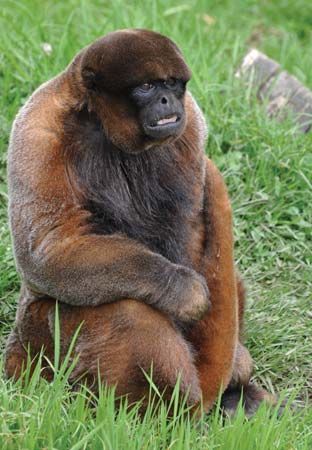
Woolly monkeys (genus Lagothrix) are densely furred primates characterized by their sturdy, thick bodies and protruding bellies, which earned them the Portuguese name barrigudo (“big belly”).1
Key physical characteristics include:
- Size: They typically measure 40–60 cm (16–24 inches) in length, excluding a thick, prehensile tail that is longer than the body. Females average 7 kg (15.5 pounds), with males weighing slightly more.1
- Appearance: They possess large, round heads with bare black or brown faces. Their fur is short and varies in color by species, ranging from tan, gray, and reddish to black, sometimes with darker heads.1
- Limbs: They have sturdy limbs and are capable of standing erect on the ground, using their tail for support.1
A distinct species, the yellow-tailed woolly monkey (Oreonax flavicauda), differs significantly with its silky mahogany-colored fur, a whitish nose, and a yellow stripe on the underside of its tail.1
What role do woolly monkeys play in the mythology and culture of indigenous Amazonian peoples?
Where are woolly monkeys primarily found in the wild?
Woolly monkeys (genus Lagothrix) are primarily found in the rainforests of the western Amazon River basin.1
A distinct species, the yellow-tailed woolly monkey (Oreonax flavicauda), is restricted to the cloud forests of northern Peru. It is important to distinguish these from the woolly spider monkey, which is a separate, rare primate found only in the Atlantic forests of southeastern Brazil.12
How do woolly monkeys compare to other New World monkeys in terms of size and behavior?
Woolly monkeys (genus Lagothrix) are members of the family Atelidae, a group of New World monkeys that also includes spider monkeys and the woolly spider monkey.
Size Comparisons
Woolly monkeys are generally robust, with a large, round head and a thick body that features a protruding belly. They typically measure 40–60 cm (16–24 inches) in length, excluding their prehensile tail, with females weighing about 7 kg (15.5 pounds) and males slightly more. In comparison:2
- Spider monkeys are lankier and weigh approximately 6 kg (13.2 pounds), with body lengths ranging from 35–66 cm.1
- Woolly spider monkeys are the largest monkeys in South America, with females averaging 8 kg and males reaching 9.6 kg.5
Behavioral Differences
While all three groups are diurnal and arboreal, their movement and social habits differ:
- Movement: Woolly monkeys are relatively slow-moving and travel primarily on all fours, though they use their prehensile tails for support and swinging. Conversely, spider monkeys are exceptionally agile, often leaping or dropping between trees, and they rarely descend to the ground.21
- Sociality: Woolly monkeys are gregarious and often associate with other species like capuchins and howlers. Spider monkeys live in large bands but forage in smaller, flexible groups.21
Sources
- woolly monkey — Encyclopædia Britannica
- woolly spider monkey — Encyclopædia Britannica
- Lagothrix — Merriam-Webster
- primate - Distribution and abundance — Encyclopædia Britannica
- spider monkey — Encyclopædia Britannica
Published on · 2 min read