Yam
Yams, which are edible tubers from the genus Dioscorea, hold significant cultural and religious importance in various tropical regions. In West Africa and…
How do yams play a role in cultural or religious traditions in different parts of the world?
Yams, which are edible tubers from the genus Dioscorea, hold significant cultural and religious importance in various tropical regions. In West Africa and New Guinea, the yam is not merely a staple food crop but serves as a primary agricultural commodity and the focal point of elaborate rituals.1
It is important to clarify that while the term “yam” is frequently used in the United States to describe moist-fleshed varieties of sweet potatoes, these are botanically distinct plants. True yams belong to the family Dioscoreaceae and are essential to the social and ceremonial life of the cultures that cultivate them.123

What is a yam and how does it differ from sweet potatoes?
A yam is an edible, starchy tuber belonging to the genus Dioscorea and the family Dioscoreaceae. These plants are native to tropical regions and serve as a vital staple food crop in areas like West Africa and New Guinea.16
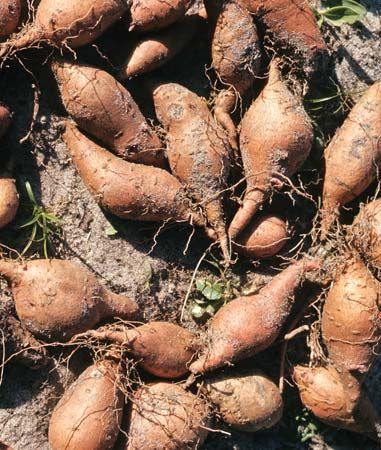
Yams are often confused with sweet potatoes, but they are entirely different plants that are not closely related.6
Feature
Yam
Sweet Potato
Scientific Name
Dioscorea
spp.
Ipomoea batatas
Plant Family
Dioscoreaceae
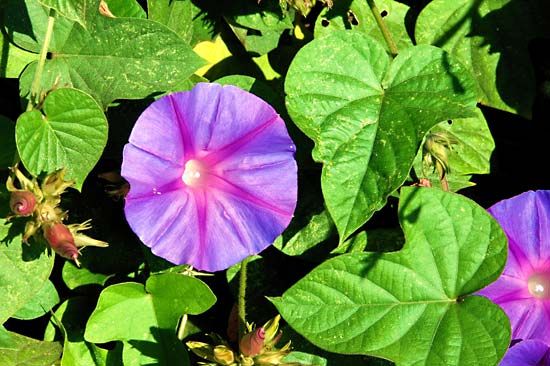
Convolvulaceae (morning glory family)
Plant Part
Tuber (stem development)
True root
Appearance
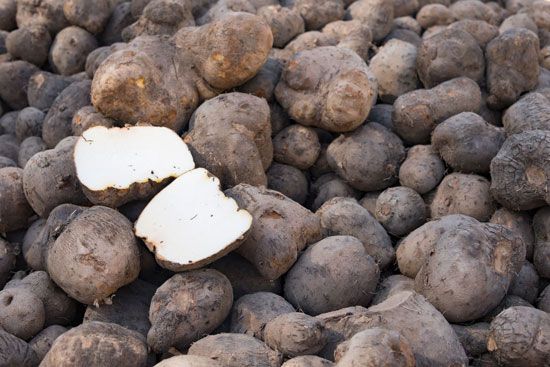
Rough, bark-like skin; white, yellow, purple, or pink flesh
Smooth skin; typically orange or white flesh
Texture/Taste
Starchy and dry; ranges from sweet to bitter
Moist and sweet
The confusion in the United States originated when enslaved Africans applied the name “yam” to moist-fleshed sweet potatoes, which resembled the true yams from their home continent.6
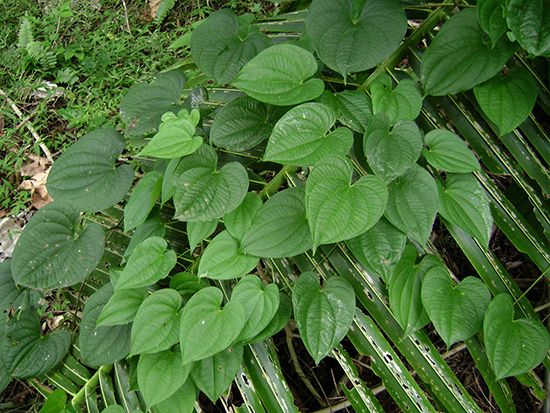
What are the different species of yams, and how do they vary?
There are numerous species within the genus Dioscorea (family Dioscoreaceae) that are cultivated globally as staple food crops. While they share the characteristic of producing starchy, tuberous roots, they vary significantly in their regional distribution, physical traits, and culinary profiles.18
Major Yam Species
- Water Yam (D. alata): Also known as the winged yam, this is one of the most widely diffused species in tropical and subtropical regions. Its tubers are exceptionally large, sometimes weighing up to 45 kg (100 pounds).18
- Guinea Yam (D. rotundata) and Yellow Guinea Yam (D. cayenensis): These are the primary species cultivated in West Africa, serving as essential agricultural commodities.1
- Lesser Yam (D. esculenta): Grown across India, southern Vietnam, and the South Pacific, this species is noted for being particularly tasty.1
- Chinese Yam (D. polystachya): Also called the cinnamon vine, it is widely cultivated throughout East Asia.1
- Indian Yam (D. trifida): Also known as the yampee or cush-cush, this species originated in South America and the West Indies.18
- Air-Potato Yam (D. bulbifera): One of the few true yams cultivated for food in the United States.1
Variation in Characteristics
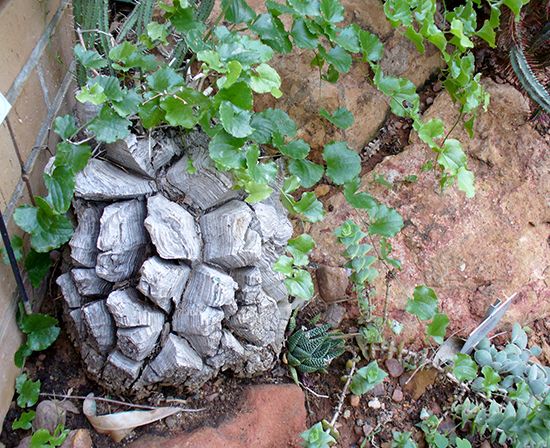
Yam flesh varies in color from white to yellow, pink, or purple, and the taste can range from sweet to bitter or relatively tasteless. Most raw yams contain an acrid principle that must be dissipated through cooking, such as boiling, roasting, or frying. Additionally, some species, such as the Elephant’s-foot (D. elephantipes), contain poisonous alkaloids that require careful preparation, such as boiling, to be rendered safe for consumption as famine food.168
How are yams grown and harvested?
The provided search results do not contain specific information regarding the agricultural methods for growing or harvesting yams, such as planting techniques, soil requirements, or the timing of the harvest. The available documentation focuses on the botanical classification, physical description, and regional distribution of various Dioscorea species rather than their cultivation practices.13
Sources
- Yam — Encyclopædia Britannica
- white yam — Merriam-Webster
- yam — Merriam-Webster
- Ten Harvest Words for the Cornucopia | Yam — Merriam-Webster
- Dioscoreaceae — Encyclopædia Britannica
- What’s the Difference Between Sweet Potatoes and Yams? — Encyclopædia Britannica
- yam family — Merriam-Webster
- Dioscoreales — Encyclopædia Britannica
Published on · 3 min read