Sweet Potato
The sweet potato (Ipomoea batatas) is a food plant belonging to the morning glory family, known as Convolvulaceae. It is a member of the genus Ipomoea, which…
What is the botanical classification and origin of the sweet potato plant?
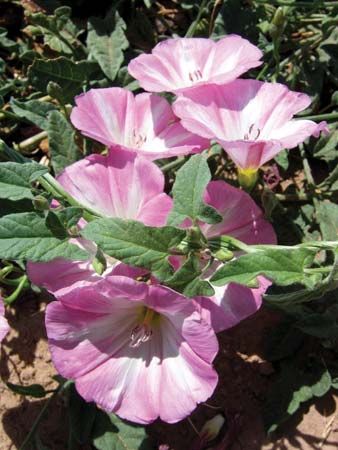
The sweet potato (Ipomoea batatas) is a food plant belonging to the morning glory family, known as Convolvulaceae. It is a member of the genus Ipomoea, which includes various ornamental morning glory species.12
Regarding its origins, the sweet potato is native to tropical America and likely originated in tropical South America. It is a perennial plant that trails along the ground, producing edible, tuberous roots that serve as a significant food crop in warm climates worldwide.12
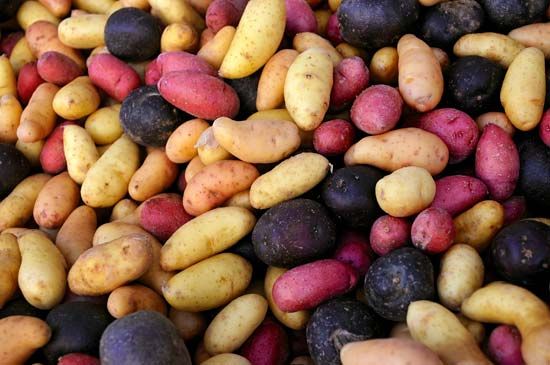
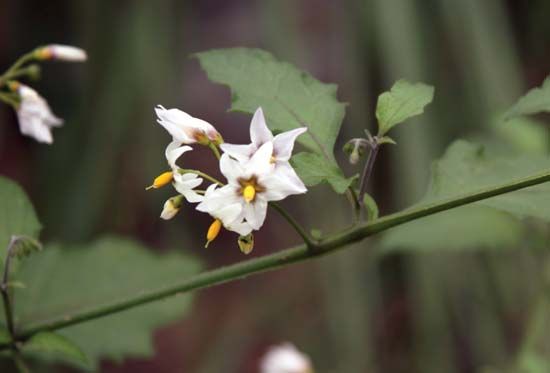
It is important to note that the sweet potato is botanically distinct from the common potato (Solanum tuberosum), which belongs to the family Solanaceae, and is also unrelated to the true yam (Dioscorea species).1
How does the sweet potato plant grow and what are its ideal growing conditions?
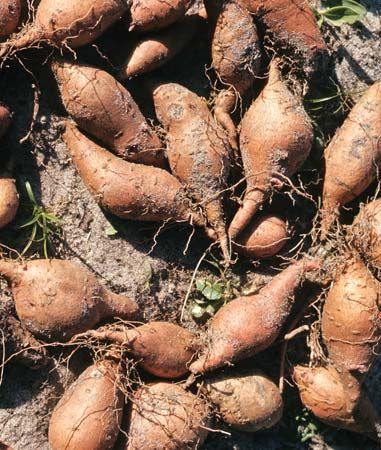
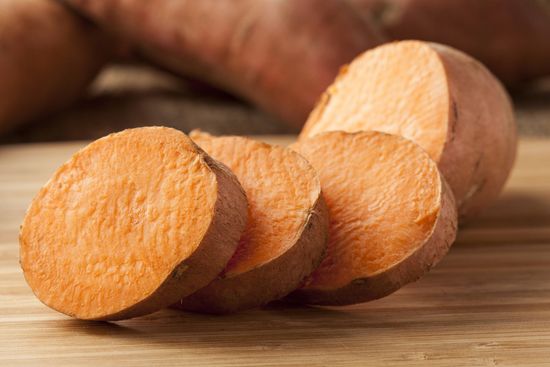
The sweet potato (Ipomoea batatas) is a perennial plant characterized by long, trailing stems and funnel-shaped flowers. Its primary edible component is the enlarged, tuberous root, which develops underground and varies in color and shape depending on the variety.1
Growth and Propagation
The plant is typically propagated vegetatively rather than through seeds. Growers use “slips”—sprouts that arise from the roots—or cuttings taken from the vines to establish new plants.1
Ideal Growing Conditions
To achieve high yields, the sweet potato requires specific environmental conditions:
- Climate: The plant thrives in warm weather and requires a growing season of at least four to five months of warmth.1
- Soil: It is best adapted to light, friable soils, particularly sandy loams, which allow the tuberous roots to develop properly.1
- Storage: Once harvested, the crop is sensitive to its environment. Postharvest diseases are managed by maintaining low temperatures and humidity levels during storage and transit to ensure the longevity of the roots.4
What are some unique varieties of sweet potatoes and how do they differ in taste and appearance?
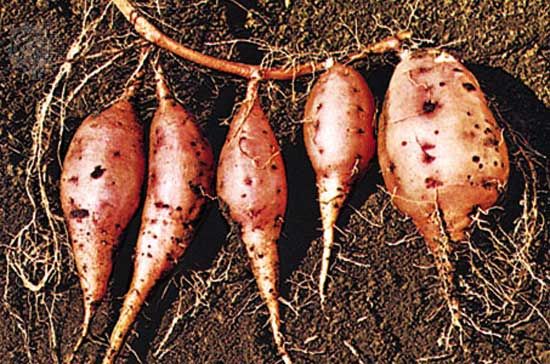
Sweet potatoes exhibit significant diversity in their physical characteristics, with variations in both skin and flesh color. While the plant is a single species, Ipomoea batatas, its tuberous roots display a wide range of appearances and internal compositions.1
Appearance and Color Variations
The external skin of the sweet potato can range from light buff to brown, rose, or purplish red. Internally, the flesh color is equally diverse, appearing in shades of white, orange, or occasionally purple.1
Differences in Composition and Use
These physical differences often correlate with the nutritional and culinary properties of the vegetable:
- Orange-fleshed varieties: These are notably high in carotene, which contributes to their vibrant color and nutritional profile.1
- Firm vs. Soft varieties: In the United States, the term “yam” is sometimes colloquially applied to distinguish soft, orange-fleshed sweet potatoes from the firmer, white-fleshed varieties, though this is botanically inaccurate as they are not related to true yams.1
- Culinary Applications: The pulp of the root consists largely of starch. Depending on the variety, they are prepared as cooked vegetables, mashed, used in pie fillings, or processed for the manufacture of starch and alcohol.1
How is a sweet potato different from a true yam?
Sweet potatoes and true yams are frequently confused, but they are entirely different plants that are not closely related. In the United States, the term “yam” is often incorrectly used to describe soft, orange-fleshed sweet potatoes, a practice that originated historically to distinguish them from firmer, white-fleshed varieties.56
Key Differences
- Botanical Classification: Sweet potatoes (Ipomoea batatas) belong to the morning glory family, Convolvulaceae. True yams belong to the genus Dioscorea within their own family, Dioscoreaceae.561
- Plant Structure: The edible part of a sweet potato is a true root, similar to a carrot. Conversely, yams are tubers, similar to potatoes.5
- Appearance and Taste: Yams typically have rough, bark-like skin and can range in taste from sweet to bitter or tasteless, often possessing a dry, starchy texture. Sweet potatoes generally have smooth skin, a sweet flavor, and a moist texture.5
While both are starchy staples, their biological origins and culinary characteristics are distinct.5
Sources
- Sweet potato — Encyclopædia Britannica
- Ipomoea — Encyclopædia Britannica
- sweet potato — Merriam-Webster
- Plant disease - Regulation of the environment — Encyclopædia Britannica
- What’s the Difference Between Sweet Potatoes and Yams? — Encyclopædia Britannica
- Dioscoreales — Encyclopædia Britannica
Published on · 3 min read