Elephant’s-foot
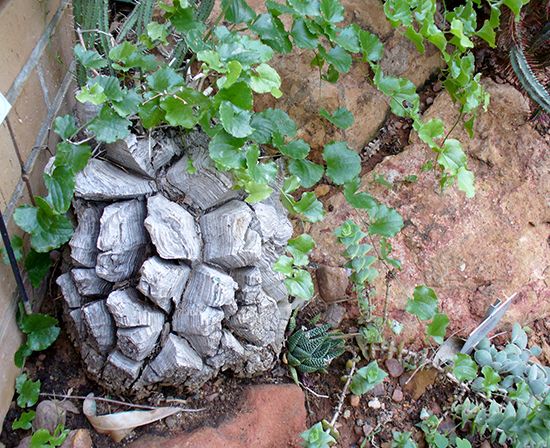
The term elephant’s-foot primarily refers to Dioscorea elephantipes, an unusual, slow-growing twining plant native to semiarid regions of South Africa.
What is Elephant’s-foot?
The term elephant’s-foot primarily refers to Dioscorea elephantipes, an unusual, slow-growing twining plant native to semiarid regions of South Africa.12
This plant is best known for its large, woody tuber, which is partially exposed above ground and covered in corky, fissured plates that resemble an elephant’s foot or a tortoise shell. This structure acts as a vital water-storage organ, allowing the plant to survive in dry environments. While the tuber can grow to over one meter in diameter, it produces only thin climbing stems and small leaves annually. Historically, the plant has served as a source of food for local peoples during times of famine, and it is now often cultivated in desert gardens as a botanical curiosity.12
Additionally, the name is sometimes applied to plants in the genus Elephantopus or used to describe a specific type of mechanical ram used in industrial flanging machines.2
How do desert plants store water in their tubers?
Desert plants utilize specialized structural modifications to store water, allowing them to survive in arid or semiarid environments. While many succulents store water in their stems or leaves, others rely on underground or partially exposed organs such as tubers and tuberous roots.31
These storage organs function through their fleshy, enlarged tissues, which act as reservoirs for water and nutrients. For example, the elephant’s-foot (Dioscorea elephantipes) features a large, woody, and partially exposed tuber covered in corky plates that serves as a vital water-storage organ.14
The distinction between these structures is as follows:
- Tubers: These are modified shoots that function in both water storage and vegetative reproduction.1
- Tuberous roots: These are modified roots that primarily serve as storage organs for water and food.1
Beyond physical storage, many of these plants also minimize water loss by closing their stomata during the day and employing a specialized form of photosynthesis known as crassulacean acid metabolism.3
What are some other unique plants found in South Africa?
South Africa is home to an extraordinarily diverse range of plant life, shaped by its varied climates and ecosystems.
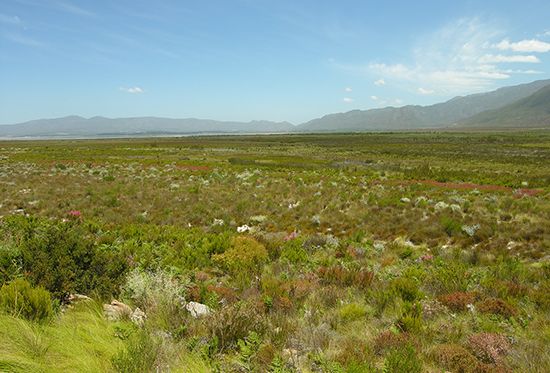
Fynbos Scrubland
The fynbos ecosystem, located along the southern coast, is a global biodiversity hotspot containing over 8,500 species, many of which are endemic. Key plants include:
- Proteoids: Iconic shrubs such as Protea and Leucadendron, which have coevolved with nectar-eating birds like the Cape sugarbird.5
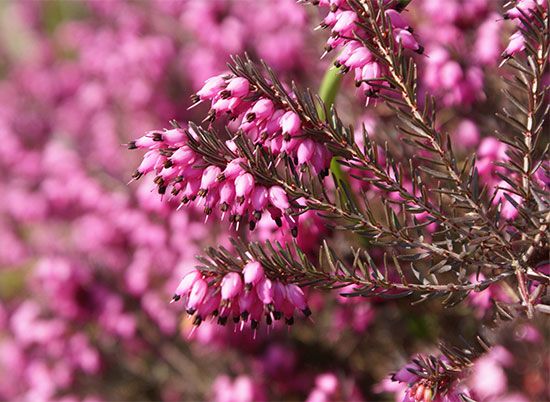
- Heathers: Diverse species of Erica that provide vibrant color to the landscape.5
- Herbaceous plants: The region is rich in irises, lilies, and orchids that grow beneath the shrub canopy.5
Karoo-Namib Succulents
In the arid Karoo and Namib regions, plants have adapted to drought-prone, saline soils. Common flora includes:
- Succulents: A wide variety of aloes, Euphorbia, and Mesembryantheum.67
- Bulbous plants: These produce short-lived, colorful blossoms annually.6
Unique Desert Specialists
- Welwitschia mirabilis: Found in the Namib desert, this bizarre gymnosperm produces only two permanent, straplike leaves that grow throughout its life, which can span up to 2,000 years.8
What does it mean for a plant to be dioecious?
A plant is considered dioecious when it is unisexual, meaning that male and female reproductive structures are produced on separate individual plants. In these species, some individuals produce only pollen-bearing (staminate) flowers or cones, while others produce only seed-bearing (pistillate or ovule-producing) flowers or cones.101112
This reproductive strategy is distinct from monoecious plants, which possess both male and female structures on the same individual—either within a single bisexual flower or as separate unisexual flowers on the same plant.10
By ensuring that male and female gametes originate from different individuals, dioecy serves as a structural mechanism to prevent self-pollination and promote genetic outcrossing. This increased genetic variability can be advantageous for a species’ survival in changing environments. Common examples of dioecious plants include ginkgo, willows, cannabis, kiwi, holly, and date palms.101211
Sources
- elephant’s-foot — Encyclopædia Britannica
- elephant's-foot — Merriam-Webster
- Succulent — Encyclopædia Britannica
- Angiosperm - Shoot system modifications — Encyclopædia Britannica
- Fynbos — Encyclopædia Britannica
- Africa - Karoo-Namib shrubland — Encyclopædia Britannica
- Welwitschiaceae — Encyclopædia Britannica
- houseplant - Succulents — Encyclopædia Britannica
- National Botanic Gardens of South Africa — Encyclopædia Britannica
- Do Plants Have Sexes? — Encyclopædia Britannica
- sexual reproduction — Encyclopædia Britannica
- Cross-pollination — Encyclopædia Britannica
Published on · 3 min read