Morning Glory
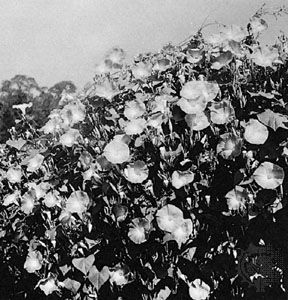
Morning glory refers to various herbaceous twining vines, shrubs, and trees within the genus Ipomoea, which belongs to the Convolvulaceae family. These…
What is Morning glory?
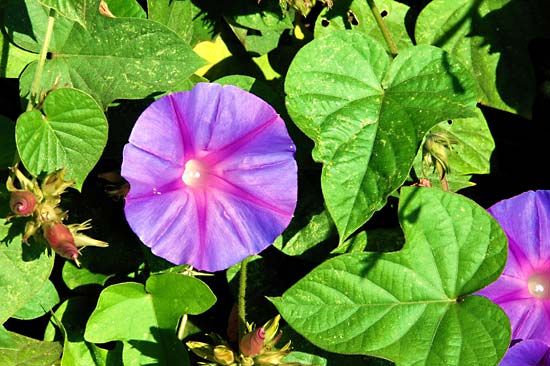
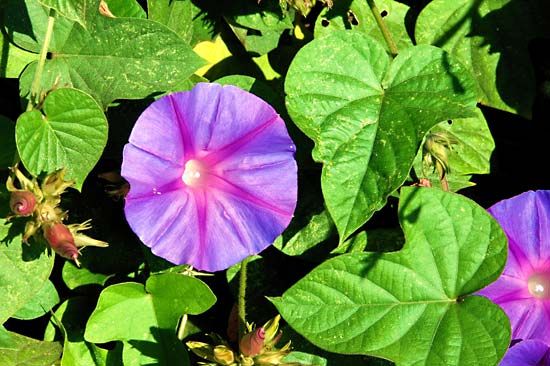
Morning glory refers to various herbaceous twining vines, shrubs, and trees within the genus Ipomoea, which belongs to the Convolvulaceae family. These plants are widely recognized for their showy, trumpet-shaped flowers and are frequently cultivated as ornamentals.123
Notable species include:
- Common morning glory: An annual vine often grown in gardens, though it can become a troublesome weed in some regions1.
- Heavenly blue morning glory: A perennial vine known for its blue-to-purple flowers. Its seeds contain alkaloids that have been used historically in ceremonial practices.13
- Moonflower: A night-blooming climber with fragrant white flowers.1
- Bush morning glory: A species native to central North America characterized by its erect branches and tuberous roots.1
How does the moonflower differ from other morning glory species?
The moonflower (Ipomoea alba) distinguishes itself from other common morning glory species through several unique physical and behavioral traits:
- Blooming Habit: Unlike most morning glories that bloom during the day, the moonflower is a night-blooming species.14
- Flower Characteristics: It produces large, fragrant, white flowers that can reach up to 15 cm (6 inches) in diameter, making it one of the largest-flowering species within the genus.14
- Growth Form: It is a rampant perennial climber.14
- Chemical Properties: The plant contains a milky juice that has been historically utilized to coagulate Castilla rubber, a functional use not typically associated with other ornamental morning glories like the common morning glory or heavenly blue morning glory.14
In contrast, other species such as the common morning glory are typically annuals with smaller flowers, while the heavenly blue variety is noted for its psychoactive alkaloids rather than industrial applications.14
Why are some morning glory species considered invasive weeds?
Some species of morning glory, such as the common morning glory (Ipomoea purpurea), are considered troublesome weeds because of their aggressive growth habits. While they are widely cultivated as ornamental plants for their attractive, trumpet-shaped flowers, their nature as twining vines allows them to spread rapidly and overtake other vegetation in certain environments, such as parts of southeastern North America.14
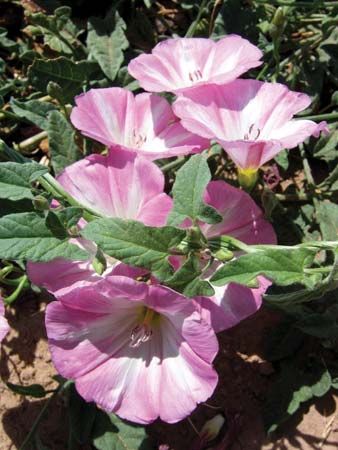
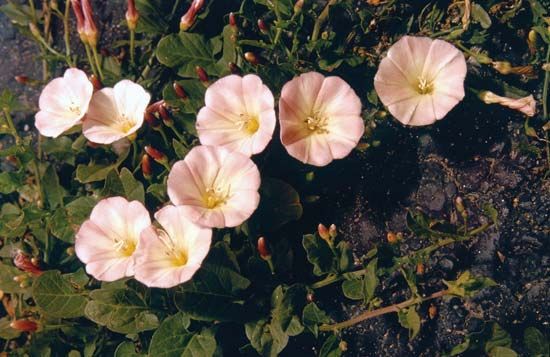
In the broader Convolvulaceae family, other related plants like bindweeds are also recognized as agricultural weeds, and some members of the genus Cuscuta (dodders) are classified as invasive species because they are parasitic and have expanded their range significantly beyond their native habitats.3
What other common food crops belong to the Convolvulaceae family?
The Convolvulaceae family, commonly known as the morning glory family, is primarily recognized for its ornamental vines and a few specific medicinal or industrial uses. While it contains over 1,600 species, the sweet potato (Ipomoea batatas) stands out as the most significant and widely cultivated food crop within the family.534
Beyond the sweet potato, there are few other common food crops in this family. Some members are utilized for other purposes:
- Medicinal/Drug Sources: The dried tubers of the Mexican Ipomoea purga are used to supply jalap, a strong purgative drug. Additionally, the seeds of certain species, such as Turbina corymbosa and Ipomoea violacea, have been historically used for their hallucinogenic properties.563
- Industrial Uses: The moonflower (Ipomoea alba) produces a milky juice historically used to coagulate rubber, and some Convolvulus species yield rosewood oil.56
It is important to note that the sweet potato is often confused with the common potato or the true yam, but these belong to entirely different plant families (Solanaceae and Dioscoreaceae, respectively).4
Sources
- Morning glory — Encyclopædia Britannica
- morning glory — Merriam-Webster
- Convolvulaceae — Encyclopædia Britannica
- Ipomoea — Encyclopædia Britannica
- Solanales - Convolvulaceae — Encyclopædia Britannica
- Sweet potato — Encyclopædia Britannica
Published on · 3 min read