Yarra River
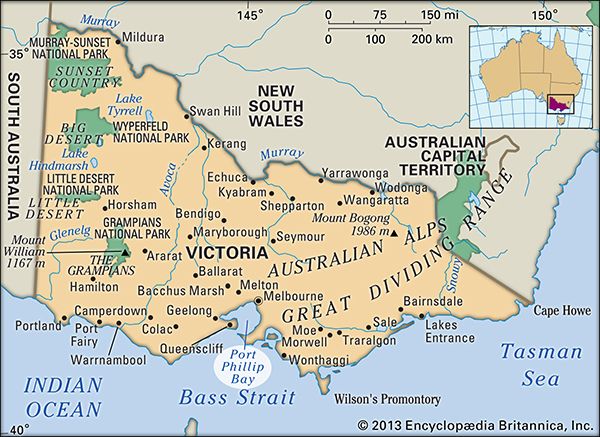
The Yarra River is a 153-mile (246 km) river located in south-central Victoria, Australia. It rises near Mount Matlock in the Eastern Highlands and flows…
What is Yarra River?
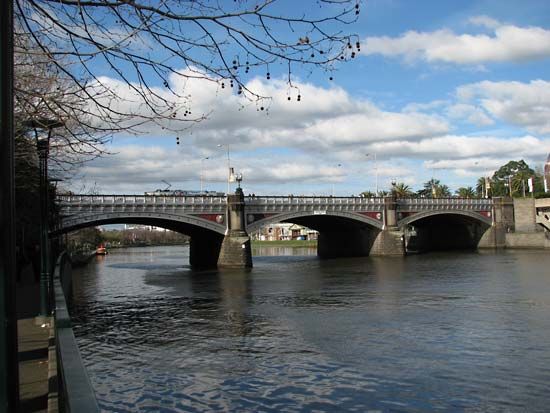
The Yarra River is a 153-mile (246 km) river located in south-central Victoria, Australia. It rises near Mount Matlock in the Eastern Highlands and flows westward, passing through the Upper Yarra Dam and towns such as Warburton and Warrandyte before reaching its mouth at Hobson’s Bay in Melbourne.1
The river valley was originally inhabited by the Wurunderjeri people, who called it Birrarung, meaning “river of mists”. In 1835, the river became the site of the first permanent European settlement that grew into the city of Melbourne. Today, the river is central to the city’s geography, with urban development historically expanding eastward from its mouth. A notable landmark along its northern bank is the park Birrarung Marr, which features bike paths, gardens, and a pedestrian bridge named after the Wurunderjeri leader and activist William Barak.123
It is important to acknowledge that the 1835 treaty involving the land around the river led to the indigenous community’s forced dislocation and the loss of approximately 500,000 acres of their ancestral home.1
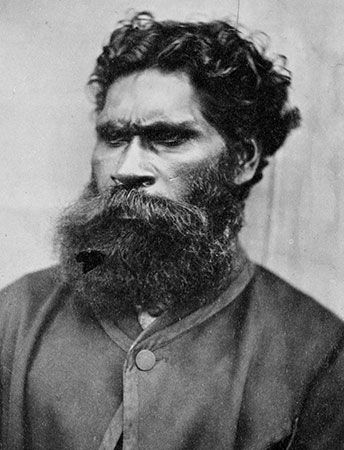
Who were the Wurundjeri people and what is their connection to the Yarra River?
The Wurundjeri people are the original inhabitants of the Yarra River valley, which they traditionally called Birrarung, meaning “river of mists”. They are one of four clans belonging to the Woiwurrung language group, which is part of the larger Kulin Nation.15
Their connection to the river is profound, as it served as their ancestral home long before European settlement. In 1835, Wurundjeri elders were coerced into signing an infamous treaty with settler John Batman, which attempted to “purchase” 500,000 acres of their land. This agreement was based on a fundamental misunderstanding of land ownership, as the Wurundjeri did not view land as a commodity to be sold. Although the British colonial government later declared the treaty invalid, it facilitated the forced dislocation of the Wurundjeri from their ancestral lands and led to significant suffering through disease and resource depletion.51
The legacy of the Wurundjeri is preserved today through landmarks like the Birrarung Marr park and the William Barak Bridge, which honors the last traditional leader of the clan.15
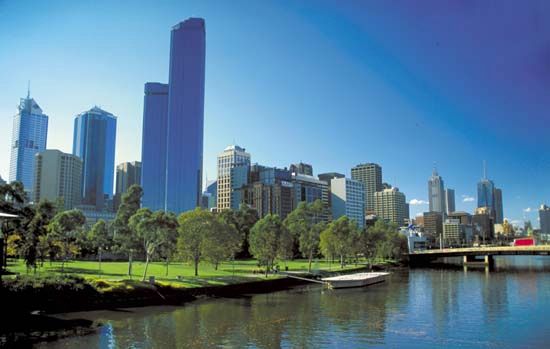
What is the significance of the Birrarung Marr park in Melbourne?
Birrarung Marr is a significant public park located on the northern bank of the Yarra River in Melbourne. Its name is derived from the traditional Wurundjeri language, where “Birrarung” refers to the river and “marr” means “mist,” collectively signifying “the river of mists.”1
The park serves as a vital urban space that features extensive bike paths and gardens, frequently hosting various public events throughout the year. Beyond its recreational utility, the park holds deep cultural and historical importance. It honors the Wurundjeri people, the original inhabitants of the valley, by incorporating their heritage into the city’s landscape. A prominent feature of the park is a pedestrian bridge named after William Barak, a respected Wurundjeri leader, activist, and artist who witnessed the 1835 treaty that resulted in the displacement of his people and the loss of their ancestral lands.1
How did the discovery of gold in the 1850s impact the development of Melbourne?
The discovery of gold in the 1850s acted as a primary catalyst for the rapid transformation of Melbourne, propelling it from a small settlement into a bustling “boomtown” and the largest city on the continent.67
The impact of the gold rushes on Melbourne’s development included:
- Population Explosion: The influx of miners and wealth caused Melbourne’s population to increase fourfold in just three years, reaching 80,000 by the mid-1850s.7
- Economic Modernization: Gold profits funded the construction of banks, stores, hotels, and businesses, establishing a wealthy society with one of the highest standards of living at the time.6
- Infrastructure Expansion: To support the movement of people and goods to and from the goldfields, significant investments were made in roads, railways, and bridges.6
- Cultural and Institutional Growth: The city’s newfound confidence led to the establishment of major institutions, including the University of Melbourne (1853), the Melbourne Public Library (1856), and the National Gallery of Victoria (1861).8
- Political Reform: The era fostered demands for democratic change, notably following the Eureka Stockade, which helped lead to the introduction of the secret ballot and broader voting rights.68
Sources
- Yarra River — Encyclopædia Britannica
- Melbourne - Early settlement — Encyclopædia Britannica
- Yarrawonga — Encyclopædia Britannica
- Melbourne - The city site — Encyclopædia Britannica
- William Barak — Encyclopædia Britannica
- Melbourne - Growth of the city — Encyclopædia Britannica
- Australian gold rushes - Impact — Encyclopædia Britannica
- Victoria - Independent settlement and discovery of gold — Encyclopædia Britannica
Published on · 3 min read