Yorkshire
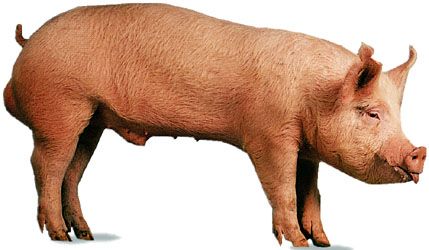
The Yorkshire pig, also known as the Large White in England, is characterized by its solid white color, though individuals may sometimes exhibit dark areas.…
What are the physical characteristics of Yorkshire pigs?
The Yorkshire pig, also known as the Large White in England, is characterized by its solid white color, though individuals may sometimes exhibit dark areas. A defining physical feature of the breed is its erect ears.12
Developed in the 18th century by crossing large indigenous white pigs from North England with smaller, fatter white Chinese pigs, the breed is described as well-fleshed. While originally established as a bacon breed, it gained significant prominence in the 20th century for its lean-meat qualities. Today, it is considered the most widely distributed breed of pig in the world.12
How has the popularity of Yorkshire pigs changed over the years in different parts of the world?
The Yorkshire pig, known as the Large White in England, has achieved status as the most widely distributed breed of pig in the world.13
Originating in 18th-century England as a bacon-type breed, the Yorkshire’s popularity has evolved alongside changing market demands. While it was initially valued for bacon production, it rose to particular prominence in the United States during the 20th century as the industry shifted its focus toward lean-meat production.13
The breed’s success is largely attributed to its versatility and the prolific nature of its sows. Today, it is found in most countries, where it is frequently utilized as a sire for crossbred litters to improve meat quality and production efficiency. While other breeds, such as the Landrace, have seen significant global expansion due to specialized breeding programs, the Yorkshire remains a cornerstone of global commercial swine production.13
How has the Yorkshire pig breed been improved over time through selective breeding?
The Yorkshire pig breed has been refined over centuries through deliberate selection and crossbreeding to meet evolving agricultural and market needs.
Historical Development
The breed originated in 18th-century England by crossing large, indigenous white pigs from North England with smaller, fatter white Chinese pigs. This foundational cross combined the size and growth potential of the native stock with the desirable traits of Asian breeds, which were historically recognized for their role in improving European and North American swine.14
Adaptation to Market Demands
While initially developed as a bacon-type breed, the Yorkshire underwent significant shifts in the 20th century to align with changing consumer preferences. As the demand for lard decreased due to the rise of vegetable oils, breeders focused on selecting for lean-meat production. In the United States, this transition helped the Yorkshire rise to prominence as a premier lean-meat breed.51
Modern Improvement Through Crossbreeding
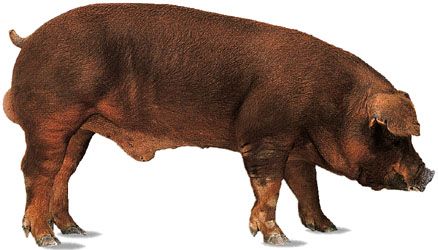
Today, the Yorkshire is frequently used in commercial crossbreeding programs to enhance production efficiency. Because Yorkshires are known for their muscle mass and the prolific nature of their sows, they are often mated with other breeds, such as the Duroc, to leverage heterosis (hybrid vigour)4. This practice allows producers to combine complementary traits—such as the Yorkshire’s litter size and the Duroc’s muscularity—to improve the growth rate, fertility, and overall economic value of the offspring.3
Where did the Yorkshire pig breed originate, and when?
The Yorkshire pig breed originated in England. While some sources identify its development as occurring in the 18th century through the crossing of large indigenous white pigs from North England with smaller, fatter white Chinese pigs, other records suggest the breed emerged early in the 19th century.13
Sources
- Yorkshire — Encyclopædia Britannica
- Pig — Encyclopædia Britannica
- Livestock farming - Breeds — Encyclopædia Britannica
- Animal breeding - Crossbreeding — Encyclopædia Britannica
- Origins of agriculture - Hogs — Encyclopædia Britannica
Published on · 3 min read