Eland
The eland is the largest antelope in the world, characterized by an oxlike build and membership in the bovid family. There are two species: the common eland…
What are the physical characteristics of an eland?
The eland is the largest antelope in the world, characterized by an oxlike build and membership in the bovid family. There are two species: the common eland and the giant eland.12
Physical Dimensions
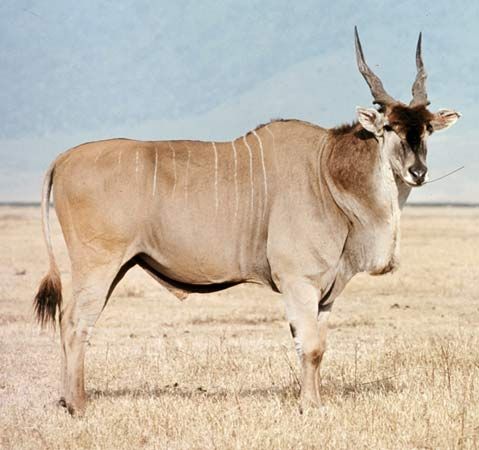
Bulls of both species can reach shoulder heights of 150–180 cm (59–71 inches), body lengths of up to 340 cm (11 feet), and weights of up to 1 metric ton (2,200 pounds). Females are significantly smaller and slimmer, typically weighing between 317 and 470 kg (699–1,036 pounds).2
Distinctive Features
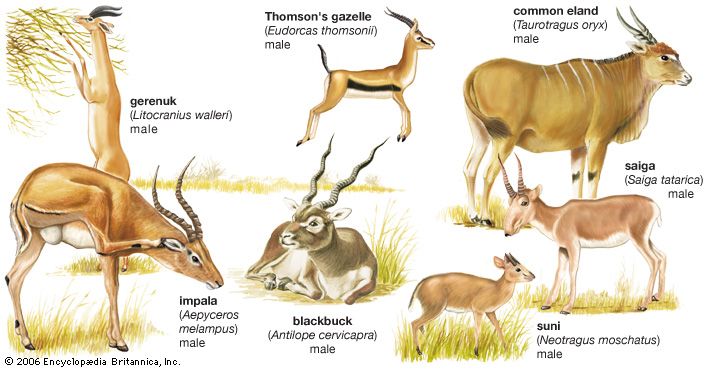
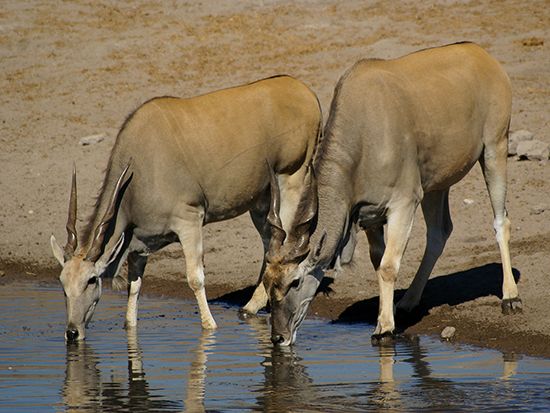
- Common Eland: Generally tawny with up to 12 white torso stripes, dark foreleg markings, and a neck mane. Both sexes possess a dewlap that becomes long and pendulous in bulls.2
- Giant Eland: Reddish-brown with vertical white striping and a blackish neck. They feature large, rounded ears and horns that are heavier and more divergent than those of the common eland.23
- Horns: Both species have spiral-horned antelopes traits, using their horns to break high branches for feeding.23
Where are elands typically found in the wild?
Elands are native to the African continent, where they occupy diverse environments depending on the species.
Common Eland (T. oryx)
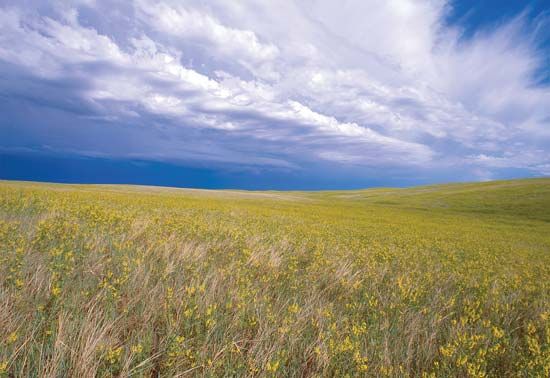
The common eland is widespread across large parts of central and southern Africa. These animals are highly adaptable and frequent a variety of habitats, including mountains, arid grasslands, plains, and woodlands.3
Giant Eland (T. derbianus)
The giant eland is primarily a woodland dweller. Its distribution is divided into two distinct ranges:
- Eastern Giant Eland: Found across central Africa, with a range extending from Nigeria and Cameroon eastward through Sudan to Uganda.23
- Western Giant Eland: This critically endangered population is now restricted to only three reserves in Senegal, including Niokolo-Koba National Park.23
We could dive deeper into the conservation challenges facing the western giant eland or discuss the specific dietary habits that influence their choice of habitat.
How does the eland’s size compare to other antelope species?
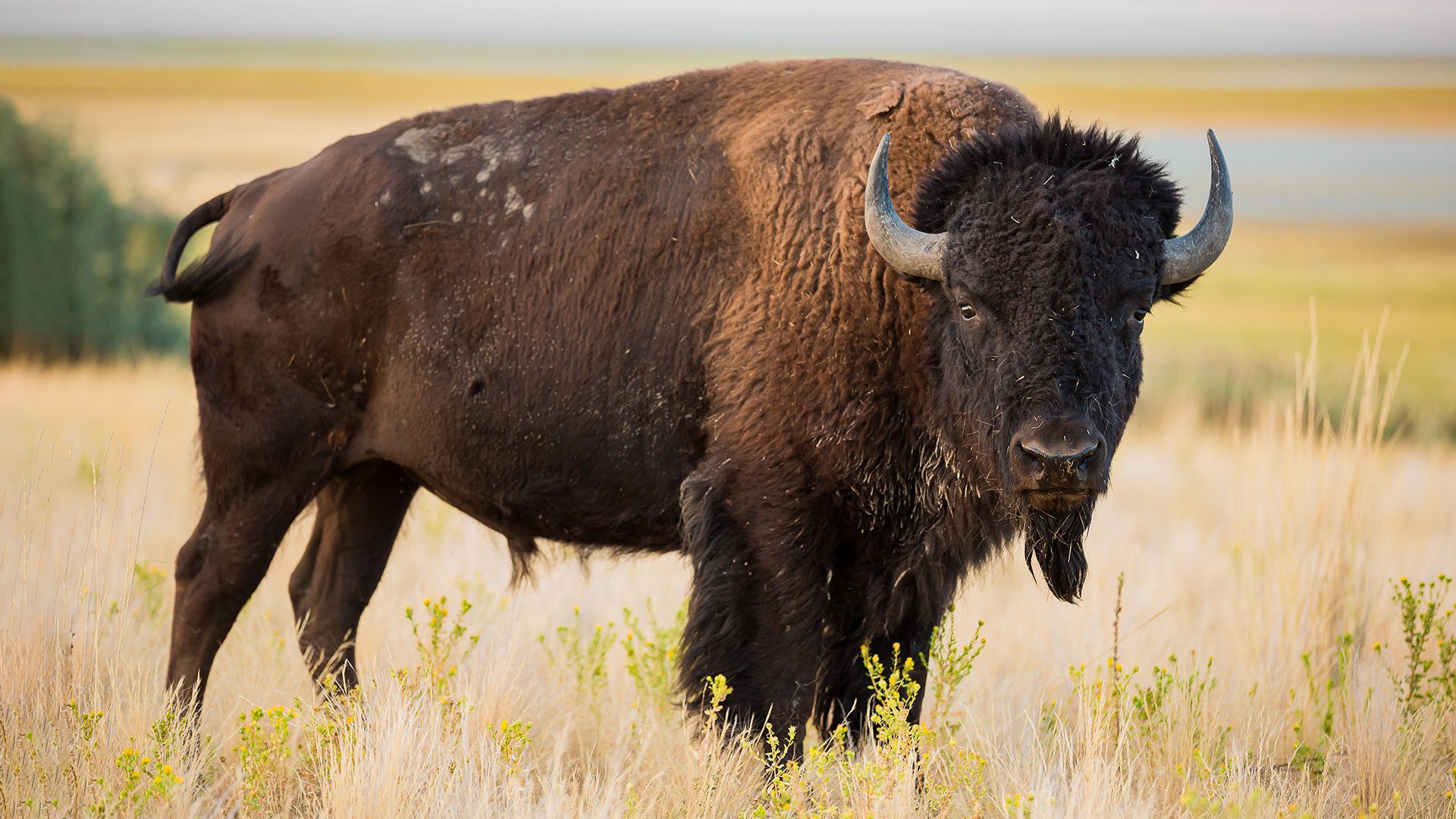
The eland holds the distinction of being the largest antelope in the world. In terms of sheer scale, elands are comparable in size to bison, with bulls reaching shoulder heights of up to 180 cm (6 feet) and weights of approximately 1 metric ton (2,200 pounds).14
To understand their size relative to other species, consider these comparisons:
- Smallest Antelopes: At the opposite end of the spectrum is the royal antelope, which stands only about 25 cm (10 inches) high and weighs as little as 2.5 kg (5.5 pounds), making it roughly the size of a hare.1
- Other Large Antelopes: The bongo is recognized as the third-heaviest antelope, ranking behind both the giant and common eland species.2
- Morphological Diversity: While elands are massive and oxlike, other antelopes vary significantly based on their habitat. For instance, forest-dwelling species are typically smaller and adapted for navigating undergrowth, whereas those in open habitats are built for speed with long, developed limbs.5
How do elands use their horns to help them feed?
Elands are unique among many antelopes for the way they utilize their horns to assist in foraging. Both male and female elands use their horns to break off branches that are positioned too high for them to reach or grasp with their lips and tongue.12
This behavior is a practical adaptation for their feeding habits, as elands are both browsers and grazers that frequently consume the foliage of dicots during the dry season. While their primary method of feeding involves grazing on green grass during the rainy season, the ability to manipulate vegetation with their horns allows them to access a wider variety of food sources when ground-level vegetation is less available.1
Sources
- What is the largest antelope? — Encyclopædia Britannica
- eland — Encyclopædia Britannica
- eland: Top Questions — Encyclopædia Britannica
- bongo — Encyclopædia Britannica
- What is the difference between a pronghorn and an antelope? — Encyclopædia Britannica
- eland — Merriam-Webster
Published on · 3 min read