A Timeline of Environmental History
Environmental history is a broad field that tracks the evolving relationship between human societies and the natural world. While concerns about pollution…

What is A Timeline of Environmental History?
Environmental history is a broad field that tracks the evolving relationship between human societies and the natural world. While concerns about pollution and resource management date back to ancient civilizations, the modern environmental movement gained significant momentum in the late 19th and 20th centuries.12
Key Historical Milestones
- Pre-20th Century: Early regulations focused on local health, such as Roman water protection (c. 80 CE) and 14th-century English coal-burning restrictions.2
- Late 19th–Early 20th Century: The rise of conservationist philosophies, led by figures like Gifford Pinchot and John Muir, focused on wilderness preservation and resource management.1
- 1960s–1970s: A turning point marked by the publication of Rachel Carson’s Silent Spring (1962) and the 1972 United Nations Conference on the Human Environment, which established the United Nations Environment Programme.23
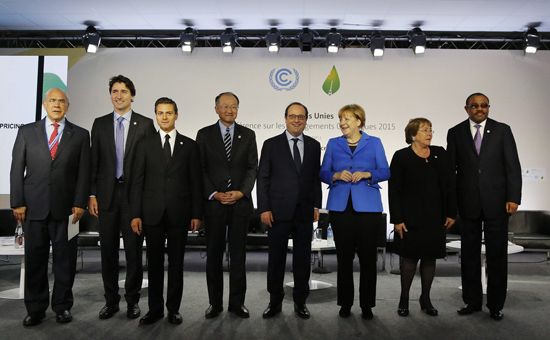
- Late 20th Century–Present: The era of global treaties, including the Montreal Protocol (1987), the Earth Summit (1992), and the Paris Agreement, addressing climate change and ozone depletion.134
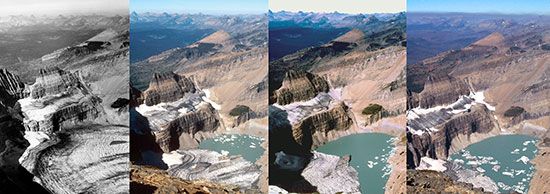
This period also coincides with the Anthropocene Epoch, a proposed geologic age defined by human activity as the primary influence on Earth’s climate and ecosystems.4
Who were some of the most influential early environmentalists?
Several figures were instrumental in shaping the early environmental movement, often representing divergent philosophies regarding the relationship between humans and nature.
- Gifford Pinchot (1865–1946): As the first chief of the U.S. Forest Service, Pinchot championed a utilitarian approach to conservation. He viewed the environment as a resource to be managed wisely and efficiently for the benefit of society, supporting sustainable use within national forests.78
- John Muir (1838–1914): A naturalist and founder of the Sierra Club, Muir advocated for a biocentric, preservationist philosophy. He believed that wilderness areas, such as Yosemite and Sequoia, should be protected in their entirety and kept off-limits to industrial exploitation. While his work was foundational to the U.S. national park system, it is important to acknowledge that his legacy is complicated by his deeply harmful, racist attitudes toward Black and Indigenous peoples, which marginalized minority participation in early conservation efforts.79
- Aldo Leopold (1887–1948): A professor of wildlife management, Leopold was pivotal in designating the first national wilderness area in the United States. He is best known for introducing the “land ethic,” which argued that humans should transition from being “conquerors” of nature to “citizens” of the ecological community.8
- Rachel Carson (1907–1964): A biologist whose seminal work, Silent Spring, alerted the public to the dangers of indiscriminate pesticide use. Her writing was crucial in shifting the environmental movement toward a broader concern for global pollution and the sustainability of planetary ecosystems.2
What is the difference between conservation and preservation?
While the terms conservation and preservation are often used interchangeably in casual conversation, they represent distinct philosophies regarding the management of the natural world. This distinction was famously highlighted by the differing approaches of early environmentalists Gifford Pinchot and John Muir.711
Conservation: The Utilitarian Approach
Conservation is generally defined as the “wise and efficient use” of natural resources. Championed by figures like Pinchot, this philosophy views the environment as a resource that should be managed to provide sustainable benefits for society. Conservationists support the regulated use of land and resources—such as timber harvesting or water management—to ensure they remain available for future generations while preventing depletion.117
Preservation: The Biocentric Approach
Preservation, by contrast, advocates for the protection of nature in its original, untouched state. This philosophy, championed by Muir, argues that certain areas, such as national parks and wilderness, should be kept entirely off-limits to industrial exploitation. Preservationists believe that nature has intrinsic value independent of its utility to humans and should be protected from human interference to maintain its integrity.212711
In modern practice, these approaches often overlap, as both seek to protect ecosystems from destruction, but they differ fundamentally in whether they prioritize human resource needs or the absolute protection of wild spaces.111314
How do international agreements like the Montreal Protocol work?
International agreements like the Montreal Protocol function as binding treaties that establish formal obligations between nations to address global environmental challenges. These agreements typically follow a structured process of negotiation, signature, and ratification, grounded in the principle of pacta sunt servanda—the requirement that agreements must be kept in good faith.1516
How They Work
- Setting Agendas: International forums, such as those hosted by the United Nations, identify global issues that require collective action. These meetings often result in “hard law” (binding treaties) or “soft law” (nonbinding declarations).17
- Defining Obligations: Treaties set specific goals, such as the phase-out of ozone-depleting chemicals or the reduction of greenhouse gas emissions. They often include differential implementation schedules to account for the varying technical and financial resources of developed versus developing nations.1819
- Compliance and Enforcement: Because environmental problems ignore political boundaries, compliance is a significant challenge. Enforcement is often treated as a domestic issue, as countries are frequently reluctant to cede sovereignty to international bodies. Instead of relying solely on sanctions, which can be difficult to enforce, these agreements often encourage compliance through financial cooperation, technology transfer, and the risk of losing good standing in the international community.19
- Flexibility Mechanisms: Some agreements incorporate market-based instruments, such as carbon-emission trading or investment in emission reductions in other countries, to help signatories meet their targets efficiently.17
Sources
- A Timeline of Environmental History — Encyclopædia Britannica
- environmentalism - History of the environmental movement — Encyclopædia Britannica
- Climate - Climate, humans, and human affairs — Encyclopædia Britannica
- Environmental law - Historical development — Encyclopædia Britannica
- United Nations - The environment — Encyclopædia Britannica
- Second Elizabethan Era: A World Remade with Science and Technology - Earth and Environment — Encyclopædia Britannica
- Gifford Pinchot — Encyclopædia Britannica
- John Muir — Encyclopædia Britannica
- Rachel Carson — Encyclopædia Britannica
- environmentalism - Intellectual underpinnings — Encyclopædia Britannica
- conservation — Merriam-Webster
- water scarcity - Environmental policy — Encyclopædia Britannica
- preservation — Merriam-Webster
- Plant - Conservation — Encyclopædia Britannica
- Montreal Protocol — Encyclopædia Britannica
- environmental policy - Global policy agreements — Encyclopædia Britannica
- Environmental law - Current trends and prospects — Encyclopædia Britannica
- International law - Protection of the environment — Encyclopædia Britannica
- treaty — Encyclopædia Britannica
- International law - Treaties — Encyclopædia Britannica
Published on · 4 min read