ʿAbd al-Kūrī
‘Abd al-Kūrī is a rocky island located in the Indian Ocean, situated approximately 65 miles (105 km) southwest of Socotra. Although it is geographically…
What is ʿAbd al-Kūrī?
‘Abd al-Kūrī is a rocky island located in the Indian Ocean, situated approximately 65 miles (105 km) southwest of Socotra. Although it is geographically closer to the Horn of Africa—lying about 70 miles (110 km) east-northeast of Cape Gwardafuy—the island is part of Yemen.12
Measuring roughly 22 miles (35 km) long and 3 miles (5 km) wide, the island is largely semi-desert and barren, reaching an elevation of over 2,300 feet (700 meters) at its highest point, Mount Ṣāliḥ. Despite its arid environment, the island is home to several plant species that are endemic to ‘Abd al-Kūrī alone. The local population primarily sustains itself through fishing. Along with the islands of Samḥah and Darzah, ‘Abd al-Kūrī is part of the broader archipelago that includes Socotra, which is recognized for its unique biodiversity and status as a World Heritage site.12
What makes the Socotra Archipelago a UNESCO World Heritage site?
The Socotra Archipelago was designated a UNESCO World Heritage site in 2008 in recognition of its distinct plant and animal life.3
The archipelago is renowned for its exceptional biodiversity, which includes several famous and unique botanical species. Among the most notable flora found on the islands are:
- Dragon’s blood tree: A signature species of the archipelago.3
- Frankincense: Historically significant and still produced on the islands.3
- Myrrh: Another of the island’s notable plant species.3
These unique biological features are attributed to the archipelago’s long-standing isolation, as the islands stand on coral banks and may have once been connected to the African and Arabian mainlands.3
What are some examples of endemic plant species found on remote islands?
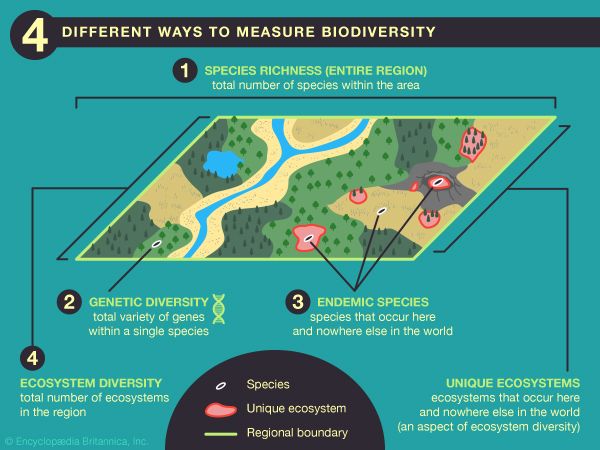
Remote islands are often centers of high endemism, where species have evolved in isolation to occupy unique ecological niches. Because these species are restricted to small geographic ranges, they are particularly vulnerable to extinction.42
Notable examples of endemic plant species found on remote islands include:
- Socotra Archipelago: This region is famous for the dragon’s blood tree, as well as native species of frankincense and myrrh.5
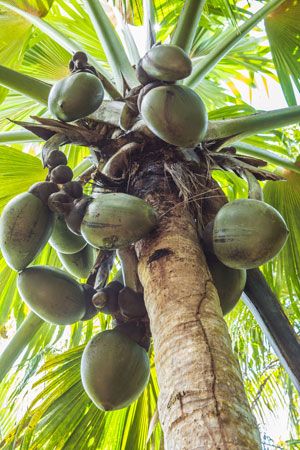
- Seychelles: The islands host approximately 80 unique plant species, including the coco de mer, jellyfish trees, screw pines, and various palms like the latanier.6
- Galapagos Islands: The archipelago features diverse vegetation zones, including open cactus forests in arid lowlands and dense Scalesia forests in moist upland regions.7
- Hawaii: The islands possess an extraordinary number of endemic flowering plants and ferns, many of which evolved from a small number of original colonizers carried to the islands by wind, water, or birds.489
How does the geography of the Horn of Africa influence nearby islands?
The geography of the Horn of Africa significantly influences nearby islands, particularly through geological connection and maritime positioning.
Geological Connection
The archipelago of Socotra, located about 160 miles east of Cape Gwardafuy, is considered an insular extension of the Horn of Africa. These islands sit on coral banks and are believed to have once been physically connected to the African and Arabian mainlands. This historical land bridge is a primary factor in the archipelago’s unique biological evolution, contributing to the high levels of endemism that led to its designation as a UNESCO World Heritage site2.211
Maritime and Strategic Influence
The Horn of Africa serves as a critical geographic crossroads, surrounded by the Red Sea, the Gulf of Aden, and the Indian Ocean. This position has historically facilitated trade, migration, and the exchange of cultural and religious traditions between Africa and Southwest Asia. Furthermore, the coastal escarpments of the Gulf of Aden are linked to the East African Rift System, illustrating the deep tectonic relationship between the mainland and the surrounding marine basins.1213
Sources
- ʿAbd al-Kūrī — Encyclopædia Britannica
- Socotra — Encyclopædia Britannica
- Seychelles - Plant and animal life — Encyclopædia Britannica
- evolution - Adaptive radiation — Encyclopædia Britannica
- Galapagos Islands — Encyclopædia Britannica
- adaptive radiation — Encyclopædia Britannica
- Hawaii - Plant and animal life — Encyclopædia Britannica
- conservation - Endemism and rarity — Encyclopædia Britannica
- Seychelles: Top Questions — Encyclopædia Britannica
- Fernandina Island — Encyclopædia Britannica
- Arabian Sea - Physical features — Encyclopædia Britannica
- Horn of Africa: Top Questions — Encyclopædia Britannica
- Arabian Sea - Submarine morphology and geology — Encyclopædia Britannica
- Indian Ocean - Surface currents — Encyclopædia Britannica
- Eastern Africa - The Somali — Encyclopædia Britannica
- Mozambique Current — Encyclopædia Britannica
Published on · 3 min read