Agathis
Agathis is a genus of 13 species of evergreen, pinelike trees belonging to the family Araucariaceae. These trees are native to regions spanning from the…
What is Agathis?
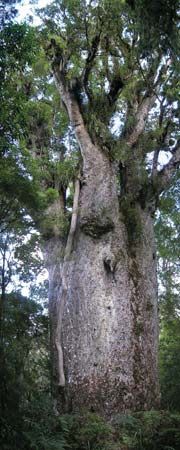
Agathis is a genus of 13 species of evergreen, pinelike trees belonging to the family Araucariaceae. These trees are native to regions spanning from the Philippines to Australia and New Zealand.12
Distinguished by their larger leaves with flat stalks and globe-shaped seed cones—from which the name Agathis, Greek for “ball of thread,” is derived—these trees are highly valued for their timber and fragrant resins. Notable products derived from these species include kauri copal, Manila copal, and dammar resin, which are essential in the production of varnishes, lacquers, linoleum, and sealing wax. While some species are cultivated as ornamentals in warm climates or greenhouses, the most well-known member is the kauri pine, a massive, resinous tree native to New Zealand’s North Island.312
What is the difference between Agathis and Araucaria trees?
While both Agathis and Araucaria belong to the family Araucariaceae, they are distinct genera with notable botanical differences.
Key Differences
Feature
Agathis
Araucaria
Leaf Structure
Larger leaves with flat stalks.
Stiff, flattened, pointed leaves; sometimes tightly overlapping and scaly.
Seed Characteristics
Seeds are free from the cone scale.
Seeds are typically associated with the cone scale.
Primary Value
Highly valued for fragrant resins (e.g.,
dammar
, kauri copal) and timber.
Valued for timber and as ornamental trees due to their unique, symmetrical growth habits.
Geographic Range
Primarily Australasia and the
Philippines
.
Found in
South America
,
Australia
, and various Pacific islands.
Both genera consist of evergreen, pinelike trees. While Agathis is known for its globe-shaped seed cones—the name itself is derived from the Greek word for “ball of thread”—Araucaria species are also characterized by globose female cones and are often recognized for their whorled branches.24
How is kauri gum harvested from these trees?
Kauri gum, also known as kauri copal or dammar, is a hard, amber-like resin obtained from the kauri pine (Agathis australis) and other species within the Agathis genus.11
The harvesting of this resin occurs in two primary ways:
- Fossilized Deposits: Much of the kauri gum used commercially is not collected directly from living trees but is instead dug from the ground at the sites of ancient, buried forests.53
- Living Trees: The resin can also be collected directly from living trees, where it exudes naturally or through intentional tapping.3
Once harvested, this durable substance is processed for use in various industrial applications, including the production of varnishes, lacquers, linoleum, patent leather, and sealing wax.11
What are some other types of conifers found in the Southern Hemisphere?
The Southern Hemisphere is home to a diverse array of conifers, many of which are endemic to specific regions like Australasia, South America, and southern Africa. Beyond the well-known Agathis and Araucaria genera, several other significant groups thrive in these temperate and tropical regions.
Key Conifer Groups in the Southern Hemisphere
- Podocarpaceae: This is the most widely distributed conifer family in the Southern Hemisphere, containing nearly 200 species across 18 genera. The genus Podocarpus, commonly known as yellowwood, is the largest and most widespread. Other notable members include the rimu (Dacrydium) and the celery-top pine (Phyllocladus).674
- Cupressaceae: This family is represented by several important genera in the south, including the cypress pine (Callitris) in Australia and the sederboom (Widdringtonia) in southern Africa. Other notable species include the Patagonian cypress (Fitzroya) found in Chile and Argentina, and the Tasmanian cedar (Athrotaxis).68
- Highly Localized Genera: Some regions, particularly New Caledonia and Tasmania, host unique, narrow-range conifers. These include Austrotaxus, Neocallitropsis, and the parasitic conifer Parasitaxus in New Caledonia, as well as Diselma and Microcachrys in Tasmania.64
These trees vary significantly in form, ranging from the broad-leaved Podocarpus to the scale-leaved Callitris, and play vital roles in their respective ecosystems as timber sources and ornamental plants.478
Sources
- kauri pine — Encyclopædia Britannica
- Agathis — Merriam-Webster
- Agathis — Encyclopædia Britannica
- Araucaria — Encyclopædia Britannica
- kauri — Merriam-Webster
- conifer - Distribution and abundance — Encyclopædia Britannica
- Podocarpaceae — Encyclopædia Britannica
- conifer - Annotated classification — Encyclopædia Britannica
- gymnosperm - Pinophyta — Encyclopædia Britannica
- Cupressaceae — Encyclopædia Britannica
Published on · 3 min read