Ahaggar
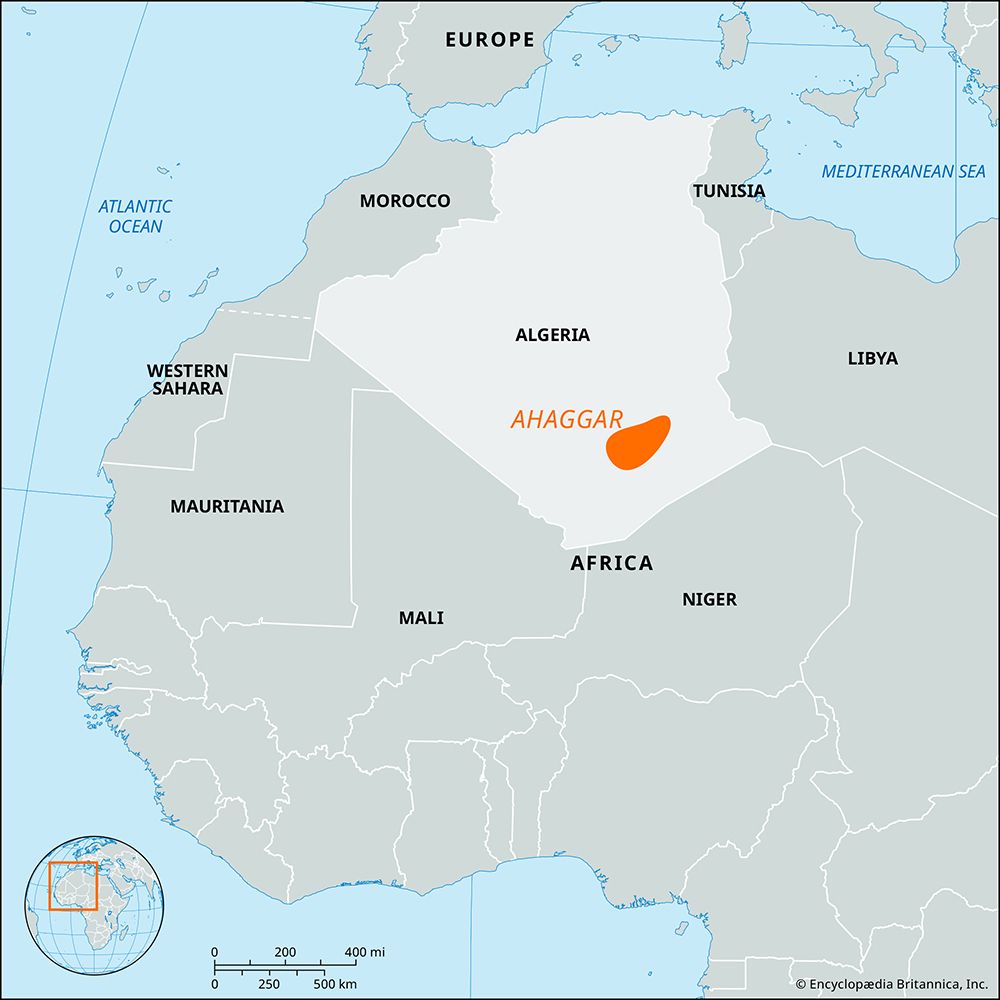
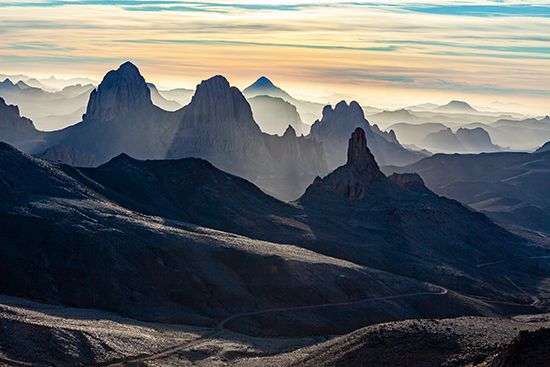
The Ahaggar (also known as the Hoggar) is a vast, arid mountainous plateau located in the north-central Sahara in southeastern Algeria. Situated on the…
What is Ahaggar?
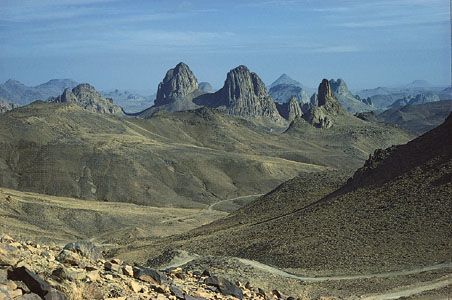
The Ahaggar (also known as the Hoggar) is a vast, arid mountainous plateau located in the north-central Sahara in southeastern Algeria. Situated on the Tropic of Cancer, the region covers approximately 965 miles north to south and 1,300 miles east to west, with elevations exceeding 3,000 feet and culminating in Mount Tahat, which reaches 9,573 feet.123
Geologically, the plateau is a rocky desert characterized by black volcanic basalt formations rising above a pink granite massif. The climate is extremely dry, with some areas experiencing years without significant precipitation. The region is home to the Tuareg, a Berber-speaking people who maintain traditional pastoral lifestyles in the area. The town of Tamanrasset, located within the Ahaggar, serves as an important oasis and way station on trans-Saharan trade routes.1435
Who are the Tuareg people?
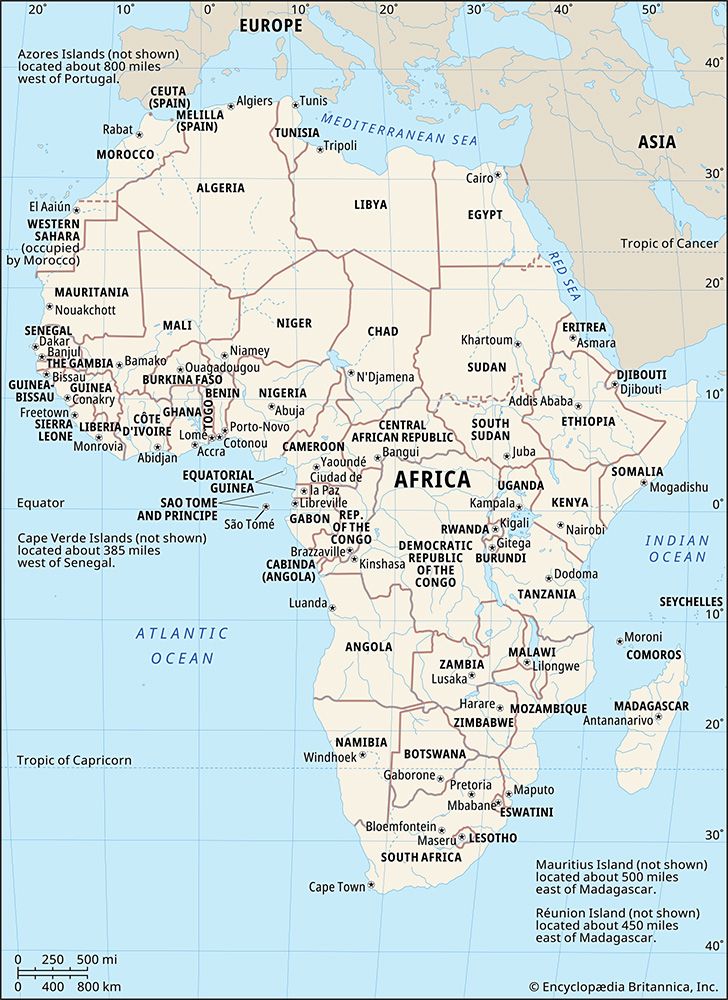
The Tuareg are a Berber-speaking people who have traditionally lived as pastoralists across a vast region of North and West Africa, spanning from Algeria and Libya in the north to Nigeria, Mali, and Niger in the south. With an estimated population exceeding two million, they are organized into various confederations, such as the Ahaggar and Azjer in the north and the Asben and Aulliminden in the south.35
Traditionally, Tuareg society has been structured along feudal lines, ranging from nobles and clergy to vassals, artisans, and laborers. While northern groups inhabit desert regions, southern groups historically relied on breeding zebu cattle and camels. Their culture is noted for the use of a unique script known as tifinagh, which is related to ancient Libyan writing. Although many Tuareg have historically maintained nomadic or semi-nomadic lifestyles, environmental challenges like droughts in the 20th century and increased urbanization have significantly impacted their traditional way of life.36
What is the significance of the Sahara Desert?
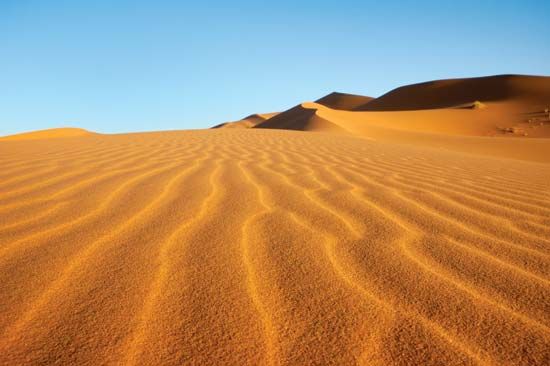
The Sahara is the world’s largest hot desert, covering nearly all of northern Africa with an area of approximately 3,320,000 square miles. Its significance spans environmental, historical, and economic dimensions:78
- Climatic History: The Sahara serves as a critical record of Earth’s climate cycles. Geological evidence shows it has undergone numerous shifts between arid and humid phases, driven by Milankovitch cycles. During the African Humid Period (roughly 11,700 to 5,000 years ago), the region was a verdant landscape of grasslands, rivers, and lakes.8
- Human and Cultural Heritage: Despite its harsh environment, the desert has supported diverse populations for millennia. Rock art and archaeological findings reveal a rich history of early human occupation, pastoralism, and the development of trans-Saharan trade routes that facilitated the spread of Islam and economic exchange.9
- Economic Resources: The region contains significant mineral and fuel reserves, including oil, natural gas, iron ore, and uranium. Additionally, vast underground water reserves offer potential for future development, though their exploitation remains complex and environmentally sensitive.10
How do people survive in extreme desert climates?
Survival in extreme desert climates requires a combination of biological adaptation, technological innovation, and strategic resource management.
Biological Adaptations
Humans have evolved specific physical traits to thrive in arid environments. Desert-adapted populations are typically thin, which helps minimize water needs and loss while facilitating the dissipation of body heat. Because desert environments often feature extreme temperature swings, these populations also exhibit an increased metabolic capacity to generate warmth during cold nights.11
Technological and Resource Strategies
To manage the scarcity of water, human societies have developed various engineering and agricultural solutions:
- Water Management: Communities rely on irrigation systems, including ancient methods like foggaras (underground tunnels) and modern motorized pumps, to tap into groundwater.12
- Infrastructure: In urban areas, desalination plants and wastewater reuse are increasingly used to supplement limited freshwater supplies.8
- Harvesting: Rainwater harvesting systems help capture seasonal precipitation for nonpotable uses, reducing the strain on public water infrastructure.8
Settlement and Lifestyle
Historically, survival in regions like the Sahara has been defined by a fragile ecological balance. Nomadic pastoralism allows groups to move in search of pasture, while sedentary populations cluster around oases where irrigation supports small-scale agriculture.12
Sources
- Ahaggar — Encyclopædia Britannica
- Ahaggar — Merriam-Webster
- Tuareg — Encyclopædia Britannica
- Algeria - Climate — Encyclopædia Britannica
- Tamanrasset — Encyclopædia Britannica
- Tuareg — Merriam-Webster
- Sahara — Encyclopædia Britannica
- Sahara - People of the Sahara — Encyclopædia Britannica
- Sahara - Resources — Encyclopædia Britannica
- The Sahara Was Once Green — Encyclopædia Britannica
- climatic adaptation — Encyclopædia Britannica
- water scarcity - Engineering technologies — Encyclopædia Britannica
- Indigenous peoples of the American Southwest - Subsistence, settlement patterns, and social organization — Encyclopædia Britannica
- Sahara: Top Questions — Encyclopædia Britannica
- Desert - Population and community development and structure — Encyclopædia Britannica
- human body - Change incident to environmental factors — Encyclopædia Britannica
Published on · 3 min read