Alder Buckthorn
The alder buckthorn (Rhamnus frangula), also known as glossy buckthorn, is a woody shrub or small tree belonging to the buckthorn family (Rhamnaceae). Native…
What is alder buckthorn?
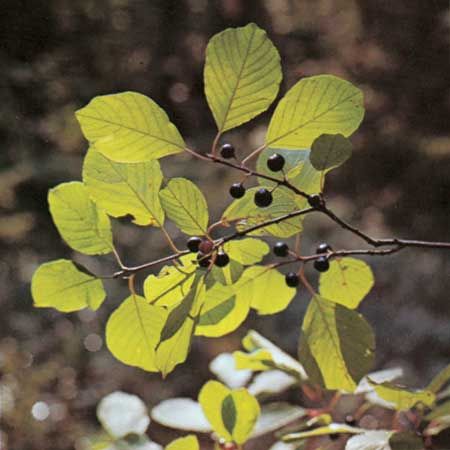
The alder buckthorn (Rhamnus frangula), also known as glossy buckthorn, is a woody shrub or small tree belonging to the buckthorn family (Rhamnaceae). Native to Europe, western Asia, and northern Africa, it has been introduced to North America, where it is frequently cultivated as an ornamental plant.12
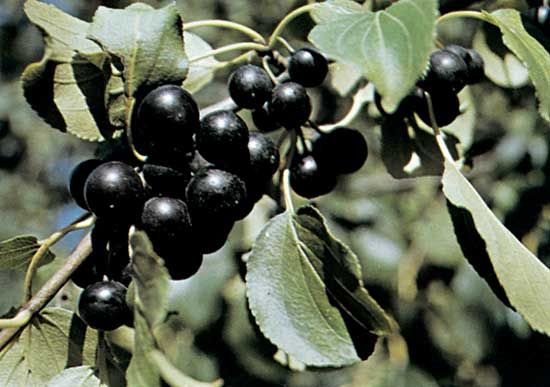
The plant grows rapidly, reaching heights of up to 5.5–6 meters (about 18–20 feet). It features dense, lustrous foliage that turns yellow in the autumn, along with small white flowers that grow in clusters. Its fruit transitions in color from red to black as it matures. A popular horticultural variety, the tallhedge buckthorn, is often used for its low-maintenance, upright form.12
It is important to distinguish this species from the “alder-leaved buckthorn,” which refers to different American shrub species (Rhamnus alnifolia or R. caroliniana).3
Why is alder buckthorn considered an invasive species in some regions?
The alder buckthorn (Rhamnus frangula) is considered an invasive species in North America because it acts as a serious pest plant that aggressively colonizes the understories of native forests.
Introduced from Eurasia as an ornamental shrub, the plant possesses characteristics that allow it to outcompete native vegetation. Its ability to grow rapidly and establish itself in diverse environments enables it to displace native species, ultimately disrupting the ecological balance of forest understory habitats.13
While it remains popular in horticulture for its low-maintenance, upright form—particularly the tallhedge buckthorn variety—its tendency to spread beyond cultivated areas has led to its classification as an invasive threat in many regions.143
What are the main differences between alder buckthorn and common buckthorn?
The alder buckthorn (Rhamnus frangula) and the common buckthorn (Rhamnus cathartica) are distinct species within the buckthorn family. While both are native to Eurasia and have become naturalized in other regions, they exhibit several key differences:
- Physical Structure: The alder buckthorn is generally larger, growing up to 6 meters (about 20 feet) in height, whereas the common buckthorn typically reaches about 3.5 meters (12 feet).13
- Spines: A notable feature of the common buckthorn is that it often bears spines, a characteristic not associated with the alder buckthorn.3
- Foliage: The alder buckthorn is known for its dark, dense, and lustrous foliage that turns yellow in the autumn. In contrast, the common buckthorn is described as having dark green, oval leaves.13
- Uses: The alder buckthorn is primarily cultivated as an ornamental plant, with varieties like the tallhedge buckthorn used for hedging. The common buckthorn has historically been used for its bark, which yields a yellow dye, and its fruit, which has purgative properties.13
How do birds and other wildlife interact with buckthorn berries?
Birds and other wildlife interact with the berries of various plants, including invasive species like buckthorn, primarily through a process known as ornithochory. These plants produce conspicuous, often red or orange, fleshy fruits that are highly attractive to fruit-eating birds such as thrushes, pigeons, and toucans.5
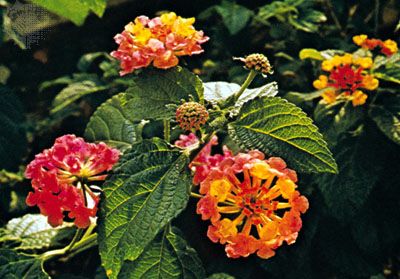
When birds consume these berries, they typically excrete or regurgitate the hard, embryo-containing seeds undamaged, effectively dispersing them across new areas. This interaction is a primary reason why certain non-native plants become invasive pests; birds inadvertently facilitate the rapid spread of these species by transporting seeds to distant locations, much like they have done with other invasive plants such as Lantana in Indonesia and Australia.5
While these fruits are evolved to be attractive, they often contain chemical defenses like acids, tannins, or poisonous compounds to protect the seed from premature digestion, ensuring the seed remains viable after passing through the bird’s digestive system.5
Sources
- alder buckthorn — Encyclopædia Britannica
- alder-leaved buckthorn — Merriam-Webster
- buckthorn — Encyclopædia Britannica
- Rosales - Rhamnaceae — Encyclopædia Britannica
- Seed - Dispersal by birds — Encyclopædia Britannica
Published on · 3 min read