Aleutian Islands
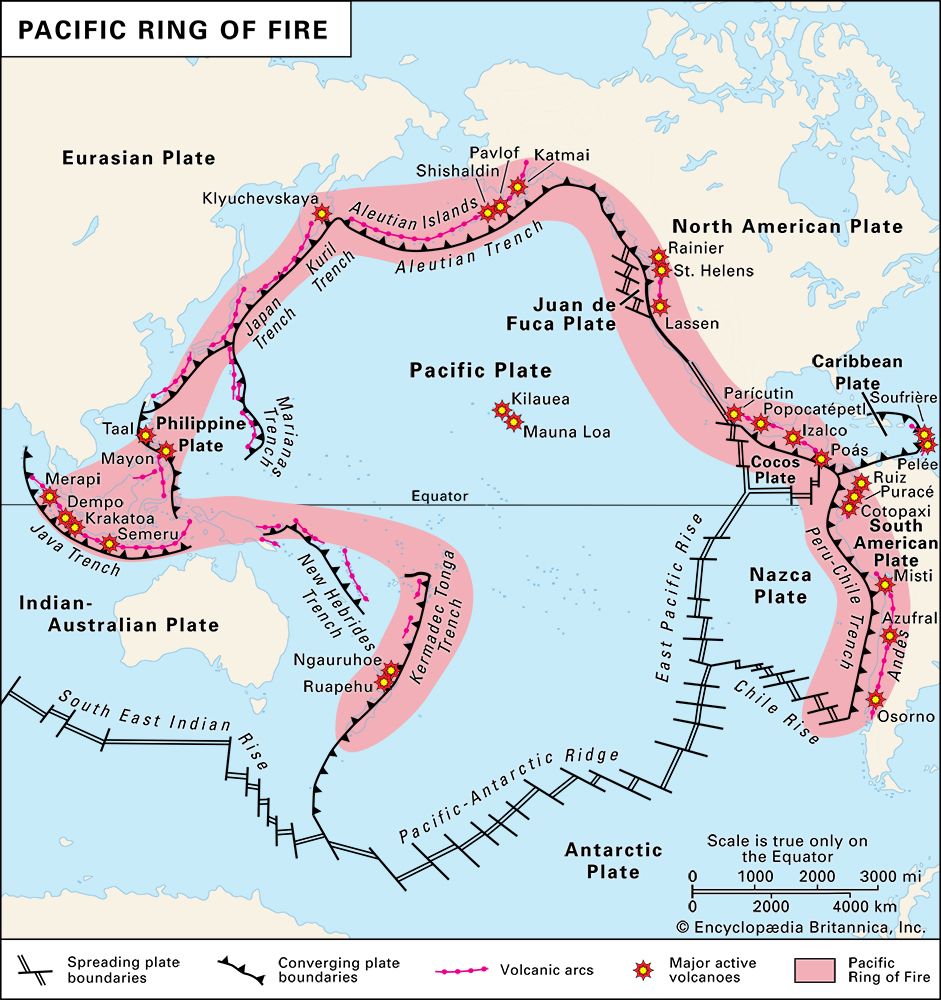
The Aleutian Islands are a chain of islands located in southwestern Alaska, U.S. They extend in an arc for approximately 1,100 miles (1,800 km) from the tip…
Where are the Aleutian Islands located, and how many islands make up this archipelago?
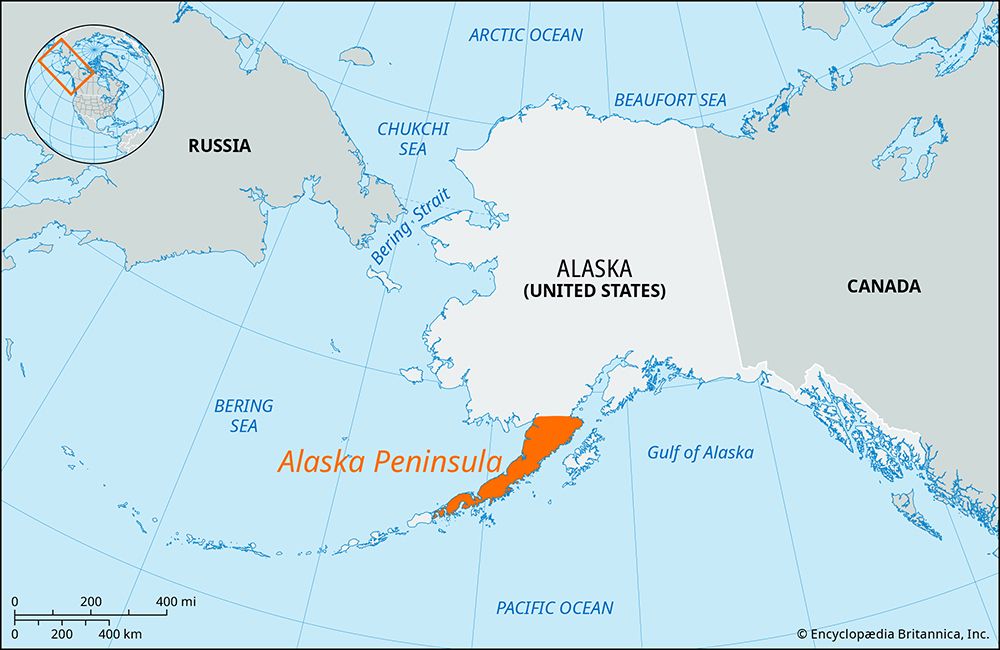
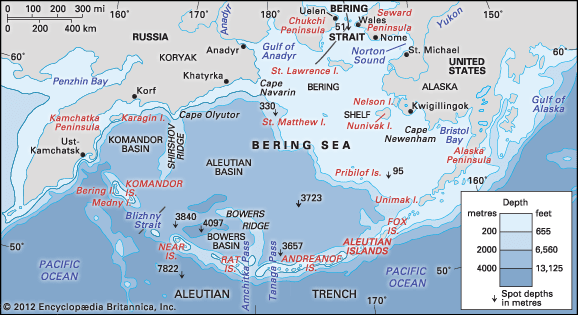
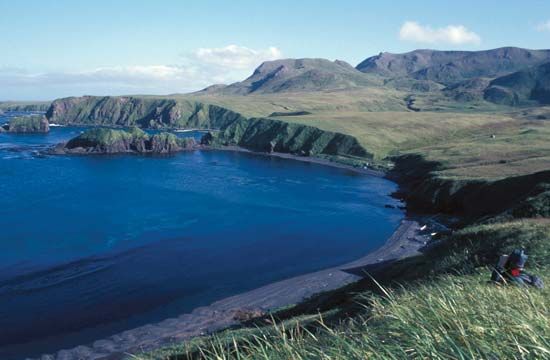
The Aleutian Islands are a chain of islands located in southwestern Alaska, U.S. They extend in an arc for approximately 1,100 miles (1,800 km) from the tip of the Alaska Peninsula to Attu Island, separating the Bering Sea to the north from the Pacific Ocean to the south.1
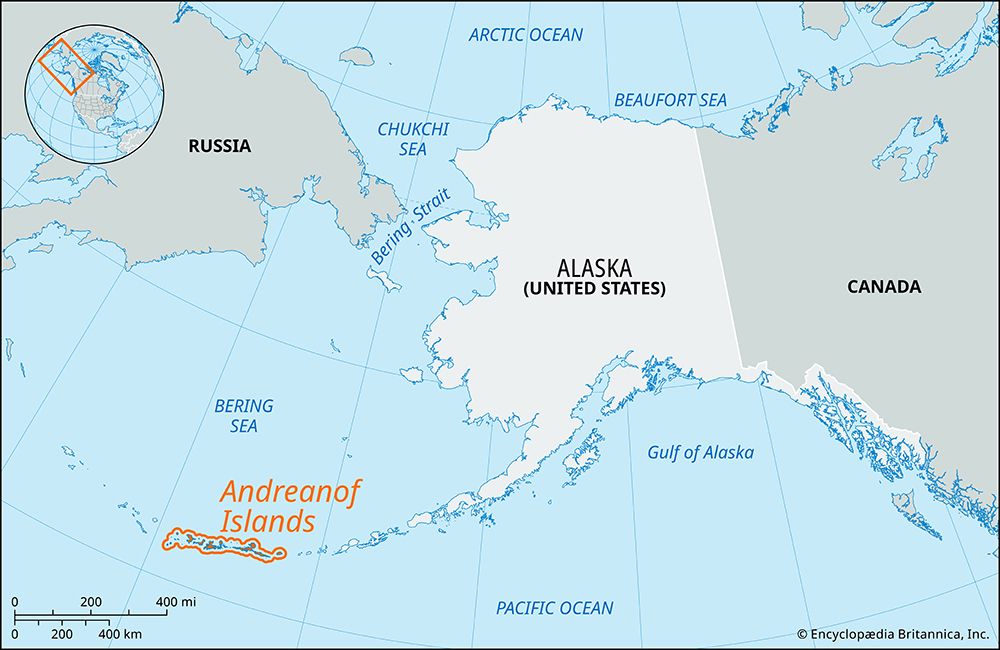
The archipelago is composed of 14 large islands, approximately 55 smaller islands, and an innumerable count of islets. Geographically, the chain is divided into several major groups, including the Fox Islands, the Islands of the Four Mountains, and the Andreanof, Rat, and Near islands3. Additionally, the Komandor (Commander) Islands, located near Russia’s Kamchatka Peninsula, are considered part of the Aleutian chain geographically.1
What role did the Aleutian Islands play during World War II?
During World War II, the Aleutian Islands became a strategic theater of conflict after Japanese forces invaded and occupied Attu and Kiska islands in June 1942. Japan’s objective was to establish air bases in the region to protect their northern flank and potentially disrupt Allied communications.43
The United States did not intend to use the Aleutians as a primary invasion route toward Japan, but military planners prioritized expelling the Japanese to prevent attacks on Alaskan bases and to secure the North Pacific. To achieve this, U.S. forces occupied Adak in August 1942 and Amchitka in January 1943, establishing airfields to launch attacks and maintain a naval blockade that cut off Japanese reinforcements.56
The campaign concluded in 1943:
- Attu: U.S. forces invaded on May 11, 1943, and retook the island after a short, bloody battle that resulted in the deaths of most of the 2,300 Japanese defenders.645
- Kiska: Following the defeat at Attu, the Japanese evacuated Kiska, allowing U.S. and Canadian troops to occupy the island unopposed in August 1943.645
These operations successfully removed Japanese forces from North American territory and provided bases for subsequent Allied bombing raids against the Kuril Islands.65
What are the main economic activities on the Aleutian Islands today?
The economy of the Aleutian Islands is primarily driven by the following activities:
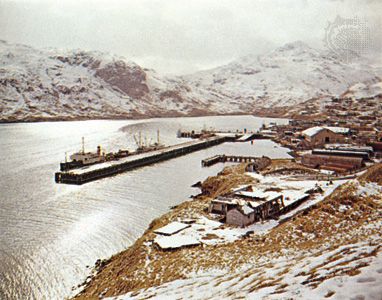
- Commercial Fishing: This is a cornerstone of the regional economy. The city of Unalaska (Dutch Harbor) is one of the most significant fishing ports in the United States, particularly for walleye pollock. The industry relies on large land-based processing plants and offshore factory ships to handle the catch.
- Subsistence Activities: For the Indigenous Unangan (Aleut) people, traditional practices such as fishing and hunting remain vital to their way of life and local economy.
- Fur Industry: Historically, the raising of blue foxes for the fur trade has provided employment for many residents.
- Land Management and Development: Following the closure of military installations, such as the naval station on Adak, large tracts of land have been transferred to the Aleut Corporation, an Alaska Native organization that manages these assets for economic development.
How do the Aleutian Islands affect weather patterns in the North Pacific?
The Aleutian Islands play a significant role in North Pacific weather patterns, primarily through their influence on atmospheric pressure and ocean circulation.
The region is the site of the Aleutian low, a large, persistent low-pressure center that typically forms during the winter. This system is created by the mixing of relatively warm Pacific waters, carried northward by the Alaska Current, with the colder waters of the Bering Sea. The Aleutian low serves as a primary source region for maritime polar air masses, which significantly influence the climate of the western United States.1213
Additionally, the islands are characterized by a maritime climate with high precipitation and are known for sudden, intense winds called williwaws. The islands also act as a geographic barrier that helps channel oceanic waters into the Bering Sea through various straits and passes, contributing to the general circulation of the northern Pacific.1314
Sources
- Near Islands — Encyclopædia Britannica
- Aleutian Islands — Merriam-Webster
- Aleutian Islands — Encyclopædia Britannica
- World War II - The Solomons, Papua, Madagascar, the Aleutians, and Burma, July 1942–May 1943 — Encyclopædia Britannica
- Pacific War - The expansion of the Japanese perimeter — Encyclopædia Britannica
- Pacific War - The Aleutians, Rabaul, and the Gilberts — Encyclopædia Britannica
- Alaska - Agriculture, forestry, and fishing — Encyclopædia Britannica
- Alaska: Top Questions — Encyclopædia Britannica
- Alaska - Services, labor, and taxation — Encyclopædia Britannica
- Alaska - Economy of Alaska — Encyclopædia Britannica
- Nunavut - Fishing and hunting — Encyclopædia Britannica
- Aleutian low — Encyclopædia Britannica
- Aleutian Current — Encyclopædia Britannica
- Bering Sea and Strait - Hydrology — Encyclopædia Britannica
- Alaska - Climate of Alaska — Encyclopædia Britannica
- North America - Storm tracks — Encyclopædia Britannica
Published on · 3 min read