Alfalfa
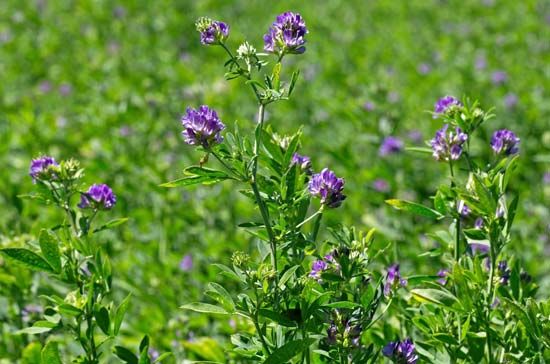
Alfalfa (Medicago sativa) is a versatile leguminous plant widely utilized in agriculture for both livestock nutrition and soil management.
What are the main uses of alfalfa in agriculture and animal feed?
Alfalfa (Medicago sativa) is a versatile leguminous plant widely utilized in agriculture for both livestock nutrition and soil management.1
Animal Feed
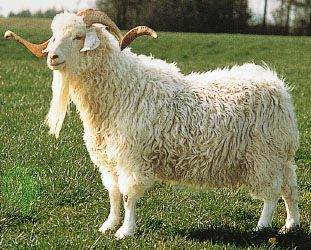
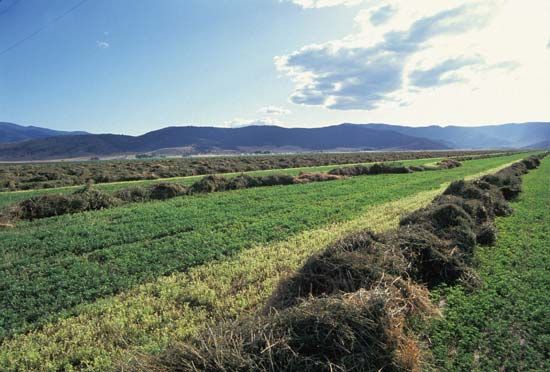
Alfalfa is a primary source of high-quality hay, silage, and pasturage. It is highly valued as a nutritious, palatable feed for livestock, containing approximately 16 percent protein and 8 percent minerals, along with essential vitamins A, D, E, and K. Because it is a legume, it provides higher protein levels compared to many grass-based feeds. It is commonly fed to various animals, including goats and horses, often to supplement their primary diet of pasture grass.123
Agricultural Uses
Beyond its role as feed, alfalfa is essential for soil health:
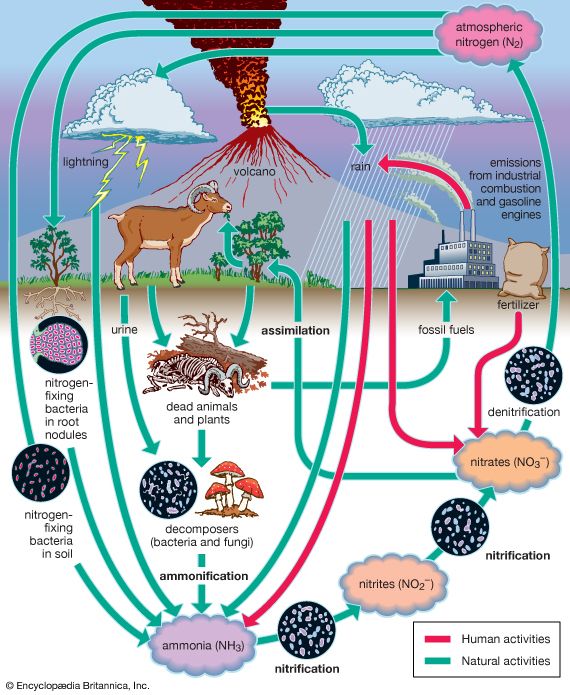
- Nitrogen Fixation: Alfalfa hosts symbiotic bacteria in its root nodules that “fix” nitrogen from the air, enriching the soil and reducing the need for synthetic fertilizers.1
- Soil Improvement: It is frequently grown as a cover crop or green manure to improve nutrient levels and decrease soil compaction through its deep taproots soil compaction through its deep taproots.1
- Crop Rotation: Its inclusion in crop rotation cycles helps maintain long-term land productivity.1
What nutritional benefits does alfalfa offer for humans and animals?
Alfalfa (Medicago sativa) is highly valued for its nutritional profile, particularly for livestock. While your query asks about benefits for both humans and animals, the provided information focuses exclusively on its role as a high-quality feed for livestock.
Nutritional Benefits for Livestock
Alfalfa is a nutritious and palatable forage crop, commonly harvested as hay, silage, or used for pasturage. Its nutritional composition includes:
- Protein: It contains approximately 16 percent protein, making it a significant source of nutrition for livestock.1
- Minerals: It provides about 8 percent mineral constituents.1
- Vitamins: The plant is rich in essential vitamins A, D, E, and K.1
Regarding the nutritional benefits of alfalfa for human consumption, the provided search results do not contain this information.

What role does alfalfa play in crop rotation and sustainable farming practices?
Alfalfa (Medicago sativa) serves as a cornerstone of sustainable agriculture due to its unique biological properties and its ability to enhance soil health when integrated into crop rotation systems.14
Soil Enrichment and Nitrogen Fixation
A primary role of alfalfa is its ability to perform nitrogen fixation. Through a symbiotic relationship with Rhizobium bacteria housed in its root nodules, the plant converts atmospheric nitrogen into a form accessible to other crops. By incorporating alfalfa into rotation cycles—often alternating it with cash crops like corn—farmers can naturally boost soil nutrient levels, which reduces the necessity for synthetic fertilizers.14
Physical Soil Improvement
Alfalfa’s deep taproots, which can reach depths of up to 15 meters, provide significant structural benefits to the land. These roots help decrease soil compaction and improve overall soil quality. Furthermore, when grown as a cover crop or green manure, alfalfa helps prevent erosion and facilitates weed control by alternating the growing environment.14
How does nitrogen fixation by alfalfa benefit neighboring crops?
Alfalfa (Medicago sativa) benefits neighboring crops primarily by enriching the soil with nitrogen through a process known as nitrogen fixation.51
The Mechanism of Nitrogen Enrichment
Alfalfa maintains a symbiotic relationship with Rhizobium bacteria, which reside in nodules on the plant’s roots. These bacteria convert atmospheric nitrogen into ammonia and other nitrogenous compounds that the alfalfa plant uses for its own development. When the alfalfa plant dies or its roots decay, these nitrogen-rich compounds are released into the soil, becoming available for uptake by subsequent or neighboring crops.54
Agricultural Impact
By integrating alfalfa into crop rotation systems—often alternating it with cash crops like corn—farmers can naturally increase soil fertility. This practice provides several advantages:14
- Reduced Fertilizer Dependency: The natural nitrogen contribution from alfalfa can decrease the need for synthetic fertilizers.14
- Improved Soil Structure: Beyond nitrogen, alfalfa’s deep taproots help reduce soil compaction and improve overall soil quality, which further supports the growth of following crops.16
- Enhanced Yields: Crops rotated with alfalfa often show higher yields due to the combined benefits of increased nutrient availability, improved soil structure, and better management of pests and diseases.6
Sources
- Alfalfa — Encyclopædia Britannica
- Livestock — Encyclopædia Britannica
- Feed - Hay — Encyclopædia Britannica
- Fabaceae - Nitrogen fixation — Encyclopædia Britannica
- Nitrogen-fixing bacteria — Encyclopædia Britannica
- Agricultural technology - Crop rotation — Encyclopædia Britannica
Published on · 3 min read