Goat
While goats and sheep are closely related, they possess distinct physical characteristics that allow them to be distinguished from one another.
How are goats different from other closely related species like sheep?
While goats and sheep are closely related, they possess distinct physical characteristics that allow them to be distinguished from one another.
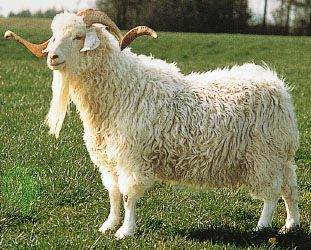
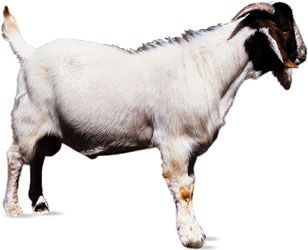
Compared to sheep, goats are generally lighter in build and have straighter hair. Their horns typically arch backward, whereas sheep exhibit different horn structures. A primary physical indicator used to tell them apart—particularly when comparing certain hair breeds of sheep to goats—is the orientation of the tail: a goat’s tail is directed upward, while a sheep’s tail hangs downward. Additionally, male goats (bucks or billys) are often characterized by the presence of a beard, a feature not typically associated with sheep.123
Beyond these physical traits, goats are members of the genus Capra and are well-regarded for their adaptability to small-scale milk production, often thriving in environments where keeping larger livestock like cattle would be impractical.21
What are the various breeds of goats and their primary uses?
Goat breeds are generally categorized by their primary utility, including milk, meat, and fiber production. These animals have been domesticated since prehistoric times and remain essential livestock, particularly in regions where keeping larger animals like cows is impractical.12
Common Goat Breeds and Their Uses
Breed
Primary Use
Key Characteristics
Angora
Wool
Small body with a thick, flat fleece; thrives in temperate regions.
Boer
Meat
Large, stocky build; known for rapid weight gain and hardiness.
Cashmere
Wool, milk, meat
Valued for its soft undercoat (pashm); small body with large ears.
LaMancha
Milk
Hardy breed with distinct, very short ears.
Nubian
Milk
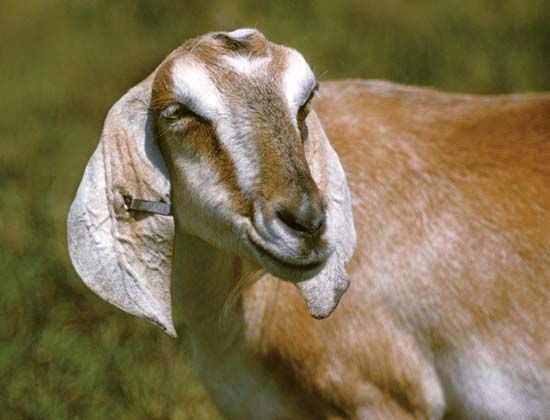
Large, long-legged, and long-eared with a Roman nose.
Oberhasli
Milk
Medium-sized; chamois-colored with two black stripes on the face.
Saanen
Milk
White or cream-colored; a consistent and important dairy producer.
Toggenburg
Milk
Light to dark brown; a significant Swiss dairy breed.
Beyond these specific uses, goat skin is also valued for leather production. While milk-producing breeds are often grouped as “prick-eared” (such as Swiss varieties) or “eastern” (such as the Nubian), wool goats like the Angora and Cashmere are prized for their specialized fibers.12
How have goats been domesticated and utilized by humans throughout history?
Goats were likely first domesticated in Asia during prehistoric times, becoming one of the earliest animals to be integrated into human agricultural systems. By the 7th millennium BP, they were already being kept by early agricultural societies, such as those in the Nile valley, alongside other livestock like sheep and swine.281
Throughout history, goats have been highly valued for their versatility and adaptability, serving as a primary source of:
- Milk and Dairy: Goats are exceptionally well-suited for small-scale milk production. A single animal can often provide enough milk for a family, making them an economical choice in regions where keeping larger livestock like cattle is impractical.28
- Meat: Goat flesh is a significant food source globally, particularly in Mediterranean countries. Meat from young kids is noted for being tender and delicate.2
- Fiber: Specific breeds, such as the Angora and Cashmere, have been selectively bred for their high-quality wool and mohair.28
- Leather: Their hides have long been utilized as a durable source of leather.28
How has selective breeding influenced the characteristics of domestic goats over time?
Selective breeding has played a fundamental role in shaping the characteristics of domestic goats, allowing humans to tailor these animals for specific agricultural needs such as milk, meat, and fiber production. By consistently selecting for desirable traits, breeders have created a diverse array of specialized goat breeds.129
Impact of Selective Breeding
- Milk Production: Through the use of pedigree males—particularly those of Swiss extraction—breeders have significantly improved milk yields in various regions. For example, in Britain, the introduction of Swiss-derived genetics led to the near-disappearance of native, less productive types in favor of high-yield dairy breeds like the Saanen and Toggenburg.2
- Fiber Quality: Selective breeding has focused on the development of specialized coats. The Angora has been refined for its thick, flat fleece, while the Cashmere goat has been bred for its soft, valuable undercoat.19
- Meat Production: Breeds like the Boer have been developed for their stocky build and rapid weight gain, as well as an extended breeding season, which improves the efficiency of meat production.12
- Physical Traits: Breeding has also influenced distinct physical characteristics, such as the unique ear types of the LaMancha or the long, drooping ears and Roman noses of the Nubian.19
Sources
- Goat breeds — Encyclopædia Britannica
- Livestock farming - Goats — Encyclopædia Britannica
- Goat — Encyclopædia Britannica
- goat antelope — Encyclopædia Britannica
- Cashmere goat — Encyclopædia Britannica
- cashmere — Encyclopædia Britannica
- Boer — Encyclopædia Britannica
- Origins of agriculture - The Nile valley — Encyclopædia Britannica
- mountain goat — Encyclopædia Britannica
Published on · 4 min read